

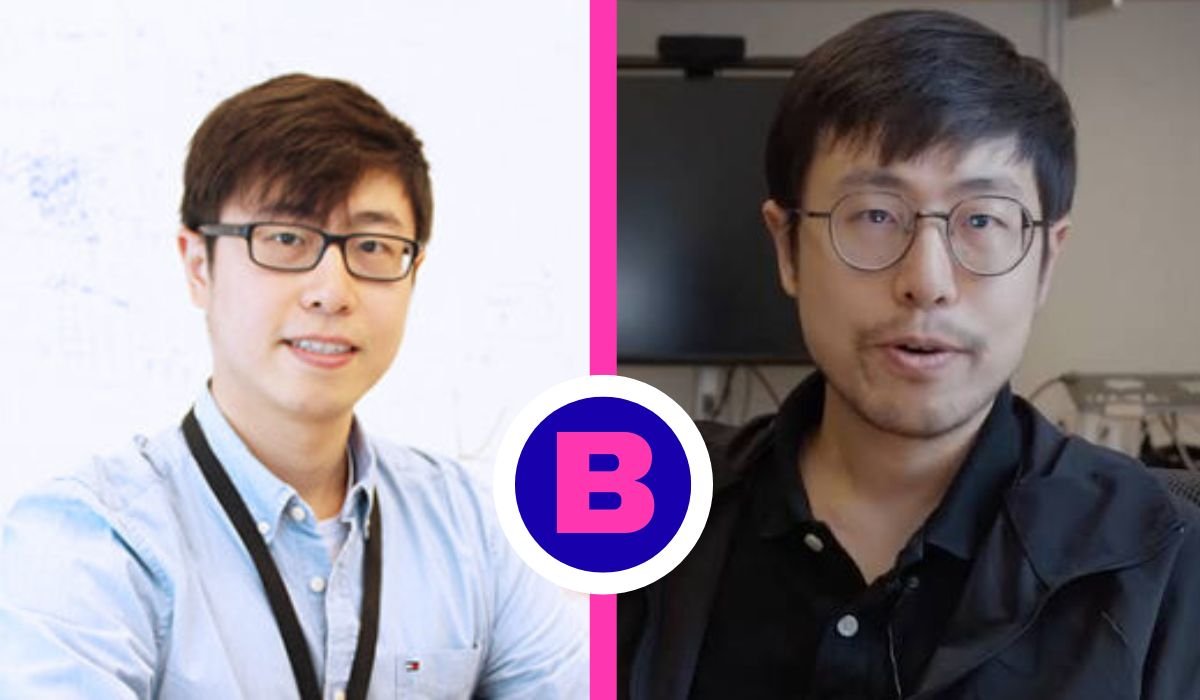
Shaoqing Ren is a prominent Artificial Intelligence researcher whose work has helped shape modern Computer Vision and Deep Learning. His name is closely associated with influential research such as Faster R-CNN and Deep Residual Learning, better known as ResNet. Over the years, his career has also moved beyond academic research into Autonomous Driving and large-scale AI applications. In 2025, he returned to the University of Science and Technology of China (USTC), where he became a Chair Professor and Doctoral Supervisor and took on a leadership role connected with the university’s Institute of Artificial Intelligence.
What makes Shaoqing Ren particularly interesting is the breadth of his career. His early work focused on fundamental problems in Computer Vision, while his later professional experience connected those ideas with Autonomous Driving. Today, his research interests include Artificial Intelligence, World Models, Embodied AI, Autonomous Driving, Computer Vision, Deep Learning, and AI for Science.
Quick Bio Information
| Information | Details |
|---|---|
| Full Name | Shaoqing Ren |
| Chinese Name | 任少卿 |
| Main Field | Artificial Intelligence |
| Specialization | Computer Vision And Deep Learning |
| University | University Of Science And Technology Of China |
| Current Academic Role | Chair Professor |
| Academic Role | Doctoral Supervisor |
| Current USTC Role | Head Of The Institute Of Artificial Intelligence, In Establishment |
| Undergraduate Degree | Information Security |
| Undergraduate Institution | University Of Science And Technology Of China |
| Bachelor’s Degree Year | 2011 |
| Doctoral Degree | Electronic Science And Technology |
| Doctoral Degree Year | 2016 |
| Doctoral Training | USTC And Microsoft Research Asia |
| Major Research Area | Computer Vision |
| Other Research Area | Autonomous Driving |
| Current Research | World Models And Embodied AI |
| Industry Connection | Autonomous Driving And AI |
| Famous Research | Faster R-CNN And ResNet |
| Major Recognition | CVPR Best Paper Award And Other International Honors |
Who Is Shaoqing Ren?
Shaoqing Ren is a Chinese Artificial Intelligence researcher known internationally for influential work in Computer Vision and Deep Learning. His research career has focused on making machines better at understanding visual information, detecting objects, and learning useful representations from large amounts of data. USTC currently identifies his main disciplines as Intelligent Science and Technology and Computer Science and Technology. His listed research interests extend from traditional Computer Vision and Deep Learning to World Models, Embodied AI, Autonomous Driving, Artificial Intelligence, and AI for Science.
His influence comes largely from collaborative research. Shaoqing Ren was a co-author of several papers that became important milestones in the development of modern Deep Learning. Rather than viewing his career as the story of one invention, it is more accurate to see it as a progression through several important stages of AI research, from visual recognition and object detection to intelligent vehicles and broader AI systems.
Early Education And Academic Background
Shaoqing Ren began his higher education at the University of Science and Technology of China. He received a Bachelor’s Degree in Information Security in 2011. His undergraduate training gave him a strong technical foundation before he moved toward Artificial Intelligence and Computer Vision research.
He then continued his academic training through a joint doctoral program involving USTC and Microsoft Research Asia. In 2016, he received his Doctoral Degree in Electronic Science and Technology. His doctoral supervisor was Jian Sun, a researcher with whom Ren later collaborated on several influential Computer Vision papers. This period was particularly important because it placed Ren within a research environment focused on the rapidly developing field of Deep Learning.
Shaoqing Ren’s Early Computer Vision Research
Before becoming widely known for Faster R-CNN and ResNet, Shaoqing Ren was already working on difficult Computer Vision problems. One notable example is his 2014 CVPR paper, “Face Alignment at 3000 FPS via Regressing Local Binary Features,” written with Xudong Cao, Yichen Wei, and Jian Sun. The work addressed the challenge of accurately locating important facial features while also emphasizing computational speed. USTC lists the paper among Ren’s representative publications.
This early research illustrates an important characteristic of his career: the effort to make AI systems both accurate and practical. Computer Vision is not only about recognizing what appears in an image. Systems must often locate objects, understand their structure, and process visual information quickly enough for real-world use. These ideas later became especially relevant to Autonomous Driving.
Shaoqing Ren And Faster R-CNN
One of the most recognized works associated with Shaoqing Ren is “Faster R-CNN: Towards Real-Time Object Detection with Region Proposal Networks.” The paper was written by Shaoqing Ren, Kaiming He, Ross Girshick, and Jian Sun and was presented at NeurIPS in 2015. USTC identifies Faster R-CNN as one of Ren’s major representative works and notes that it later received the 2025 NeurIPS Test of Time Award.
Faster R-CNN addressed a central problem in Computer Vision: object detection. A system performing object detection does more than recognize an object. It also determines where that object appears in an image. The work introduced Region Proposal Networks as part of an approach designed to make object detection faster and more efficient. Its importance lasted well beyond the original publication, and the paper became part of the foundation of subsequent object-detection research. Its later Test of Time recognition is evidence of that continuing influence.
Shaoqing Ren And ResNet
Another defining part of Shaoqing Ren’s research career is his contribution to “Deep Residual Learning for Image Recognition.” The paper was authored by Kaiming He, Xiangyu Zhang, Shaoqing Ren, and Jian Sun and was published at CVPR in 2016. It received the CVPR Best Paper Award.
The work introduced the residual learning framework that became known as ResNet. In simple terms, residual connections helped researchers train much deeper neural networks by making it easier for information and gradients to move through the network. The result was a major step forward in Deep Learning. USTC reported in 2026 that the ResNet paper had received more than 320,000 citations and described its residual-learning idea as a foundational influence across areas including Computer Vision and other forms of modern AI.
It is important to describe this achievement accurately. ResNet was not created by Shaoqing Ren alone. It was a collaborative research project involving several researchers, and Ren was one of the paper’s co-authors.
ImageNet, COCO, And Computer Vision Achievements
Shaoqing Ren’s research career also includes strong results in major Computer Vision benchmarks. USTC states that Ren and his collaborators achieved global championship results in both the ImageNet and MS COCO competitions. These benchmarks played a major role in measuring progress in image classification, object detection, localization, and related visual tasks.
These achievements matter because they demonstrate the practical value of the research. Computer Vision researchers often use standardized datasets and competitions to compare competing approaches. Strong performance on such benchmarks can show that a new method is not simply theoretically interesting but capable of solving demanding visual-recognition problems at a high level.
From Computer Vision To Autonomous Driving
As Artificial Intelligence developed, Shaoqing Ren’s career increasingly connected fundamental Computer Vision research with Autonomous Driving. The relationship between the two areas is natural. A self-driving vehicle needs to understand its surroundings, identify other vehicles and pedestrians, recognize relevant road information, and make decisions based on changing conditions.
Ren’s background in object detection and visual recognition therefore provided a strong foundation for work in intelligent vehicles. His professional career demonstrates how research that begins with images and neural networks can eventually become part of complex systems designed to interact with the physical world.
Shaoqing Ren And Momenta
Shaoqing Ren also moved into entrepreneurship and the Autonomous Driving industry. His career has included work with Momenta, an Autonomous Driving technology company that he co-founded. This stage of his career was significant because it placed him in an environment where AI research had to meet practical engineering requirements.
The move from academic laboratories to industry can be challenging. Research papers often focus on controlled experiments and measurable benchmarks, while real-world Autonomous Driving requires systems that operate continuously, handle uncertainty, and respond to complicated environments. Ren’s experience across both areas provides an interesting example of how advanced Computer Vision research can be translated into commercial technology.
His Career At NIO
Ren later joined NIO, where his career continued to focus on Autonomous Driving. His professional experience at NIO added another major industry dimension to his background, connecting his research expertise with the development of intelligent vehicle technology.
This part of his career is particularly relevant when considering the evolution of Shaoqing Ren’s research interests. His work moved from visual recognition toward larger questions involving perception, decision-making, and intelligent interaction with the physical environment. Autonomous Driving requires many of the capabilities that modern AI researchers are now exploring more broadly, including prediction, planning, representation, and reasoning.
Returning To USTC
In September 2025, Shaoqing Ren joined the University of Science and Technology of China as a Chair Professor and Doctoral Supervisor. USTC also identifies him as the head of its Institute of Artificial Intelligence, which was listed as being in establishment.
His return to USTC represents an important new phase. Instead of focusing only on industry applications, he is now positioned to combine academic research, advanced AI development, and the education of future researchers. His industry experience can also provide a practical perspective for students and researchers working on AI systems intended for real-world use.
Shaoqing Ren’s Current Research Areas
Shaoqing Ren’s current research interests are much broader than the areas associated with his early publications. USTC lists Artificial Intelligence, World Models, Embodied AI, Autonomous Driving, Computer Vision, AI for Science, and Deep Learning among his research directions.
World Models are especially interesting because they involve giving AI systems useful internal representations of environments and situations. Instead of simply recognizing an object, an intelligent system may need to understand how an environment works and predict what could happen next. Embodied AI takes this idea into the physical world, where an intelligent system must perceive its surroundings and respond through actions.
AI for Science represents another expansion of his interests. It refers broadly to using AI to help scientists analyze complex information, model difficult processes, and accelerate discovery. Together, these research areas show that Ren’s current work is connected to a much broader vision of intelligent systems.
Shaoqing Ren And Artificial General Intelligence
Ren’s current USTC position is also connected with the university’s developing Institute of Artificial Intelligence. USTC lists him as its head, while his research interests include several areas often discussed in connection with increasingly capable AI systems.
World Models and Embodied AI are particularly relevant to this direction because they address capabilities beyond simple pattern recognition. An intelligent system operating in the real world needs to perceive information, understand context, anticipate outcomes, and respond appropriately. However, it is important not to confuse research into these areas with a claim that Artificial General Intelligence has already been achieved. They are research directions that may contribute to more capable AI systems.
Major Awards And Recognition
Shaoqing Ren has received significant recognition for his research. USTC lists the 2016 CVPR Best Paper Award among his honors, along with the 2023 Future Science Prize in Mathematics and Computer Science, the 2025 NeurIPS Test of Time Award, and the 2025 Helmholtz Prize associated with the ICCV Test of Time recognition. The university also notes his team’s global championship results in ImageNet and MS COCO.
His recognition continued in 2026. USTC reported that the ResNet paper received the CVPR 2026 Longuet-Higgins Prize, also known as a Test of Time Award. The prize recognizes research published years earlier that has demonstrated lasting influence on academic research and technological development.
Research Impact And Citation Record
The impact of Shaoqing Ren’s research can also be seen through citations. USTC reported that his academic papers had received more than 460,000 citations by November 2025. This figure demonstrates the extraordinary reach of his publications, although citation totals naturally change over time.
Citation numbers alone cannot measure the full value of research, but in Ren’s case they are especially notable because several of his papers have become standard references in Computer Vision and Deep Learning. Faster R-CNN and ResNet, in particular, influenced generations of researchers and developers working on visual recognition and neural-network architectures.
Why Faster R-CNN And ResNet Still Matter
The lasting importance of Shaoqing Ren’s work becomes clearer when looking beyond the original publication dates. Faster R-CNN helped advance the development of efficient object detection, while ResNet introduced a residual-learning approach that became deeply embedded in modern neural-network design. Both papers addressed fundamental problems rather than narrow applications.
In 2026, Computer Vision has moved far beyond the systems that existed when these papers were published. Yet the ideas introduced during that earlier period remain part of the historical foundation on which newer AI systems were developed. The CVPR 2026 recognition of ResNet and the 2025 NeurIPS recognition of Faster R-CNN demonstrate that their influence has survived well beyond their original research environments.
Shaoqing Ren’s Academic And Industry Influence
Perhaps the most interesting feature of Shaoqing Ren’s career is the connection between research and application. His academic work contributed to fundamental Computer Vision and Deep Learning methods, while his industry experience exposed him to the challenges of building Autonomous Driving systems.
His current position at USTC brings those experiences together. He can approach AI from the perspective of fundamental research while also understanding the demands of practical systems. This combination is valuable at a time when AI research increasingly needs to connect mathematical ideas, large-scale computing, physical environments, and real-world applications.
Final Thoughts
Shaoqing Ren’s career reflects the rapid development of Artificial Intelligence over the past two decades. He began with a strong academic foundation at USTC, developed expertise in Computer Vision and Deep Learning, and became a co-author of research that helped define important parts of modern AI. Faster R-CNN and ResNet remain central examples of that influence, while his work in Autonomous Driving demonstrates how research can move from academic laboratories into complex real-world technologies.
Today, Shaoqing Ren’s research interests are expanding again. His work now encompasses World Models, Embodied AI, Autonomous Driving, Computer Vision, Deep Learning, Artificial Intelligence, and AI for Science. His story is therefore not simply a biography of a researcher associated with famous papers. It is also a story about how AI itself has evolved, from recognizing patterns in images toward building systems that can understand environments, interact with the physical world, and potentially support scientific discovery.
FAQs About Shaoqing Ren
Who Is Shaoqing Ren?
Shaoqing Ren is an Artificial Intelligence researcher and Chair Professor at the University of Science and Technology of China. His research has focused heavily on Computer Vision and Deep Learning, with later work and professional experience extending into Autonomous Driving, World Models, Embodied AI, and AI for Science.
What Is Shaoqing Ren Known For?
He is particularly well known as a co-author of Faster R-CNN and Deep Residual Learning, the research paper that introduced the ResNet approach. Both became highly influential in Computer Vision and Deep Learning.
Did Shaoqing Ren Create ResNet?
ResNet was developed collaboratively. Shaoqing Ren was one of four authors of the influential “Deep Residual Learning for Image Recognition” paper, alongside Kaiming He, Xiangyu Zhang, and Jian Sun. The paper received the 2016 CVPR Best Paper Award and later won the CVPR 2026 Longuet-Higgins Prize for its lasting impact.
What Is Faster R-CNN?
Faster R-CNN is a Deep Learning framework for Object Detection. It was developed by Shaoqing Ren, Kaiming He, Ross Girshick, and Jian Sun and introduced Region Proposal Networks to help make object detection more efficient. The work was published at NeurIPS in 2015 and received the NeurIPS Test of Time Award in 2025.
Where Did Shaoqing Ren Study?
Shaoqing Ren studied at the University of Science and Technology of China. He earned his Bachelor’s Degree in Information Security in 2011 and later completed a joint doctoral program involving USTC and Microsoft Research Asia, receiving his PhD in Electronic Science and Technology in 2016.
What Are Shaoqing Ren’s Current Research Interests?
His current research interests include Artificial Intelligence, World Models, Embodied AI, Autonomous Driving, Computer Vision, Deep Learning, and AI for Science. USTC also identifies him with the university’s developing Institute of Artificial Intelligence.
What Awards Has Shaoqing Ren Received?
His documented honors include the 2016 CVPR Best Paper Award, the 2023 Future Science Prize in Mathematics and Computer Science, the 2025 NeurIPS Test of Time Award, the 2025 Helmholtz Prize, and the CVPR 2026 Longuet-Higgins Prize awarded to the ResNet paper.
Why Is Shaoqing Ren Important To AI Research?
His importance comes from the combination of highly influential academic research and practical AI experience. His publications helped advance Object Detection and Deep Learning, while his industry career connected AI research with Autonomous Driving. His current work at USTC extends that experience toward broader areas such as World Models, Embodied AI, and AI for Science.
Learn more and explore exciting content on: Who Is Daysha Ferrer Torres? Exploring Her Career and Research









Leave a Reply