
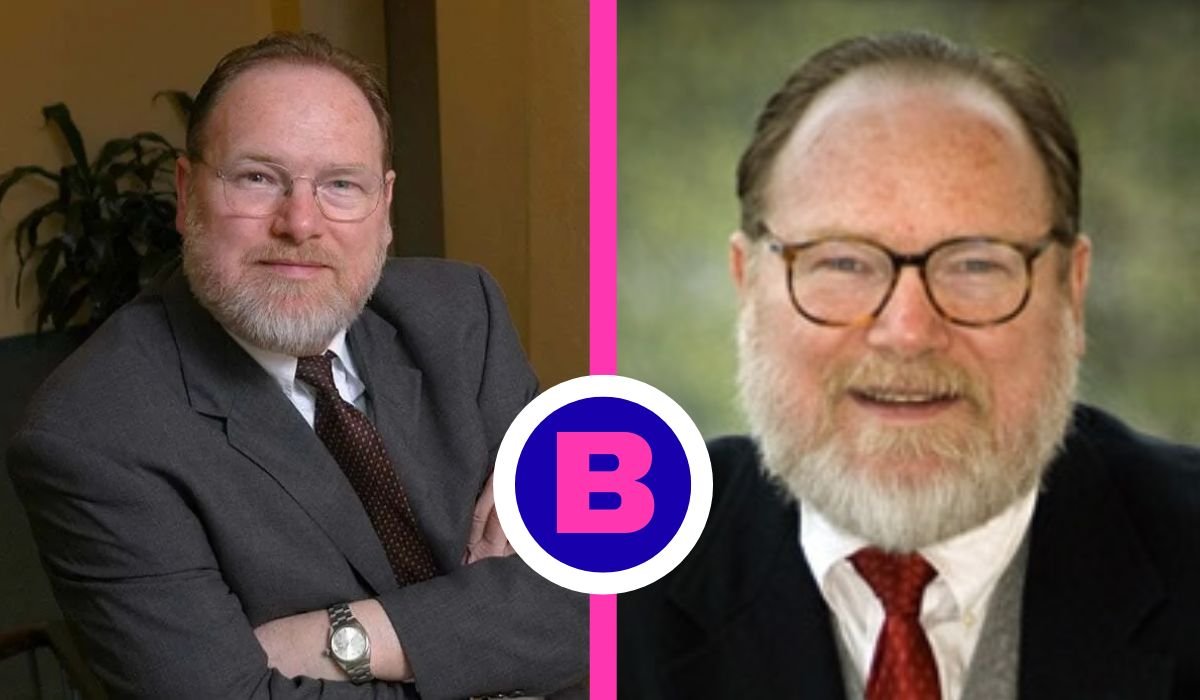
Ronald C. Kessler Has Spent Much Of His Career Asking A Simple But Important Question: How Can We Better Understand Mental Illness Across Individuals And Populations? His Answer Has Come Through Decades Of Large-Scale Research, Careful Epidemiological Studies, And Work Designed To Connect Scientific Evidence With Better Mental-Health Care. Today, Kessler Is The McNeil Family Professor Of Health Care Policy At Harvard Medical School And One Of The Most Influential Researchers In Psychiatric Epidemiology. His Research Examines The Social Determinants Of Mental Health And Illness, The Prevalence And Consequences Of Mental Disorders, Patterns Of Treatment, And Ways To Match Patients With More Effective Interventions. Harvard Reports That He Has Authored More Than 1,000 Publications And Has Been Rated Among The Most Widely Cited Researchers In Psychiatry For Many Years.
Quick Bio Information
| Fact | Information |
|---|---|
| Full Name | Ronald C. Kessler |
| Born | April 26, 1947 |
| Birthplace | Bristol, Pennsylvania |
| Nationality | American |
| Primary Field | Psychiatric Epidemiology |
| Academic Background | Sociology |
| Bachelor’s Degree | B.A., Temple University |
| Bachelor’s Year | 1970 |
| Master’s Degree | M.A., New York University |
| Doctoral Degree | Ph.D., New York University |
| Doctorate Year | 1975 |
| Current Harvard Title | McNeil Family Professor Of Health Care Policy |
| Institution | Harvard Medical School |
| Major Research Area | Social Determinants Of Mental Health |
| Major Project | U.S. National Comorbidity Survey |
| International Project | World Mental Health Survey Initiative |
| Major Recognition | National Academy Of Sciences Membership |
| NAS Election | 2008 |
| Publications | More Than 1,000 According To Harvard |
| Research Focus | Mental Disorders, Treatment, Prevention, And Population Health |
Who Is Ronald C. Kessler?
Ronald C. Kessler Is An American Sociologist And Mental-Health Researcher Whose Career Bridges Sociology, Psychiatry, Epidemiology, Health Policy, And Population Research. Rather Than Studying Mental Illness Only At The Individual Clinical Level, His Work Frequently Looks At Entire Populations. This Approach Helps Researchers Understand How Common Mental Disorders Are, When They Begin, What Factors Are Associated With Them, How They Affect Daily Life, And Whether People Receive Appropriate Treatment. Kessler Is Best Known For Leading The U.S. National Comorbidity Survey And For His Leadership In The World Mental Health Survey Initiative. His Current Research Also Extends Into Precision Treatment, Suicide Prevention, Trauma, And Prevention Programs For People At High Risk Of Mental Disorders.
Early Life And Education
Kessler Was Born On April 26, 1947, In Bristol, Pennsylvania. Information About His Private Childhood And Family Background Is Limited In Major Academic Sources, So His Professional Story Is Best Understood Through His Education And Research Career. He Studied Sociology At Temple University, Earning His Bachelor Of Arts Degree In 1970. He Then Continued His Graduate Education At New York University, Where He Earned A Master’s Degree In Sociology In 1973 And A Ph.D. In Sociology In 1975. This Sociological Foundation Became Central To His Later Work Because Mental Health Is Influenced Not Only By Biology And Clinical Factors But Also By Social Circumstances, Economic Conditions, Relationships, Work, Education, And Access To Care.
Early Academic Career
Kessler’s Early Professional Experience Helped Move His Career Toward Health Services Research And Psychiatric Epidemiology. Before Completing His Doctorate, He Was A Predoctoral Fellow In Health Services Research At Montefiore Hospital. He Later Worked As A Research Associate At The New York State Psychiatric Institute And The Centre For Policy Research. He Also Completed Postdoctoral Training In Psychiatric Epidemiology At The University Of Wisconsin. These Experiences Gave Him Exposure To Both Social-Science Research And Psychiatric Research, A Combination That Would Become A Defining Feature Of His Career. He Subsequently Joined The University Of Michigan Faculty, Where He Spent Many Years Developing His Research Program Before Moving To Harvard Medical School.
Harvard Medical School Career
Ronald C. Kessler Joined The Harvard Medical School Faculty In The 1990s And Became A Major Figure In The Department Of Health Care Policy. Harvard Currently Identifies Him As The McNeil Family Professor Of Health Care Policy. His Harvard Career Has Given Him A Platform For Conducting Large, Collaborative Studies That Examine Mental Health At National And International Levels. His Work Has Also Expanded Beyond Describing Mental Disorders To Questions About Prevention, Treatment, Service Use, Risk Factors, And The Development Of Tools That Can Help Providers Make Better Treatment Decisions. Harvard’s Current Profile Also Lists Him As Faculty In Epidemiology At Harvard T.H. Chan School Of Public Health.
Psychiatric Epidemiology And Mental Health Research
The Phrase “Psychiatric Epidemiology” Can Sound Technical, But Its Basic Idea Is Easy To Understand. It Means Studying Mental Disorders Across Populations To Determine How Frequently They Occur, Who Is Most Affected, What Factors Are Associated With Them, And How They Influence People’s Lives. Kessler Has Helped Make This Approach Especially Important In Modern Mental-Health Research. His Work Looks At Mental Illness Through A Broad Social Lens, Examining Factors Such As Life Circumstances, Social Conditions, Treatment Access, And Other Predictors Of Mental-Health Outcomes. This Population-Based Perspective Helps Researchers And Policymakers Move Beyond Individual Cases And Understand Larger Patterns That Can Guide Public-Health Decisions.
The National Comorbidity Survey
One Of Ronald C. Kessler’s Most Important Contributions Is His Leadership Of The U.S. National Comorbidity Survey, Commonly Called The NCS. Harvard Describes The Original NCS As The First Nationally Representative U.S. Mental-Health Survey To Use A Fully Structured Research Diagnostic Interview To Assess The Prevalence And Correlates Of Psychiatric Disorders. The Baseline Survey Was Conducted From The Fall Of 1990 Through The Spring Of 1992. Its Importance Goes Beyond Its Size Because It Created A Systematic National Picture Of Mental Disorders Rather Than Depending Only On Clinical Samples Or Smaller Local Studies. The NCS Became A Foundation For Subsequent Research Into The Frequency, Causes, Course, And Treatment Of Mental Disorders In The United States.
NCS Follow-Up Studies And Adolescent Research
The National Comorbidity Survey Did Not End With Its Original Interviews. Kessler And His Collaborators Developed Several Extensions That Allowed Researchers To Examine Mental Health Over Time. The NCS-2 Reinterviewed Participants From The Original Survey In 2001 And 2002, Making It Possible To Study The Course Of Mental And Substance-Use Disorders. An NCS Replication Survey, Known As The NCS-R, Used A New National Sample Of About 10,000 Respondents To Study Trends And Expand Areas Of Investigation. At The Same Time, The National Comorbidity Survey–Adolescent Was Conducted With About 10,000 Adolescents To Produce Nationally Representative Information About Mental Disorders Among Young People.
The Kessler Psychological Distress Scale
Kessler Is Also Closely Associated With The Kessler Psychological Distress Scale, A Measure Designed To Assess Non-Specific Psychological Distress. The Instrument Is Particularly Useful When Researchers Want A Practical Way To Identify Levels Of Psychological Distress In A Population Without Treating The Measure As A Complete Diagnostic Assessment For Every Mental Disorder. Its Importance Fits Naturally Into Kessler’s Larger Research Philosophy: Mental Health Can Be Studied Systematically Using Reliable Measures Applied Across Large Groups Of People. For Readers Interested In Ronald C. Kessler’s Contributions, The Scale Represents An Important Example Of How His Research Has Influenced Both Measurement And Population Mental-Health Research.
World Mental Health Survey Initiative
Kessler’s Research Has Also Reached Far Beyond The United States Through The World Mental Health Survey Initiative. The Program Coordinates Community-Based Psychiatric Epidemiological Surveys Across Countries And Examines The Prevalence, Correlates, Consequences, And Treatment Of Mental, Substance-Use, And Behavioral Disorders. Current Information From Kessler’s Research Site Says The Initiative Has Included Surveys In 30 Countries, With An Eventual Combined Sample Exceeding 166,000 Participants, While A More Recent WMH Page Reports 32 Countries And An Eventual Sample Above 180,000. This Shows Why Older Descriptions Of The Initiative Should Be Updated Rather Than Repeating Earlier Figures Such As 28 Countries Or 200,000 Participants.
Mental Health, Treatment, And Social Consequences
The World Mental Health Research Program Has Helped Examine Much More Than The Simple Question Of Whether Someone Has A Mental Disorder. Its Research Looks At Risk Factors, Impairment, Help-Seeking, Barriers To Treatment, And The Broader Consequences Of Mental Illness. Publications From The Initiative Have Examined Topics Including Mental-Physical Comorbidity, Suicide, And The Social And Economic Burden Of Mental Disorders. One Major Volume, For Example, Examined How Mental Disorders Can Affect Education, Marital Stability, Absenteeism, Earnings, And Disability. This Broader Approach Shows Why Kessler’s Work Is Relevant Not Only To Psychiatrists But Also To Policymakers, Health Economists, Researchers, And Public-Health Professionals.
Workplace And Youth Mental Health
Kessler’s Research Has Also Explored Mental Health In Real-World Settings, Including Workplaces And Educational Environments. His Broader Program Has Included Evaluation Of Prevention And Treatment Programs For People At Elevated Risk Of Mental Disorders. Research Connected To The World Mental Health International College Student Initiative, For Example, Examines Mental Disorders Among University Students, Their Personal And Academic Consequences, Help-Seeking Patterns, And Barriers To Treatment. Longitudinal Research Can Also Track Changes During The College Years And Identify Potentially Modifiable Risk And Protective Factors. This Work Illustrates A Larger Theme In Kessler’s Career: Good Mental-Health Research Should Ultimately Help Identify Where Problems Occur And What Can Be Done About Them.
Trauma, Suicide Prevention, And Precision Treatment
Kessler’s More Recent Research Interests Extend Into Several Important Areas Of Contemporary Mental-Health Science. Harvard Identifies His Involvement With Army STARRS-LS, A Program Studying Risk And Protective Factors Related To Suicide Among Army Personnel, As Well As The AURORA Study Of Neuropsychiatric Responses Following Traumatic Events. His Research Program Also Includes Precision Treatment Of Mental Disorders, Which Seeks To Develop Decision-Support Approaches That Can Help Treatment Providers Select More Appropriate Interventions For Individual Patients. The Underlying Idea Is Straightforward: Different Patients May Respond Differently To The Same Treatment, So Better Evidence Could Help Clinicians Make More Informed Choices.
Awards, Recognition, And Research Legacy
Kessler’s Influence Is Reflected In Both His Research Output And His Professional Recognition. Harvard States That He Has Published More Than 1,000 Publications And Has Received Major Research honors, Including Senior Scientist And MERIT Awards From The National Institute Of Mental Health. He Was Elected To The National Academy Of Sciences In 2008. He Is Also An Elected Member Of The National Academy Of Medicine And The American Academy Of Arts And Sciences. The National Academy Of Sciences Describes Him As One Of The Most Widely Cited Researchers In Science And Highlights His Work On Mental-Health Epidemiology, Suicide Risk, Prevention, And Precision Treatment.
Why Ronald C. Kessler’s Work Matters Today
The Lasting Importance Of Ronald C. Kessler’s Research Comes From The Connection Between Measurement, Population Evidence, And Practical Mental-Health Decisions. Large Surveys Can Show Researchers How Common Disorders Are And Which Groups Face Greater Risks. Longitudinal Studies Can Reveal How Conditions Develop Or Change. International Research Can Show Which Patterns Are Shared Across Countries And Which Are Shaped By Social Or Cultural Circumstances. Precision-Treatment Research Then Takes The Next Step By Asking How Such Evidence Can Help Individual Patients. In This Sense, Kessler’s Career Is Not Simply About Collecting Statistics. It Is About Building Better Evidence For Understanding Mental Illness And Improving The Way Health Systems Respond To It.
Final Thoughts
Ronald C. Kessler’s Career Demonstrates How Sociology Can Become A Powerful Foundation For Modern Mental-Health Research. From His Early Training At Temple University And New York University To His Long Career At Harvard Medical School, He Has Built A Research Program That Connects Social Conditions, Epidemiology, Psychiatric Disorders, Treatment, And Public Policy. His Leadership Of The National Comorbidity Survey Helped Transform Understanding Of Mental Disorders In The United States, While The World Mental Health Survey Initiative Expanded That Perspective Across Countries. His Work In Youth Mental Health, Suicide Prevention, Trauma, And Precision Treatment Shows That His Research Continues To Evolve With The Needs Of Modern Health Care. For Anyone Seeking To Understand Ronald C. Kessler’s Academic Career And Research Contributions, His Greatest Legacy May Be The Idea That Better Mental-Health Decisions Begin With Better Evidence.
FAQs About Ronald C. Kessler
Who Is Ronald C. Kessler?
Ronald C. Kessler Is An American Sociologist And Psychiatric Epidemiologist Who Is The McNeil Family Professor Of Health Care Policy At Harvard Medical School. His Research Focuses On The Social Determinants Of Mental Health And Illness, Population Mental-Health Patterns, Treatment, Prevention, And Precision Treatment.
What Is Ronald C. Kessler Known For?
He Is Best Known For Leading The U.S. National Comorbidity Survey And Contributing To The World Mental Health Survey Initiative. He Is Also Closely Associated With The Kessler Psychological Distress Scale And Has Conducted Extensive Research On Mental Disorders, Treatment, Suicide Risk, Trauma, And Prevention.
Where Did Ronald C. Kessler Study?
Kessler Studied Sociology At Temple University, Where He Earned His Bachelor’s Degree In 1970. He Later Attended New York University, Receiving His Master’s Degree In 1973 And Ph.D. In Sociology In 1975.
When Did Ronald C. Kessler Join Harvard Medical School?
Kessler Joined The Harvard Medical School Faculty In The 1990s And Has Served As The McNeil Family Professor Of Health Care Policy. Harvard’s Current Faculty Profile Identifies Him In That Role Within The Department Of Health Care Policy.
What Is The National Comorbidity Survey?
The National Comorbidity Survey Is A Major U.S. Mental-Health Research Program Led By Kessler. Its Original Survey Was Conducted From 1990 To 1992 And Was The First Nationally Representative U.S. Mental-Health Survey To Use A Fully Structured Diagnostic Interview To Study The Prevalence And Correlates Of Psychiatric Disorders.
What Is The Kessler Psychological Distress Scale?
The Kessler Psychological Distress Scale Is A Research Measure Designed To Assess Non-Specific Psychological Distress. It Is Associated With Kessler’s Broader Contribution To Mental-Health Measurement And Population-Based Research.
Is Ronald C. Kessler A Member Of The National Academy Of Sciences?
Yes. Kessler Was Elected To The National Academy Of Sciences In 2008. He Is Also Listed By Harvard As A Member Of The National Academy Of Medicine And The American Academy Of Arts And Sciences.
Why Is Ronald C. Kessler Important To Mental-Health Research?
Kessler’s Importance Comes From His Ability To Combine Large-Scale Epidemiological Research With Questions About Treatment, Prevention, Risk, And Health Policy. His Studies Have Helped Researchers Understand Mental Disorders Across Populations In The United States And Internationally, While His More Recent Work Explores How Evidence Can Be Used To Improve Treatment Decisions For Individual Patients.
Learn more and explore exciting content on: Who Is Jimmy Ba? Exploring the Life and Career of the Canadian Machine Learning Scientist











Leave a Reply