
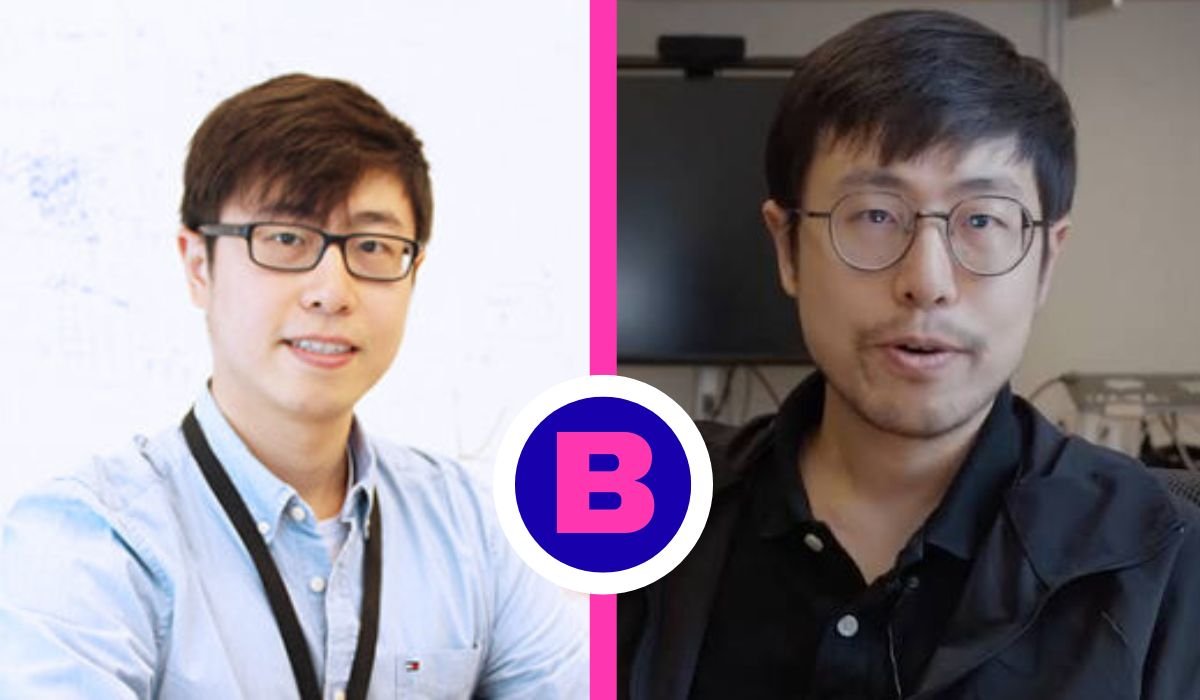
Mengye Ren is a Computer Scientist and Artificial Intelligence Researcher whose work sits at the intersection of Machine Learning, Computer Vision, Deep Learning, and Intelligent Agents. He is an Assistant Professor of Computer Science and Data Science at New York University, where he also runs the Agentic Learning AI Lab. His research has evolved from early work in Computer Vision and Few-Shot Learning to broader questions about how Artificial Intelligence systems can learn continuously, remember experiences, reason about their surroundings, and adapt to new situations.
What makes Mengye Ren’s research especially interesting is the connection between several major challenges in modern AI. Instead of treating an AI model as something that learns once from a fixed dataset, his research explores systems that can continue learning from experience. His recent work covers World Models, Embodied AI, Planning, Memory, Large Language Models, Reasoning, and Continual Learning. By 2026, his publication record shows a clear movement toward AI agents that can interact with complex environments and improve their abilities through ongoing learning.
Quick Bio Information
| Information | Details |
|---|---|
| Full Name | Mengye Ren |
| Current Institution | New York University |
| Current Position | Assistant Professor Of Computer Science And Data Science |
| Academic Unit | Courant Institute School Of Mathematics, Computing, And Data Science |
| Research Field | Artificial Intelligence And Machine Learning |
| Major Research Area | Machine Learning |
| Other Research Area | Computer Vision |
| Other Research Area | Deep Learning |
| Doctoral Degree | Ph.D. In Computer Science |
| Doctoral Institution | University Of Toronto |
| Previous Research Institution | Google Brain Toronto |
| Industry Experience | Uber Advanced Technologies Group And Waabi |
| Autonomous Driving Work | Self-Driving Vehicle Research |
| Current Lab | Agentic Learning AI Lab |
| Main Research Theme | Continually Learning And Adaptive AI |
| Related Research | Few-Shot Learning And Meta-Learning |
| Recent Direction | World Models And Embodied AI |
| Current Topics | Memory, Planning, Reasoning, And AI Agents |
Who Is Mengye Ren?
Mengye Ren is an academic researcher focused on developing more capable and adaptable Artificial Intelligence systems. At New York University, he holds an Assistant Professor position in Computer Science and Data Science and leads the Agentic Learning AI Lab. His official NYU profile describes his research as an effort to make Machine Learning more natural and human-like so that AI systems can continually learn, adapt, and reason in naturalistic environments.
That description helps explain the direction of his career. Mengye Ren’s work is not limited to one narrow AI problem. His publications cover Computer Vision, Meta-Learning, Few-Shot Learning, Autonomous Driving, Continual Learning, Visual Representation Learning, and more recent research involving World Models, Large Language Models, Memory, and Reasoning. This combination gives his career a broad but recognizable theme: finding better ways for machines to learn from information and use what they have learned in changing environments.
Education And Ph.D. At The University Of Toronto
Mengye Ren received his Ph.D. in Computer Science from the University of Toronto. His doctoral work developed around Machine Learning and related problems involving how AI systems can learn from limited or changing information. His Ph.D. thesis, titled “Open-World Machine Learning With Limited Labeled Data,” was published in 2022 and reflects an important theme in his research: AI should be able to operate in situations where labeled information is limited and the world is not completely known in advance.
This academic foundation is important for understanding his later research. Machine Learning systems often perform well when they are trained on large, carefully prepared datasets, but real environments are much less predictable. New objects appear, conditions change, and useful information may arrive gradually. Research into open-world learning, Few-Shot Learning, and Continual Learning addresses precisely these challenges and helped establish the intellectual direction that can be seen throughout Ren’s later work.
Mengye Ren’s Professional Career Before NYU
Before joining New York University, Mengye Ren developed experience across both academic and industrial research environments. His official biography states that he was a visiting faculty researcher at Google Brain Toronto, where he worked with Geoffrey Hinton. He also spent the period from 2017 to 2021 as a Senior Research Scientist at Uber Advanced Technologies Group and Waabi, working on self-driving vehicles.
This combination of academic and industry experience is significant. University research can provide room to investigate fundamental questions, while autonomous-driving research demands solutions to practical problems involving perception, prediction, planning, and decision-making. Ren’s career therefore provides a useful example of how theoretical Machine Learning research can connect with demanding real-world AI applications.
Work With Google Brain Toronto
Ren’s experience at Google Brain Toronto placed him in an influential research environment during a period of rapid development in Deep Learning. His official biography identifies him as a visiting faculty researcher there and notes that he worked with Geoffrey Hinton.
This part of his career fits naturally with his broader interests in representation learning and neural networks. His publication record includes work on topics such as robust Deep Learning, Few-Shot Learning, visual representations, and optimization. Although individual projects address different technical problems, they share a common question: how can neural systems learn useful representations and become more effective when faced with unfamiliar information?
Research At Uber ATG And Waabi
From 2017 through 2021, Mengye Ren worked as a Senior Research Scientist at Uber Advanced Technologies Group and Waabi on self-driving vehicles. His publication record from this period includes research connected to Autonomous Driving, Computer Vision, LiDAR, motion planning, traffic simulation, and visual attention.
Among the relevant publications are “SceneGen: Learning to Simulate Realistic Traffic Scenes,” “Perceive, Attend, and Drive: Learning Spatial Attention for Safe Self-Driving,” and “Perceive, Predict, and Plan: Safe Motion Planning Through Interpretable Semantic Representations.” His research also includes work on LiDAR object detection and closed-loop training for Autonomous Driving. These projects show how Machine Learning can be used to help vehicles understand their surroundings, anticipate what may happen next, and make safer decisions.
Mengye Ren At New York University
Today, Mengye Ren is an Assistant Professor of Computer Science and Data Science at New York University. He is part of the Courant Institute School of Mathematics, Computing, and Data Science and leads the Agentic Learning AI Lab.
His NYU role brings together several areas that previously appeared across different stages of his career. Computer Vision remains important, but his research has increasingly expanded toward intelligent agents, continual learning, memory, planning, and World Models. His lab’s direction reflects a larger shift in Artificial Intelligence from models that simply produce predictions toward systems that can interact with environments, build useful internal representations, and use experience to improve future behavior.
What Does Mengye Ren Research?
Mengye Ren’s research covers several connected areas of Artificial Intelligence. NYU identifies Deep Learning, Computer Vision, and Machine Learning as his primary research areas, while his own research publications demonstrate broader interests in Continual Learning, Few-Shot Learning, Meta-Learning, Embodied Learning, World Models, Planning, and AI Reasoning.
The common thread is adaptability. Traditional AI training usually assumes that a model can learn from a relatively stable collection of examples. Ren’s research asks what happens when the information keeps changing. An intelligent system may need to learn from new experiences, remember useful information, recognize unfamiliar situations, and decide what to do next. These questions are increasingly important as researchers attempt to build more capable AI Agents.
Machine Learning And Deep Learning
A significant part of Ren’s career has focused on Machine Learning and Deep Learning. One notable example is his 2018 ICML paper, “Learning to Reweight Examples for Robust Deep Learning,” which investigated ways of improving learning by changing how training examples influence a model. His publication record also includes work on optimization, neural architecture search, and representation learning.
These subjects may sound highly technical, but the underlying goal is practical. AI systems learn from examples, and the quality and usefulness of those examples can strongly affect performance. Research into better learning strategies can therefore help models become more reliable and adaptable. Ren’s work in this area provides an important foundation for his later research into more dynamic forms of machine intelligence.
Contributions To Computer Vision
Computer Vision has been another major part of Mengye Ren’s research. His earlier publications explored image question answering and Instance Segmentation, while later work moved into areas such as autonomous driving, visual representation learning, and video understanding.
His Computer Vision research is particularly interesting because it increasingly connects perception with learning over time. More recent projects investigate Egocentric Video, where cameras capture information from an embodied viewpoint. This type of data can provide a continuous record of activities and environments, creating new opportunities for AI systems to learn from experience rather than isolated images. That direction links traditional Computer Vision with Memory, Continual Learning, and Embodied AI.
Meta-Learning And Few-Shot Learning
Few-Shot Learning and Meta-Learning have played an important role in Ren’s academic development. Few-Shot Learning is concerned with situations where an AI system must learn something new from only a small number of examples. Meta-Learning, sometimes described as “learning to learn,” explores methods that allow a system to become better at adapting to new tasks.
Ren’s publications include “Meta-Learning for Semi-Supervised Few-Shot Classification,” “Incremental Few-Shot Learning With Attention Attractor Networks,” and “Wandering Within a World: Online Contextualized Few-Shot Learning.” These studies reflect a continuing interest in learning efficiently when information is limited or changing. This work also provides a bridge between conventional Machine Learning and the larger goal of creating AI that can adapt naturally to new circumstances.
Continual Learning And Human-Like AI
Continual Learning is central to the direction of Mengye Ren’s current research. Instead of training an AI system once and leaving it unchanged, Continual Learning considers how a model can keep learning as new experiences arrive. The challenge is not simply acquiring new knowledge; the system must also preserve useful previous knowledge and avoid forgetting important information.
Ren’s research page includes work on integrating present and past information in unsupervised Continual Learning, lifelong memory, and continual learning from Egocentric Video. His 2026 work, “Continual Visual and Verbal Learning Through a Child’s Egocentric Input,” pushes this idea toward a more naturalistic learning setting. His broader goal is to create AI systems capable of learning, adapting, and reasoning in ways that are more natural and human-like.
World Models, Planning, And Embodied AI
One of the most notable developments in Ren’s recent research is his growing focus on World Models and Embodied AI. A World Model can be understood as an internal representation that helps an AI system reason about how an environment works and what might happen next. Such models can be valuable for planning because an agent needs more than recognition; it needs some understanding of possible outcomes.
In 2026, Ren co-authored “AdaJEPA: An Adaptive Latent World Model” and “Temporal Straightening for Latent Planning,” while other projects explored latent motion models and visuomotor control. These studies show how his research is moving toward AI systems that can represent environments, anticipate changes, and use learned representations for longer-term decisions.
AI Agents, Reasoning, Memory, And Large Language Models
Ren’s recent work also reflects the rapid development of AI Agents and Large Language Models. His publications now include research into LLM forecasting, solution verification, in-context optimization, reasoning, memory transfer, and video-based question answering.
This does not mean his research has abandoned Computer Vision or traditional Machine Learning. Instead, these areas are increasingly being combined. An AI Agent may need to understand visual information, remember previous experiences, reason about a problem, and decide which action to take. Ren’s research on long-form Egocentric Videos and LifelongMemory is particularly relevant because it explores how AI can retrieve and use information from extended streams of experience.
Notable Research Papers And Publications
Mengye Ren has built a substantial publication record across multiple stages of AI research. His earlier work includes “Exploring Models and Data for Image Question Answering,” “End-to-End Instance Segmentation With Recurrent Attention,” and “Learning to Reweight Examples for Robust Deep Learning.” His later research includes Autonomous Driving, Few-Shot Learning, Visual Representation Learning, and Continual Learning.
His 2025 and 2026 publications show an especially broad research agenda. Examples include “PooDLe: Pooled and Dense Self-Supervised Learning From Naturalistic Videos,” “Memory Storyboard,” “StreamMem,” “Context Tuning for In-Context Optimization,” “HyperThink,” “Generative Recursive Reasoning,” and “Memory Transfer Learning.” Together, these publications illustrate the progression of his research from visual recognition and learning algorithms toward AI systems with stronger memory, reasoning, planning, and adaptation capabilities.
Teaching And Academic Contributions
As an Assistant Professor at NYU, Mengye Ren contributes to both research and education. His academic work covers Machine Learning and Data Science, while his broader teaching interests include Deep Learning and Embodied Learning and Vision. His position at the Courant Institute places his research within an institution that combines Mathematics, Computing, and Data Science.
Teaching is an important part of an academic research career because it allows complex ideas to be passed to the next generation of researchers and practitioners. In Ren’s case, topics such as Machine Learning, Computer Vision, and Embodied AI are fields that are changing quickly. His work therefore sits within a broader educational effort to help students understand not only how modern AI systems work, but also the deeper problems researchers are still trying to solve.
Why Mengye Ren’s AI Research Matters
The importance of Mengye Ren’s work can be understood through the limitations of many current AI systems. A model may perform extremely well on a specific benchmark while still struggling when conditions change. It may also have difficulty remembering information across long periods, learning from new experiences without forgetting old knowledge, or using what it sees to plan future actions.
Ren’s research addresses several of these challenges at once. Few-Shot Learning asks how systems can adapt from limited examples. Continual Learning examines how they can learn over time. Computer Vision helps them understand visual environments. World Models and Planning explore how they can anticipate possible outcomes. Memory and AI-Agent research examines how systems can use accumulated experience. Taken together, these areas point toward a more flexible form of Artificial Intelligence.
Mengye Ren’s Research Journey And Evolution
Looking across Mengye Ren’s career, there is a clear progression rather than a collection of unrelated projects. His earlier research explored Computer Vision, Image Question Answering, Instance Segmentation, Meta-Learning, and Few-Shot Learning. His industry work then brought these skills into Autonomous Driving, where AI had to perceive complicated environments and support prediction and planning. His later academic research increasingly addresses Continual Learning, Embodied Intelligence, World Models, Memory, and Reasoning.
The underlying question has remained remarkably consistent: how can machines learn more effectively from the world around them? In that sense, the evolution of Mengye Ren’s research reflects a wider evolution within Artificial Intelligence itself. The field is moving from systems designed mainly to recognize patterns toward systems expected to learn continuously, use context, remember experience, reason about uncertainty, and act in complex environments.
Conclusion
Mengye Ren’s career offers a useful view of how Artificial Intelligence research is changing. His work began across important areas such as Computer Vision, Deep Learning, Meta-Learning, and Few-Shot Learning before expanding through Autonomous Driving research and eventually into Continual Learning, Embodied AI, World Models, Memory, Planning, and Reasoning.
Today, his work at New York University focuses on a particularly ambitious question: how can AI systems become better learners that can continually adapt to natural environments? His 2026 research suggests that answering this question will require combining perception, memory, reasoning, planning, and learning rather than treating each capability as an isolated problem. That broader vision makes Mengye Ren an interesting researcher to follow as the field moves toward increasingly capable and adaptive AI Agents.
FAQs About Mengye Ren
Who Is Mengye Ren?
Mengye Ren is an Assistant Professor of Computer Science and Data Science at New York University. He is an Artificial Intelligence Researcher whose work includes Machine Learning, Computer Vision, Deep Learning, Continual Learning, Few-Shot Learning, World Models, and AI Agents. He also leads the Agentic Learning AI Lab at NYU.
Where Did Mengye Ren Earn His Ph.D.?
Mengye Ren earned his Ph.D. in Computer Science from the University of Toronto. His doctoral thesis, “Open-World Machine Learning With Limited Labeled Data,” was completed in 2022 and reflects his interest in learning when labeled information is limited and environments are open-ended.
What Does Mengye Ren Research?
His research covers Machine Learning, Deep Learning, and Computer Vision, with broader work involving Meta-Learning, Few-Shot Learning, Continual Learning, Embodied AI, World Models, Planning, Memory, and AI Reasoning. His recent publications increasingly focus on building AI systems that can learn and adapt through experience.
Has Mengye Ren Worked In Industry?
Yes. From 2017 to 2021, he was a Senior Research Scientist at Uber Advanced Technologies Group and Waabi, where he worked on Self-Driving Vehicles. This experience contributed to research involving Autonomous Driving, Computer Vision, perception, prediction, and planning.
What Is Mengye Ren’s Connection To Google Brain?
Before joining NYU, Mengye Ren was a visiting faculty researcher at Google Brain Toronto, where he worked with Geoffrey Hinton. This experience formed part of his broader career in Machine Learning and Artificial Intelligence research.
What Is Continual Learning?
Continual Learning is an approach in which an AI system learns from new information over time rather than being trained only once on a fixed dataset. A major challenge is allowing the system to acquire new knowledge while preserving useful knowledge from previous experiences. This idea is closely connected to Ren’s research interests in adaptive and more human-like AI.
What Is Mengye Ren Working On In 2026?
His 2026 research includes World Models, Latent Planning, Continual Visual And Verbal Learning, AI Reasoning, LLM Forecasting, Memory Transfer, Streaming Video Understanding, and Embodied AI. His official publication list includes projects such as “AdaJEPA,” “Temporal Straightening for Latent Planning,” “HyperThink,” and “Generative Recursive Reasoning.”
Learn more and explore exciting content on: Who Is Bora Kim? Biography, Career, Research, and Academic Journey









Leave a Reply