
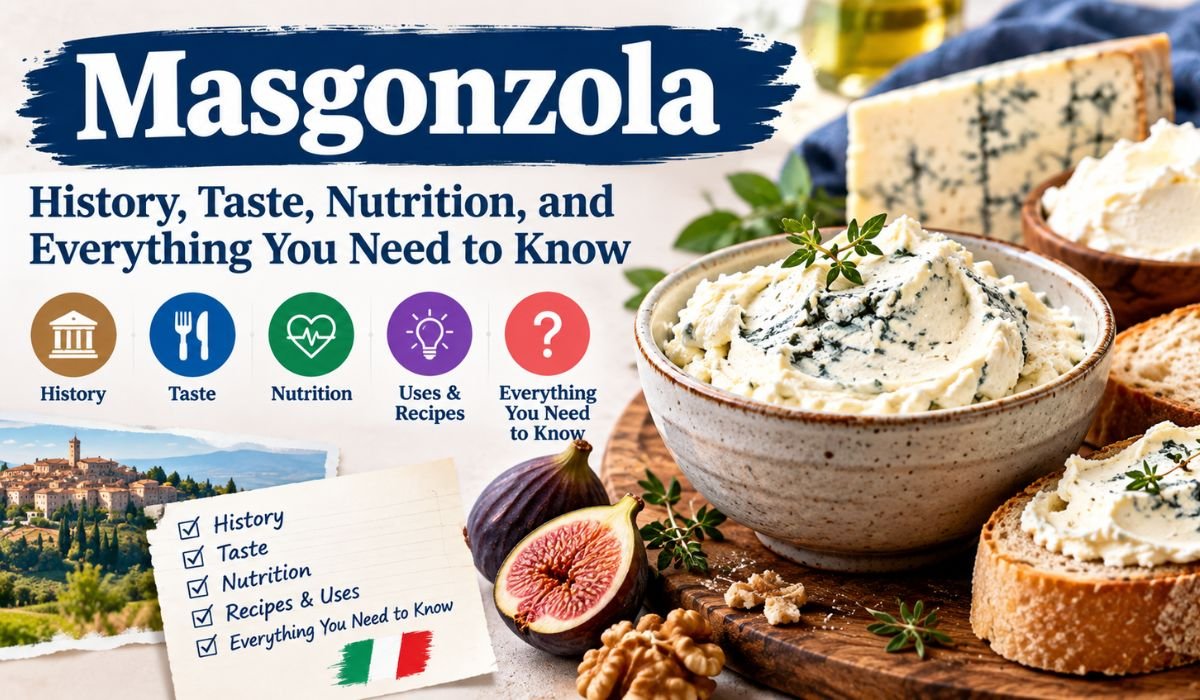
Masgonzola Is A Name That Can Easily Cause Confusion. At First, It Sounds Like The Name Of A Traditional Italian Cheese With A Long History, Much Like Gorgonzola Or Parmigiano Reggiano. In Reality, The Better-Supported Meaning Of Masgonzola Is Much Simpler: It Generally Refers To A Creamy Combination Of Gorgonzola And Mascarpone. The Two Ingredients Bring Very Different Qualities To The Table. Gorgonzola Supplies The Salty, Tangy, Blue-Cheese Character, While Mascarpone Contributes A Smooth, Rich, Mild And Buttery Texture. The Result Is A Soft, Creamy Cheese Specialty That Can Be Easier To Enjoy Than Strong Blue Cheese On Its Own.
This Distinction Matters Because Some Online Descriptions Present Masgonzola As An Independent Historic Cheese With Its Own Ancient Origin, Fixed Aging Periods, Varieties And Traditional Production Rules. Reliable Evidence Does Not Support That Interpretation. Gorgonzola, By Contrast, Has A Clearly Defined Protected Designation Of Origin, Or PDO, With Official Production Requirements. Masgonzola Does Not Have A Separate Equivalent Protected Status In The Sources Reviewed.
Quick Bio Information
| Detail | Information |
|---|---|
| Name | Masgonzola |
| Common Meaning | Gorgonzola And Mascarpone Combination |
| Main Ingredients | Gorgonzola And Mascarpone |
| Food Type | Creamy Cheese Specialty |
| Cheese Character | Blue-Cheese And Creamy |
| Main Flavor | Tangy, Savory, Buttery And Mildly Blue |
| Texture | Soft, Rich And Creamy |
| Main Blue-Cheese Component | Gorgonzola |
| Creamy Component | Mascarpone |
| Milk Allergen | Yes |
| Separate Masgonzola PDO | No Separate PDO Established |
| Related Protected Cheese | Gorgonzola PDO |
| Common Appearance | Creamy White With Blue-Veined Portions |
| Common Uses | Pasta, Risotto, Sauces And Appetizers |
| Serving Style | Spreadable, Crumbled Or Melted |
| Flavor Intensity | Usually Milder Than Plain Gorgonzola |
| Nutrition | Varies By Product And Recipe |
| Storage | Refrigerated |
| Best Buying Approach | Check The Product Label And Ingredients |
| Main Appeal | Balance Between Creaminess And Blue-Cheese Flavor |
What Is Masgonzola?
Masgonzola Is Generally Used For A Preparation That Combines Gorgonzola With Mascarpone. The Name Itself Appears To Be A Straightforward Combination Of The Two Names: “Mas” From Mascarpone And “Gonzola” From Gorgonzola. This Makes Sense When You Consider What The Finished Product Does. Mascarpone Is Mild, Creamy And Rich, While Gorgonzola Provides The More Noticeable Blue-Cheese Flavor. Together, They Create A Product With More Creaminess And Less Sharpness Than Gorgonzola Alone.
Masgonzola Does Not Necessarily Look The Same In Every Product. Some Versions Can Be Blended Into A Relatively Even Creamy Mixture, While Others May Have Visible Layers Of White Mascarpone And Blue-Veined Gorgonzola. Some Commercial Products May Not Use The Word Masgonzola At All And Instead Use Descriptions Such As Gorgonzola With Mascarpone Or Gorgonzola E Mascarpone. That Is Useful To Know When Shopping Because Searching Only For The Exact Word “Masgonzola” May Cause You To Miss Similar Products.
The History And Possible Origins Of Masgonzola
The History Of Masgonzola Needs To Be Handled Carefully. There Is Strong Evidence For The Long History Of Gorgonzola And For The Established Culinary Use Of Mascarpone, But There Is Not Equivalent Evidence Showing That Masgonzola Is An Ancient, Independently Recognized Cheese. It Is More Accurate To Connect Masgonzola To The Culinary Combination Of Two Established Italian Dairy Products Rather Than To Invent A Centuries-Old Origin Story.
Gorgonzola Has A Particularly Well-Documented Identity. European Union Documentation Recognizes Gorgonzola As A PDO Cheese, And Its Production Is Associated With Defined Areas Of Piedmont And Lombardy. The official specification describes Gorgonzola As A Blue-Veined Cheese Made From Pasteurized Whole Cow’s Milk, With Characteristic Blue-Green Or Grey-Blue Veins Produced By Mold Development.
Masgonzola Is Better Understood Against That Background. It Takes The Recognizable Character Of Gorgonzola And Combines It With The Softness Of Mascarpone. The exact date when the term Masgonzola was first coined is not clearly established by reliable sources, and there is no verified single inventor who can confidently be credited with creating it. That makes a cautious description more useful than an attractive but unsupported historical story.
Is Masgonzola A Real Cheese?
Yes, Masgonzola Refers To A Real Food Preparation, But Calling It A Separate Protected Cheese Variety Would Be Misleading. This Is An Important Difference. A Food Can Have A Genuine Culinary Identity Without Having Its Own PDO Or Other Protected Designation.
Gorgonzola Has Official Protection. The European Union’s specification identifies Gorgonzola as A PDO Cheese And Defines Its Ingredients, Appearance, Production Area And Other Characteristics. The Gorgonzola Protection Consortium Also Continues To Monitor And Promote The Protected Product. In 2025, Gorgonzola PDO Production Exceeded 5.4 Million Wheels, Showing Just How Established The Underlying Cheese Is.
Masgonzola Does Not Have A Comparable Separate Specification In The Evidence Reviewed. It Is Therefore More Helpful To Describe It As A Gorgonzola-Mascarpone Specialty. This Also Explains Why Different Products Can Have Different Ratios, Textures And Presentations.
What Does Masgonzola Taste Like?
The Taste Of Masgonzola Comes From The Contrast Between Its Two Main Components. Gorgonzola Brings Tanginess, Saltiness, Savory Depth And The Earthy Character Associated With Blue Cheese. Mascarpone Is Much Gentler. Its Rich, Creamy Character Rounds Off Some Of The More Aggressive Notes Of Blue Cheese.
That Balance Can Make Masgonzola Appealing To People Who Enjoy The Idea Of Blue Cheese But Do Not Want An Extremely Sharp Or Pungent Experience. Instead Of Allowing The Blue Cheese To Dominate, The Mascarpone Creates A Softer Background. The Finished Flavor Can Feel Creamy, Buttery, Tangy And Mildly Sharp At The Same Time.
The Exact Taste Depends On The Product. A Preparation Containing More Gorgonzola Will Naturally Have A Stronger Blue-Cheese Character, While A More Mascarpone-Heavy Version Will Be Softer And Milder. There Is No Universal Masgonzola Formula, So Readers Should Not Expect Every Product To Taste Identically.
What Does Masgonzola Look And Feel Like?
Masgonzola Is Usually Associated With A Soft And Creamy Texture. The Mascarpone Component Makes It Particularly Rich And Spreadable, While Gorgonzola Adds The Blue-Veined Appearance And More Complex Dairy Character. Depending On How The Product Is Made, The Two Components May Be Blended Or Arranged In Visible Layers.
This Is One Of The Most Interesting Visual Features Of Masgonzola. A Product Can Show Pale, Creamy Areas Alongside Blue-Green Veined Portions. Those Veins Come From The Gorgonzola Component Rather Than From Some Separate Masgonzola Mold Tradition.
It Is Also Important Not To Assume That Every Blue Or Green Marking On A Product Is The Same. Genuine Gorgonzola Has Characteristic Veining Associated With Mold Development Under Controlled Production Conditions. Unexpected Mold On A Finished Product, Particularly Mold With An Unusual Color Or Appearance, Should Not Automatically Be Assumed To Be Part Of The intended cheese.
How Is Masgonzola Made?
Because Masgonzola Does Not Have One Universal Production Standard, There Is No Single Official Masgonzola Manufacturing Process. Instead, The Basic Idea Is To Bring Together Gorgonzola And Mascarpone In A Finished Preparation.
Understanding How Gorgonzola Is Made Helps Explain The Blue-Cheese Side Of The Product. Official Gorgonzola Production Uses Pasteurized Whole Cow’s Milk, Lactic Ferments, Rennet, Salt And Penicillium Spores. After Coagulation, The Curd Is Drained And The Cheese Goes Through Salting And Maturation. The Wheels Are Later Pierced To Allow Air Into The Cheese, Helping The Cultures Produce The Familiar Blue-Green Veins.
Mascarpone Provides A Completely Different Texture. Rather Than Being A Blue-Veined Aged Cheese, It Is Known For Its Soft, Creamy Character. When It Is Combined With Gorgonzola, The Finished Specialty Takes On Qualities Of Both Ingredients. Some commercial preparations use layers, while others combine the components more thoroughly.
What Creates The Blue Veins?
The Blue Veins Associated With Masgonzola Come From The Gorgonzola Side Of The Combination. In Gorgonzola Production, Penicillium Cultures Are Used As Part Of The Cheesemaking Process. The cheese is later pierced, allowing oxygen to reach areas inside the paste and encouraging the development of the characteristic blue-green marbling.
This Is A Good Example Of Why Blue Cheese Should Not Simply Be Described As “Moldy Cheese.” The Veining Is A Controlled Part Of Production. Cheesemakers Manage Cultures, Moisture, Temperature, Salt And Air Exposure To Create A Desired Result.
The Gorgonzola PDO Specification Specifically Describes The Characteristic Blue-Green And Grey-Blue Veins As Resulting From Mold Development. That Controlled Process Is What Gives The Cheese Its Recognizable Appearance And Much Of Its Distinctive Flavor.
Masgonzola Varieties And Product Differences
It Is Better Not To Present Young Masgonzola, Aged Masgonzola, Cow-Milk Masgonzola And Mixed-Milk Masgonzola As Official Standardized Varieties. Those Categories May Appear In Online descriptions, But The Evidence Does Not Establish Them As A Formal Classification System For Masgonzola.
Instead, Product Differences Are More Likely To Come From The Particular Gorgonzola Used, The Amount Of Mascarpone, The Way The Two Are Combined And The Conditions Under Which The Product Is Stored. Some Versions May Be Very Mild And Creamy, While Others Can Have A More Noticeable Blue-Cheese Character.
This Flexibility Is Part Of The Appeal. Unlike A Protected Cheese With A Highly Defined Specification, A Gorgonzola-Mascarpone Specialty Can Be Designed For Different Culinary Uses. Still, Consumers Should Read The Label Rather Than Assuming That Every Product Called Masgonzola Has The Same Ingredients Or Nutritional Values.
Young And Aged Masgonzola: What Is The Difference?
There Is No Official Universal Aging Scale For Masgonzola, So It Would Be Incorrect To Assign Fixed Masgonzola Aging periods Without Referring To A Specific Manufacturer. However, The Maturity Of The Gorgonzola Component Can Influence The Character Of The Finished Product.
Traditional Gorgonzola Itself Has Defined Maturation Categories. Under The European Specification, Mild Large Wheels Mature For At Least 50 Days And Up To 150 Days, While Stronger Types Have Longer Minimum And Maximum Maturation Periods.
When A More Delicate Gorgonzola Is Used In A Mascarpone Combination, The Result Can Be Relatively Gentle And Creamy. A More Strongly Flavored Gorgonzola Can Give The Finished Product Greater Depth And Pungency. Therefore, It Is More Accurate To Talk About The Character Of The Gorgonzola Used Rather Than Claiming That Masgonzola Itself Has One Fixed Young-to-aged system.
How To Eat And Enjoy Masgonzola
Masgonzola Is Particularly Useful In Dishes Where You Want Blue-Cheese Flavor Without Losing Creaminess. Its Soft Texture Makes It Easy To Spread On Bread, Crostini And Crackers. It Can Also Be Added To Warm Dishes, Where The Cheese Melts Into A Rich Sauce.
Pasta And Risotto Are Natural Matches. A Small Amount Can Bring Creaminess, Tanginess And Savory Depth To A Sauce. Because The Cheese Is Rich, It does not always need to be used in large quantities. A little can be enough to change the character of an entire dish.
Masgonzola Can Also Work On Pizza, Flatbreads, Appetizers And Cheese Boards. Its Creaminess makes it particularly useful when a recipe needs both richness and the unmistakable flavor of blue cheese. It can also be paired with sweet ingredients to create a pleasant contrast.
Best Foods And Drinks To Pair With Masgonzola
Sweet And Fresh Foods Can Work Especially Well With Masgonzola Because They Balance Its Salty And Tangy Character. Pears, Apples, Figs, Grapes, Honey And Dried Fruit Are Natural Choices. Walnuts And Other Nuts Add Texture While Complementing The Cheese’s Richness.
Masgonzola Can Also Be Served With Bread, Crackers And Mildly Flavored Appetizers. The Goal Is Usually To Create Contrast Rather Than Put Several Extremely Strong Ingredients Together.
Wine Pairings Depend On The Strength Of The Gorgonzola Used. Rich Red Wines Can Work With More Powerful Versions, While Sweet Wines Can Create A Particularly Interesting Sweet-and-savory Contrast. Sparkling Wines May Also Work When Their Freshness Helps Cut Through The Richness. The Best Pairing Ultimately Depends On The Specific Product Rather Than The Word Masgonzola Alone.
Masgonzola Nutrition: Calories, Protein, Fat And Minerals
There Is No Single Reliable Nutrition Panel For All Masgonzola Because There Is No One Universal Recipe. A Product Made With Different Amounts Of Gorgonzola And Mascarpone Will Naturally Have Different Calories, Fat, Protein And Sodium Levels. For That Reason, Previously Published Online Figures That Give One Exact Masgonzola Nutrition Profile Should Be Treated With Caution Unless They Refer To A Specific Product.
The Ingredients Nevertheless Give Us A Useful General Picture. Gorgonzola Provides Protein, Fat, Calcium And Other Dairy Nutrients, While Mascarpone Is Particularly Rich And Creamy. Combining Them creates a food that can be energy-dense, so serving size matters.
Gorgonzola’s own nutritional composition is also affected by production and formulation. The Gorgonzola Consortium reports average salt content of around 1.6 grams per 100 grams for Gorgonzola PDO, while noting that values can vary. Masgonzola may differ because it contains mascarpone as well. Anyone following a sodium-restricted diet should therefore check the nutrition label of the actual product.
Is Masgonzola Healthy?
Masgonzola Can Fit Into A Balanced Diet, But It Is Best Viewed As A Rich Food Rather Than A Food To Eat Without Portion Awareness. Dairy Cheese Can Contribute Protein And Minerals Such As Calcium And Phosphorus, Yet Creamy Cheese Specialties Can Also Supply Significant Fat, Calories And Sodium.
The Most Useful Approach Is Balance. A modest serving alongside vegetables, fruit, whole grains or another balanced meal can provide flavor without making cheese the entire meal. People Who Need To Limit Saturated Fat Or Sodium Should Pay Particular Attention To The Nutrition Panel.
It Is Also Important To Avoid Overstating Health Claims. Masgonzola Should Not Be Described As A Treatment For Any Disease, And The Presence Of Fermentation Or Cheese Cultures Does Not Automatically Mean That A Product Is A Proven Probiotic Food. The Actual Ingredients And Label Should Guide Dietary Decisions.
Masgonzola In Pasta, Pizza, Salads And Other Recipes
One Of The Strongest Reasons To Try Masgonzola Is Its Culinary Flexibility. In Pasta, It Can Melt Into A Creamy Sauce And Add Tangy Depth Without Requiring A Large Amount Of Additional Cheese. In Risotto, It Can Be Stirred In Near The End Of Cooking To Create A Rich Finish.
On Pizza And Flatbread, It Can Be Used With Pears, Walnuts, Mushrooms Or Other Ingredients That Complement Blue Cheese. In Salads, A Small Amount Can Add A Strong Savory Element To Greens And Sweet Fruit.
It Also Works In Simple Appetizers. Spread It On Toasted Bread And Add Honey Or Fresh Fruit For A quick combination of salty, creamy and sweet flavors. These uses show why a Gorgonzola-Mascarpone preparation can be more approachable than eating a strong blue cheese by itself.
How To Store Masgonzola Properly
Because Masgonzola Is A Refrigerated Dairy Product, Proper Storage Is Essential. Keep It Cold And Follow The Storage Instructions Printed On The Package. Since Different Products Can Have Different Formulations And Packaging, A Universal Shelf-Life Rule Is Not Reliable.
When A Product Has Been Opened, Good Food-Handling Habits Matter. Keep It Wrapped As Recommended By The Manufacturer And Avoid Leaving It At Room Temperature For Long Periods. If The Cheese Develops Unexpected Mold, An Unusual Odor, A Slimy Texture Or Another Sign Of Spoilage Outside Its Normal Characteristics, It Should Be Treated With Caution.
The distinction between expected blue veining and unexpected spoilage is particularly important. The blue character associated with Gorgonzola is deliberately created during production. It does not mean that every new patch of mold that appears on an opened cheese is automatically safe.
Masgonzola Vs. Gorgonzola: Are They The Same?
Masgonzola And Gorgonzola Are Not The Same Thing. Gorgonzola Is A Distinct Italian Blue Cheese With PDO Protection And A Detailed Official Production Specification. Masgonzola Generally Refers To A Combination Of Gorgonzola And Mascarpone.
The Difference Can Be Understood In One Simple Way: Gorgonzola Is The Blue Cheese, While Masgonzola Uses Gorgonzola As One Component Of A Creamier Preparation.
The official Gorgonzola specification requires pasteurized whole cow’s milk and defines the cheese’s appearance, maturation and production characteristics. The Gorgonzola Consortium also identifies the protected cheese as a product made within designated provinces of Piedmont and Lombardy.
This distinction is useful when shopping. If a package says Gorgonzola PDO, you are buying the protected cheese. If it describes Gorgonzola with Mascarpone, you are looking at the type of combination generally associated with Masgonzola.
Final Thoughts
Masgonzola Is Most Interesting When Its Name Is Understood Correctly. Rather Than Treating It As A Mysterious Ancient Cheese Or An Alternative Spelling Of Gorgonzola, It Is More Accurate To Think Of It As A Creamy Gorgonzola-And-Mascarpone Specialty. Gorgonzola Provides The Tangy, Savory Blue-Cheese Character, While Mascarpone Brings Softness, Richness And A Milder Finish.
That Combination Makes Masgonzola Useful In The Kitchen. It Can Be Spread On Bread, Melted Into Pasta Or Risotto, Added To Pizza And Flatbread, Or Served With Fruit, Nuts And Honey. Its Exact Taste And Nutrition Depend On The Product, So Checking The Label Is More Reliable Than Relying On Generic Numbers Found Online.
The Biggest Lesson Is Perhaps The Simplest One: Masgonzola Does Not Need An Elaborate Myth To Be Interesting. Its Appeal Comes From The Contrast Between Two Familiar Italian Dairy Foods. Understanding That Difference Makes It Easier To Buy, Taste, Store And Cook With It—and It Also Helps Separate Reliable Cheese Information From The Many unsupported descriptions that have appeared online.
FAQs About Masgonzola
What Is Masgonzola?
Masgonzola Generally Refers To A Cheese Specialty Combining Gorgonzola And Mascarpone. The Gorgonzola Provides Blue-Cheese Flavor And Veining, While Mascarpone Adds A Soft, Rich And Creamy Texture.
Is Masgonzola The Same As Gorgonzola?
No. Gorgonzola Is A Protected Italian PDO Blue Cheese With Official Production Rules. Masgonzola Generally Describes A Combination Of Gorgonzola And Mascarpone, So The Two Names Should Not Be Treated As Synonyms.
What Does Masgonzola Taste Like?
Masgonzola Usually Combines Tangy, Salty And Earthy Blue-Cheese Notes With The Mild, Buttery Richness Of Mascarpone. The Result Is Generally Creamier And Softer In Flavor Than Gorgonzola Alone, Although The Exact Taste Depends On The Product.
Is Masgonzola A Traditional Italian Cheese?
It Is Better Described As A Gorgonzola-Mascarpone Specialty Than As A Separately Protected Traditional Italian Cheese. Gorgonzola Has A Well-Documented PDO Identity, While No Separate Masgonzola PDO Standard Has Been Established In The Sources Reviewed.
Is Masgonzola Healthy?
Masgonzola Can Contribute Dairy Protein And Minerals, But It Can Also Be Rich In Fat, Calories And Sodium. Because There Is No Single Standardized Recipe, The Nutrition Can Vary Between Products. Checking The Specific Nutrition Label Is The Best Way To Understand Its Nutritional Content.
How Do You Eat Masgonzola?
Masgonzola Can Be Spread On Bread Or Crackers, Added To Pasta And Risotto, Melted Into Sauces, Used On Pizza Or Flatbread, Or Served With Fruit, Nuts And Honey. Its Creamy Texture Makes It Especially Convenient For Sauces And Spreads.
How Should Masgonzola Be Stored?
Keep Masgonzola Refrigerated And Follow The Storage Instructions On Its Packaging. After Opening, Keep It Properly Wrapped And Avoid Leaving It At Room Temperature For Extended Periods. If Its Appearance, Smell Or Texture Changes In A Way That Suggests Spoilage, It Should Not Be Assumed To Be Safe.
Why Does Masgonzola Have Blue Veins?
The Blue Character Comes From The Gorgonzola Component. In Gorgonzola Production, Penicillium Cultures And Controlled Air Exposure During Maturation Create The Characteristic Blue-Green Veining. The Cheese Is Pierced During Production To Allow Air To Reach The Cultures Inside.
Learn more and explore exciting content on: Christopher Harvest: Biography, Career, Family, and Life Story






Leave a Reply