
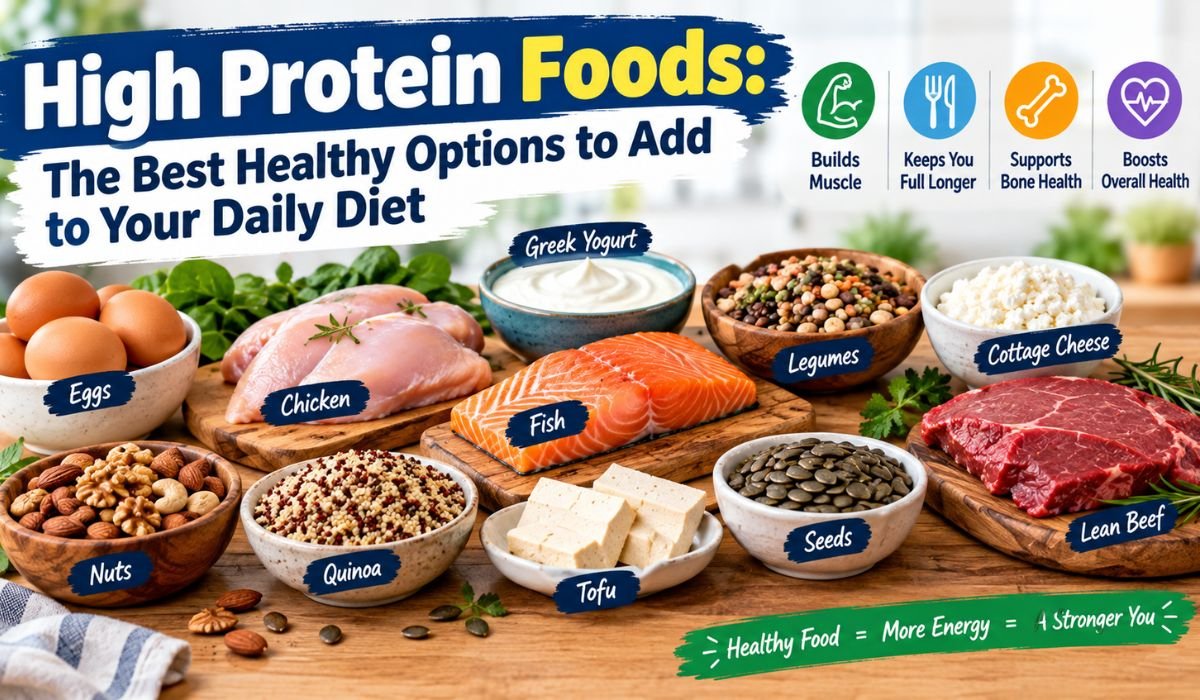
Choosing The Right Foods Can Make A Big Difference To Your Health, Energy, And Overall Well-Being. Among The Most Important Nutrients Your Body Needs Is Protein, Which Helps Build And Repair Muscles, Supports Immune Function, And Keeps Many Essential Body Processes Working Properly. Fortunately, You Do Not Need An Expensive Diet Or Complicated Meal Plan To Get Enough Of It. Many Everyday Foods Are Excellent Sources Of Protein.
The Best High Protein Foods Include Eggs, Chicken, Fish, Greek Yogurt, Lentils, Beans, Nuts, Seeds, Tofu, And Other Nutritious Options. Some Come From Animals, While Others Are Entirely Plant-Based. Each Offers A Different Combination Of Protein, Vitamins, Minerals, Healthy Fats, And Other Nutrients.
Whether You Want To Maintain Muscle, Improve Your Eating Habits, Manage Your Weight, Or Simply Prepare More Balanced Meals, Understanding Protein Can Help You Make Better Food Choices. This Guide Explains The Best Protein-Rich Foods, How Much Protein You May Need, Their Health Benefits, And Simple Ways To Include Them In Your Daily Diet.
Quick Bio Information: High Protein Foods At A Glance
| Fact | Helpful Information |
|---|---|
| Main Nutrient | Protein Is Made From Amino Acids |
| Essential Amino Acids | The Body Needs Nine From Food |
| Standard Adult RDA | 0.8 Grams Per Kilogram Of Body Weight Daily |
| Egg Protein | About 6 Grams Per Large Egg |
| Milk Protein | About 8 Grams Per Cup |
| Cooked Lentils | About 18 Grams Per Cup |
| Cooked Chickpeas | About 14–15 Grams Per Cup |
| Cooked Quinoa | About 8 Grams Per Cup |
| Chicken Breast | About 30–31 Grams Per 100 Grams Cooked |
| Salmon | About 22–25 Grams Per 100 Grams Cooked |
| Greek Yogurt | Often 15–18 Grams Per 170-Gram Serving |
| Plant Protein Sources | Beans, Lentils, Soy, Nuts, Seeds, And Grains |
| Complete Plant Proteins | Soy And Quinoa Are Examples |
| Muscle Support | Protein Helps Repair And Maintain Muscle Tissue |
| Weight Management | Protein Can Support Satiety And Lean-Mass Retention |
| Food Quality | Consider Saturated Fat, Sodium, Fiber, And Calories |
| Budget-Friendly Choices | Eggs, Beans, Lentils, Peanuts, And Yogurt |
| Protein Supplements | Useful For Some People, But Not Essential For Everyone |
These Figures Are Approximate And Can Vary By Serving Size, Product, And Preparation Method. They Are Intended As General Nutrition Information Rather Than Personalized Medical Advice.
What Is Protein And Why Does Your Body Need It?
Protein Is One Of The Three Main Macronutrients, Along With Carbohydrates And Fats. Your Body Uses It To Build And Maintain Muscles, Skin, Bones, And Other Tissues. Protein Also Helps Produce Enzymes, Hormones, Antibodies, And Other Substances Needed For Normal Body Functions.
Protein Is Made From Smaller Units Called Amino Acids. Your Body Can Produce Some Amino Acids, But Nine Essential Amino Acids Must Come From Food. Eating A Variety Of Protein-Rich Foods Helps Supply These Essential Nutrients. Protein Is Especially Important During Growth, Recovery From Illness, And Periods Of Physical Training. Older Adults Also Need To Pay Attention To Protein Intake Because Muscle Mass And Strength Can Decline With Age. However, Protein Works Best As Part Of A Balanced Diet That Also Provides Enough Energy, Healthy Fats, Carbohydrates, Vitamins, Minerals, And Fiber.
How Much Protein Do You Need Every Day?
Your Daily Protein Requirement Depends On Your Body Weight, Age, Activity Level, And Health. For Most Healthy Adults, The Standard Recommended Dietary Allowance Is 0.8 Grams Of Protein Per Kilogram Of Body Weight Per Day. This Equals Approximately 0.36 Grams Per Pound. For Example, A Person Weighing 75 Kilograms Needs About 60 Grams Of Protein Daily To Meet This Basic Recommendation.
A Person Weighing 60 Kilograms Would Need Approximately 48 Grams, While Someone Weighing 90 Kilograms Would Need Around 72 Grams. These Figures Are General Estimates Rather Than Personalized Targets. People Who Exercise Intensely, Participate In Competitive Sports, Are Pregnant Or Breastfeeding, Or Are Recovering From Certain Illnesses May Have Different Needs. Older Adults May Also Benefit From Individualized Advice To Help Maintain Muscle. The Best Approach Is To Consider Your Overall Diet And Lifestyle Instead Of Assuming That Everyone Needs A High-Protein Diet.
The Best High Protein Foods For Your Daily Diet
Many Foods Can Help You Meet Your Protein Needs. Eggs, Lean Poultry, Fish, Dairy Products, Beans, Lentils, Soy Foods, Nuts, And Seeds Are Among The Most Useful Options. The Best Choice Depends On Your Budget, Dietary Preferences, Nutritional Needs, And The Other Nutrients A Food Provides.
Chicken And Fish Are Rich In High-Quality Protein, While Lentils And Beans Supply Protein Along With Fiber. Greek Yogurt Offers Protein And Calcium, And Eggs Provide Essential Amino Acids Along With Several Vitamins. Soy Foods Such As Tofu And Tempeh Are Particularly Useful For People Who Prefer Plant-Based Meals. Rather Than Depending On One Food, Try Including Different Protein Sources Throughout The Week. Variety Makes Meals More Interesting And Helps You Obtain A Broader Range Of Nutrients.
Eggs, Chicken, And Fish
Eggs Are Convenient, Affordable, And Easy To Prepare. One Large Egg Contains Approximately Six Grams Of Protein, Although The Exact Amount Depends On Its Size. Eggs Also Provide Vitamin B12, Choline, And Other Nutrients. Boiled Eggs, Vegetable Omelets, And Scrambled Eggs Can Make Simple Breakfasts Or Snacks.
Chicken And Turkey Are Popular Lean Protein Sources. Around 100 Grams Of Cooked Skinless Chicken Breast Provides Approximately 30 To 31 Grams Of Protein. Grilling, Baking, Or Roasting Poultry Can Help Limit Added Fat. Fish Is Another Valuable Choice. Salmon Provides Protein And Omega-3 Fatty Acids, While Other Fish Offer Different Nutritional Benefits. Choose A Variety Of Seafood And Follow Local Advice About Mercury Exposure, Especially During Pregnancy. Replacing Some Processed Meat With Fish, Eggs, Or Lean Poultry Can Improve The Overall Quality Of Your Diet.
Dairy Products, Beans, Lentils, And Chickpeas
Milk, Yogurt, Greek Yogurt, And Cottage Cheese Can Make Protein Intake Easier. One Cup Of Cow’s Milk Usually Provides About Eight Grams Of Protein, While A Typical 170-Gram Serving Of Greek Yogurt May Supply Around 15 To 18 Grams, Depending On The Brand. Dairy Foods Also Provide Calcium And Other Nutrients. Choose Unsweetened Yogurt When You Want To Limit Added Sugar, And Compare Labels Because Protein Content Varies.
Plant-Based Options Are Equally Valuable. One Cup Of Cooked Lentils Provides Approximately 18 Grams Of Protein, While Cooked Chickpeas Offer Around 14 To 15 Grams Per Cup. Beans And Lentils Also Supply Fiber, Folate, Potassium, And Iron. They Work Well In Soups, Curries, Salads, Stews, And Rice Dishes. Dried Legumes Can Be Especially Economical, Making Them Practical High Protein Foods For Families And People Planning Meals On A Budget.
Nuts, Seeds, Tofu, And Quinoa
Nuts And Seeds Provide Protein Along With Unsaturated Fats, Fiber, And Minerals. A 28-Gram Serving Of Almonds Contains Around Six Grams Of Protein. Pumpkin Seeds, Peanuts, Chia Seeds, And Peanut Butter Can Also Contribute To Daily Protein Intake. Because Nuts And Seeds Are Energy-Dense, Reasonable Portions Are Helpful, Particularly If You Are Monitoring Your Total Calorie Intake.
Tofu, Tempeh, Edamame, And Soybeans Offer Versatile Plant-Based Protein. Firm Tofu Can Provide Roughly Eight To 17 Grams Of Protein Per 100 Grams, Depending On Its Type. Quinoa Is Another Useful Food Because It Contains All Nine Essential Amino Acids. One Cup Of Cooked Quinoa Provides About Eight Grams Of Protein And Around Five Grams Of Fiber. Oats And Other Whole Grains Also Contribute Protein, Although They Usually Work Best Alongside More Concentrated Sources Such As Beans, Eggs, Dairy, Or Soy.
High Protein Foods List: Protein Per Serving
Understanding Serving Sizes Makes It Easier To Compare Foods. Cooked Chicken Breast Provides About 31 Grams Of Protein Per 100 Grams, While Cooked Salmon Usually Provides Around 22 To 25 Grams. One Large Egg Supplies About Six Grams, And One Cup Of Milk Provides Approximately Eight Grams. Cooked Lentils Offer Around 18 Grams Per Cup, And Cooked Quinoa Provides About Eight Grams Per Cup.
These Numbers Are Estimates, Not Exact Values For Every Product. Preparation Methods, Water Content, Food Variety, And Brand Differences Can Affect The Final Amount. For The Most Accurate Information, Check Nutrition Labels Or A Reliable Food Database. Remember That A Food Providing Less Protein Per Serving Can Still Be Valuable Because It May Supply Fiber, Healthy Fats, Or Important Micronutrients. The Goal Is To Build A Nutritious Eating Pattern, Not Simply To Choose The Food With The Highest Number.
Animal Protein Vs. Plant Protein
Animal Protein Comes From Foods Such As Meat, Fish, Eggs, And Dairy Products. Many Of These Foods Supply All Nine Essential Amino Acids In Useful Amounts. They Can Also Provide Nutrients Such As Vitamin B12, Iron, Zinc, And Calcium, Depending On The Food. However, Some Animal Foods, Particularly Fatty And Processed Meats, Can Contain Large Amounts Of Saturated Fat Or Sodium.
Plant Protein Comes From Beans, Lentils, Peas, Soy, Nuts, Seeds, And Grains. These Foods Can Provide Fiber And Other Nutrients That Are Less Abundant In Many Animal Products. Soy And Quinoa Are Complete Plant Protein Sources, While Many Other Plant Foods Have Different Essential Amino Acid Profiles. Eating A Variety Of Plant Proteins Throughout The Day Can Supply The Amino Acids Your Body Needs. A Healthy Diet Can Include Both Animal And Plant Protein, But Emphasizing Beans, Lentils, Nuts, And Other Nutritious Plant Foods Is A Practical Way To Improve Dietary Variety.
Health Benefits Of Eating Enough Protein
Adequate Protein Supports Muscle Maintenance, Tissue Repair, Growth, And Normal Immune Function. It Is Particularly Important When Your Body Is Building Or Repairing Tissue, Such As During Strength Training Or Recovery From Illness. Protein Also Helps Maintain Lean Body Mass As Part Of A Balanced Diet.
Protein-Rich Foods Can Provide Benefits Beyond Protein Itself. Lentils Supply Fiber, Fish Can Provide Omega-3 Fatty Acids, Dairy Products Contribute Calcium, And Nuts Offer Unsaturated Fats. Choosing Foods With These Additional Nutrients Helps Support Overall Health. However, Eating More Protein Does Not Automatically Make A Person Healthier. Once Your Needs Are Met, The Quality Of Your Overall Diet, Regular Physical Activity, Sleep, And Other Lifestyle Habits Remain Important.
Can High Protein Foods Help With Weight Loss?
High Protein Foods Can Fit Into A Weight-Management Plan Because Protein Can Help You Feel Satisfied After Eating. Protein Also Helps Preserve Lean Muscle During Weight Loss, Especially When Combined With Suitable Physical Activity. Eggs, Fish, Plain Greek Yogurt, Beans, Lentils, Tofu, And Lean Poultry Can All Be Useful Choices.
However, Weight Loss Still Depends On The Overall Relationship Between Energy Intake And Energy Expenditure. Some Protein-Rich Foods, Including Nuts, Cheese, Fatty Meats, And Certain Shakes, Can Be High In Calories. A Meal Does Not Become Automatically Suitable For Weight Loss Simply Because It Contains Protein. Combine Protein With Vegetables, Fruit, Whole Grains, And Appropriate Portions. Sustainable Eating Habits Are Usually More Helpful Than Extreme Diets That Eliminate Entire Food Groups Or Promise Rapid Results.
High Protein Foods For Muscle Growth And Recovery
Muscles Need Protein To Repair And Adapt After Exercise. Strength Training Provides The Stimulus For Muscle Growth, While Protein Supplies The Amino Acids Needed To Support That Process. People Who Train Regularly May Need More Protein Than The Basic Adult Recommendation, Depending On Their Training, Goals, And Total Energy Intake.
Useful Choices Include Eggs, Milk, Greek Yogurt, Fish, Chicken, Tofu, Beans, And Lentils. You Could Eat Yogurt With Fruit After A Workout, Have Eggs With Whole-Grain Toast, Or Enjoy A Balanced Meal Of Fish, Rice, And Vegetables. Total Daily Protein Intake Matters More Than Finding One Perfect Post-Workout Food. Protein Supplements Can Be Convenient For Some People, But They Are Not Essential For Everyone. Ordinary Foods Can Meet Many People’s Needs When Meals Are Planned Well.
High Protein Foods For Vegetarians And Vegans
Vegetarians And Vegans Can Meet Their Protein Needs With Thoughtful Food Choices. Lentils, Chickpeas, Beans, Peas, Tofu, Tempeh, Edamame, Peanuts, Seeds, And Quinoa Are Useful Options. Vegetarians Who Eat Dairy Products Or Eggs Can Include Those Foods As Additional Sources. Vegans Can Use Soy Milk And Other Plant-Based Products, But They Should Check Labels Because Protein Content Varies Widely.
A Balanced Plant-Based Meal Might Include Lentils With Rice, Tofu With Vegetables And Whole Grains, Or Chickpeas Served With Whole-Wheat Bread. There Is Usually No Need To Combine Specific Proteins At Every Meal, Provided The Overall Diet Supplies Enough Protein And Essential Amino Acids. People Following A Fully Vegan Diet Should Also Plan For Vitamin B12, Which Requires Reliable Fortified Foods Or Supplements. A Varied Plant-Based Diet Can Be Nutritious, Affordable, And Satisfying.
Affordable High Protein Foods And Everyday Meal Ideas
Eating Enough Protein Does Not Have To Be Expensive. Eggs, Dried Lentils, Beans, Chickpeas, Peanuts, Milk, Plain Yogurt, Tofu, And Canned Fish Can Be Practical Choices Depending On Local Prices And Availability. Buying Dried Legumes In Larger Amounts, Cooking In Batches, And Using Leftovers Safely Can Help Reduce Food Costs.
At Breakfast, Try Eggs With Whole-Grain Toast Or Oats Prepared With Milk. For Lunch, Consider Lentil Curry, Chickpea Salad, Or Beans Served With Rice And Vegetables. Dinner Could Include Baked Fish, Chicken, Tofu Stir-Fry, Or A Bean-Based Stew. Yogurt, Boiled Eggs, Hummus, Or A Small Portion Of Nuts Can Work As Snacks. These Ideas Can Be Adapted To Different Cultures, Budgets, And Preferences Without Relying On Expensive Supplements.
Can You Eat Too Much Protein?
More Protein Is Not Always Better. Extremely Protein-Focused Diets May Crowd Out Fiber-Rich Carbohydrates, Healthy Fats, Fruit, Vegetables, And Other Foods Needed For A Balanced Diet. If Protein Intake Adds Calories Beyond Your Needs, It Can Also Contribute To Weight Gain.
People With Chronic Kidney Disease Or Other Conditions Affecting Protein Metabolism May Need Individualized Dietary Advice. Some Dietary Patterns High In Animal Protein May Also Influence Kidney Stone Risk. There Is No Single Protein Target That Is Appropriate For Every Person, And The Article’s General Adult Recommendation Should Not Replace Medical Guidance. If You Have A Medical Condition, Are Pregnant, Or Plan To Make A Major Change To Your Diet, Speak With A Qualified Healthcare Professional Or Registered Dietitian About Your Needs.
Final Thoughts
High Protein Foods Can Make Everyday Meals More Nutritious, Satisfying, And Balanced. The Best Options Include A Mix Of Eggs, Lean Poultry, Fish, Dairy Products, Beans, Lentils, Nuts, Seeds, Tofu, And Whole Grains. Each Food Offers Its Own Combination Of Protein And Other Nutrients, So Variety Is More Valuable Than Depending On One Source.
Start With Small, Practical Changes. Add Beans To A Favorite Meal, Choose Yogurt As A Snack, Include Eggs At Breakfast, Or Try Tofu In A Stir-Fry. Pay Attention To Portion Sizes And Choose Foods That Fit Your Budget, Culture, And Health Needs. Most Importantly, Remember That Good Nutrition Is About The Whole Diet, Not Just One Nutrient. Eating Enough Protein From Varied, Nutritious Sources Can Help You Build A Sustainable Eating Pattern That Supports Your Health Over Time.
FAQs About High Protein Foods
What Foods Are Highest In Protein?
Lean Chicken, Fish, Lean Meat, Greek Yogurt, Soy Foods, And Some Protein-Rich Dairy Products Can Provide Substantial Protein Per Serving. Beans, Lentils, Eggs, Nuts, And Seeds Also Contribute Valuable Protein. The Best Choice Depends On Serving Size, Nutritional Needs, And The Other Nutrients The Food Provides.
How Much Protein Should I Eat Every Day?
The Standard Recommended Dietary Allowance For Most Healthy Adults Is 0.8 Grams Per Kilogram Of Body Weight Daily. A Person Weighing 70 Kilograms Would Need About 56 Grams. Activity Level, Age, Pregnancy, Breastfeeding, And Medical Conditions Can Change Individual Needs, So This Figure Is A General Starting Point.
Are Eggs A Good Source Of Protein?
Yes. One Large Egg Contains Around Six Grams Of Protein And Provides All Nine Essential Amino Acids. Eggs Also Supply Nutrients Such As Vitamin B12 And Choline. Boiled Eggs And Vegetable Omelets Are Simple Ways To Include Them In A Balanced Diet.
Can Plant-Based Foods Provide Enough Protein?
Yes. Lentils, Beans, Chickpeas, Tofu, Tempeh, Edamame, Nuts, Seeds, And Quinoa Can All Contribute Protein. Eating A Variety Of Plant Foods Throughout The Day Helps Supply Essential Amino Acids. People Following Vegan Diets Should Also Plan For Vitamin B12 And Other Nutrients That May Require Fortified Foods Or Supplements.
Are High Protein Foods Good For Weight Loss?
They Can Help Because Protein May Improve Fullness And Support Lean-Muscle Retention During Weight Loss. However, Overall Calorie Intake, Physical Activity, And Long-Term Eating Habits Still Matter. Choose Nutritious Protein Sources And Combine Them With Vegetables, Fruit, And Whole Grains Rather Than Relying On Protein Alone.
What Should I Eat After A Workout?
A Balanced Meal Or Snack Containing Protein And Carbohydrates Can Support Recovery. Options Include Yogurt With Fruit, Eggs With Whole-Grain Toast, Milk, Tofu With Rice, Or Fish With Vegetables And Grains. Your Total Daily Nutrition And Training Routine Matter More Than One Specific Post-Workout Food.
Can Eating Too Much Protein Be Harmful?
Excessive Protein Intake Can Make A Diet Less Balanced Or Add Unnecessary Calories. People With Kidney Disease May Need A Personalized Protein Target, And Some High-Animal-Protein Dietary Patterns May Affect Kidney Stone Risk. Anyone With A Relevant Medical Condition Should Seek Professional Guidance Before Making Major Dietary Changes.
Do I Need Protein Powder To Build Muscle?
No. Many People Can Meet Their Protein Needs Through Foods Such As Eggs, Dairy Products, Fish, Chicken, Soy, Beans, And Lentils. Protein Powder Can Be Convenient When Food Choices Or Schedules Make It Difficult To Meet Individual Needs, But It Is Not A Replacement For Balanced Meals, Resistance Training, And Adequate Recovery.
Learn more and explore exciting content on: Landman Cast: Meet the Actors Behind the Hit TV Series








Leave a Reply