
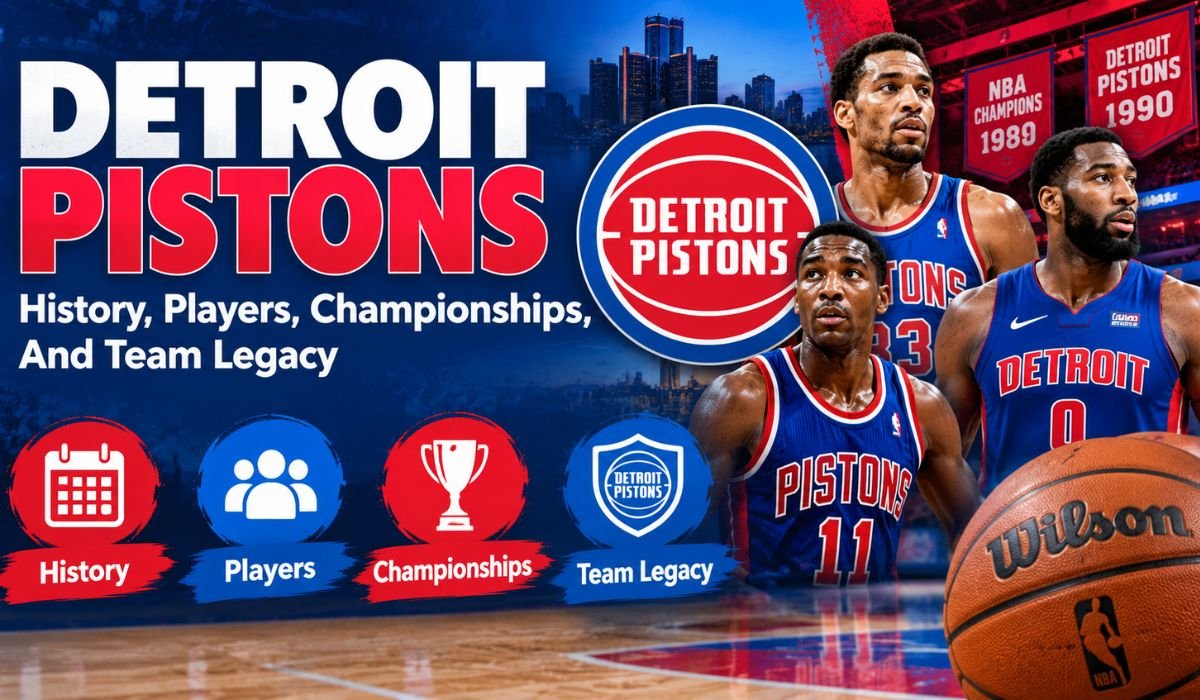
The Detroit Pistons Are One Of The Most Recognizable Teams In The National Basketball Association (NBA). Known For Their Tough Defense, Teamwork, Memorable Players, And Championship History, The Pistons Have Built A Legacy That Continues To Matter To Basketball Fans. From Their Early Days In Indiana To Their Rise As NBA Champions, Their Story Includes Major Victories, Famous Rivalries, Challenging Seasons, And Generations Of Talented Players.
The Team Is Especially Famous For Its “Bad Boys” Era In The Late 1980s, When A Physical And Determined Style Of Basketball Helped Detroit Win Back-To-Back Championships. The Pistons Added Another NBA Title In 2004 With A Different Group Of Players, Proving That Strong Defense And Collective Effort Could Still defeat a team filled with superstar talent.
However, The Detroit Pistons Story Is About More Than Championships. It Is Also About The Connection Between A Basketball Team And Its City, The Importance Of Developing Young Players, And The Challenges Of Staying Competitive In A League That Constantly Changes. This Guide Explores Pistons History, Legendary Players, NBA Titles, Team Records, Recent Developments, And What The Future May Hold.
Detroit Pistons Quick Bio Information
<escape>| Team Detail | Information |
|—|—|
| Official Name | Detroit Pistons |
| Sport | Professional Basketball |
| League | National Basketball Association (NBA) |
| Home City | Detroit, Michigan, United States |
| Conference | Eastern Conference |
| Division | Central Division |
| Original Franchise Founded | 1941 |
| Original Name | Fort Wayne Zollner Pistons |
| Moved To Detroit | 1957 |
| Team Colors | Blue, Red, White, And Other Official Design Elements |
| Home Arena | Little Caesars Arena |
| Arena Location | Detroit, Michigan |
| NBA Championship Titles | 3 |
| Championship Years | 1989, 1990, And 2004 |
| Famous Team Era | The Bad Boys |
| Notable Legend | Isiah Thomas |
| Other Famous Players | Joe Dumars, Chauncey Billups, Ben Wallace |
| Team Nickname | The Pistons |
| Current League | NBA |
| Official Website | Pistons.com |
The Early History Of The Detroit Pistons
The Detroit Pistons Have A History That Began Long Before The Team Became Associated With Michigan. The Franchise Was Established In 1941 In Fort Wayne, Indiana, By Auto-Piston Manufacturer Fred Zollner. It Was Originally Known As The Fort Wayne Zollner Pistons, A Name That Reflected The Owner’s Manufacturing Business. The Team Competed In Early Professional Basketball Leagues Before Joining The Basketball Association Of America In 1948. When The BAA And National Basketball League Combined In 1949, The Pistons Became Part Of The NBA As The League Took Its Modern Form.
During Their Early Years, The Pistons Developed A Reputation As A Competitive Team. Their Indiana Roots Are An Important Part Of The Franchise’s Identity, Even Though Many Modern Fans Know Them Mainly As A Detroit Team. The Early History Also Shows How Professional Basketball Developed From Smaller Regional Markets Into The National Sport It Is Today. Detroit Was Not The Team’s First Home, But The Franchise’s Original Name And Industrial Connection Help Explain Why The Word “Pistons” Remained Central To Its Identity.
Why The Pistons Moved To Detroit
In 1957, The Franchise Moved From Fort Wayne To Detroit. The Move Offered Access To A Larger Market, A Bigger Potential Fan Base, And More Business Opportunities. Detroit Was Already Widely Associated With The American Automobile Industry, Making The Pistons Name A Natural Fit For The City. The Relocation Helped Create The Lasting Relationship Between The Team And Detroit That Continues Today.
Moving To Detroit Did Not Immediately Turn The Pistons Into A Championship Team. Building A successful NBA Franchise Requires More Than A New City; it takes strong players, effective coaching, financial support, and years of development. Still, the move gave the team a larger stage and placed it in a city with a deep connection to industrial work, competition, and professional sports. Over time, the Pistons became an important part of Detroit’s basketball culture, sharing the city’s sporting spotlight with its other major professional teams.
The Pistons In The 1960s And 1970s
The 1960s And 1970s Were Important Developmental Decades For The Detroit Pistons. The Team Experienced Different Levels Of Success While Competing Against Powerful NBA Franchises. It Had Talented Players And Periods Of Strong Performance, But It Did Not Yet Establish The Sustained Championship Dominance That Would Later Define The Franchise.
These Years Also Showed How Much The NBA Was Changing. Teams Were Adjusting To New Playing Styles, Expanding Talent Pools, And Increasing Competition. The Pistons Had To Continue Searching For The Right Combination Of Players And Leadership. Although The Team Did Not Win An NBA Championship During These Decades, The Experience Helped Lay The Groundwork For Later Improvements. The Story Of A Successful Franchise Is Not Only About Its Greatest Seasons; It Also Includes The Years Of Rebuilding And Learning That Make Future Success Possible.
The Bad Boys Era And Detroit’s Rise
The Late 1980s Brought The Detroit Pistons Their Most Famous Identity: The “Bad Boys.” Led By Guard Isiah Thomas And Supported By Joe Dumars, Bill Laimbeer, Dennis Rodman, And Other Key Contributors, The Team Became Known For Physical Defense, Fierce Competition, And A Relentless Approach To Winning. Coach Chuck Daly Helped Bring The Group Together, creating a system built on discipline, defensive pressure, and trust between teammates.
The Bad Boys Were Often Unpopular With Opponents Because Of Their hard-edged style, but their results were difficult to ignore. They challenged the idea that a championship team needed to depend mainly on individual scoring stars. Instead, Detroit used coordinated defense, rebounding, toughness, and timely offensive plays to control games. The team’s identity was not simply about physical play; it was also about knowing each player’s role and performing it consistently under pressure.
Their rise was especially significant because the Eastern Conference included formidable opponents. Detroit faced teams such as the Boston Celtics and Chicago Bulls during intense playoff battles. Those matchups helped shape the Bad Boys’ reputation and turned the Pistons into one of the most talked-about teams of their time.
Detroit Pistons Championships And NBA Titles
The Detroit Pistons Have Won Three NBA Championships: In 1989, 1990, And 2004. Each Title Represents A Different Stage In The Franchise’s History. The First Two Came During The Bad Boys Era, When Detroit’s defensive intensity and teamwork made it one of the league’s strongest teams. The third arrived years later, with a new group of players that proved the franchise could reach the top through a different approach.
In 1989, The Pistons Defeated The Los Angeles Lakers In The NBA Finals, Winning The Franchise’s First Championship Since Moving To Detroit. The victory was especially meaningful after years of playoff battles and near misses. Detroit followed it with another title in 1990, defeating the Portland Trail Blazers. Winning consecutive championships confirmed that the Pistons were not a one-season success; they had built a team capable of performing at the highest level over time.
The 2004 Championship Added Another Historic Chapter. Detroit defeated the heavily favored Los Angeles Lakers, a team featuring several established stars. The Pistons’ victory became a lasting example of balanced basketball, disciplined defense, and collective effort. Together, the three titles form the foundation of the franchise’s championship legacy and remain central to the story of Detroit basketball.
The 2004 Championship Team And Its Lasting Legacy
The 2004 Detroit Pistons Team Deserves Special Attention Because It Won A Championship Without Depending On A Single Scoring Superstar. Chauncey Billups, Ben Wallace, Rasheed Wallace, Richard Hamilton, And Tayshaun Prince Each Played Important Roles. Their Strength Came From How Well They Worked Together, With Different Skills Combining To Create A Balanced And Difficult Team To Beat.
Billups Provided Calm Leadership And Strong Guard Play, While Hamilton Used His Movement And Mid-Range Shooting To Create Scoring Opportunities. Ben Wallace Was A Defensive Force, Particularly Around The Basket, And Rasheed Wallace Added Size, Versatility, And Experience. Prince Contributed On Both Ends Of The Court, Including Important defensive work against elite opponents. Their coach, Larry Brown, helped turn those individual strengths into a clear team strategy.
In The 2004 NBA Finals, Detroit Faced The Los Angeles Lakers, Who Had High-profile players including Shaquille O’Neal, Kobe Bryant, Gary Payton, And Karl Malone. The Lakers Entered The Series With Enormous Expectations, But Detroit Won The Series Four Games To One. The Pistons Limited Their Opponents’ Offensive Comfort And Took Advantage Of Their own balanced attack. The victory remains one of the NBA’s best-known examples of a team defeating a collection of stars through preparation, defense, and shared responsibility.
The Greatest Detroit Pistons Players Of All Time
Several Players Have Helped Define The Detroit Pistons’ Identity. Isiah Thomas Is Often Considered One Of The Greatest Players In Franchise History. As The Team’s Leading Guard During The Bad Boys Era, He Combined Scoring, Passing, Leadership, And Fearlessness. His performances during Detroit’s championship seasons made him one of the defining point guards of his generation.
Joe Dumars Was Another Essential Figure. Known For His disciplined defense and reliable scoring, Dumars helped the Pistons win both the 1989 and 1990 championships. He was also named the Most Valuable Player of the 1989 NBA Finals. Bill Laimbeer contributed rebounding, outside shooting, and physical play, while Dennis Rodman became famous for his extraordinary rebounding and defensive ability.
The 2004 team introduced another group of franchise legends. Chauncey Billups earned the nickname “Mr. Big Shot” for his confidence and ability to deliver in important moments. Ben Wallace became one of the league’s leading defensive players and won the NBA Defensive Player of the Year award four times during his career. Richard Hamilton’s movement and scoring helped the offense, while Tayshaun Prince became known for his length and defensive versatility.
Other notable players have contributed to different periods of Pistons history, including Grant Hill, Bob Lanier, Dave Bing, and Vinnie Johnson. Comparing players across eras is difficult because rules, competition, and playing styles change. Still, each of these names represents an important part of the franchise’s long story.
Detroit Pistons Coaches And Their Impact
Coaching Has Played A Major Role In The Pistons’ Success. Chuck Daly Is Closely Associated With The Bad Boys Era Because He helped organize a talented but hard-nosed group into a championship-winning team. His approach emphasized preparation, discipline, defensive structure, and the importance of every player understanding his responsibility. Detroit’s back-to-back titles in 1989 and 1990 remain the clearest evidence of the effectiveness of that system.
Larry Brown Led The Pistons To Their 2004 Championship. His team was known for its defensive organization, unselfish passing, and ability to adjust to different opponents. Brown’s coaching showed that a team could compete with more star-heavy rosters by limiting easy scoring opportunities and making smart decisions on offense. The championship strengthened his reputation as one of basketball’s most experienced coaches.
The Franchise Has Had Many Other Coaches Across Its History, Each Working Under Different Circumstances. Coaching changes can influence playing style, player development, and the direction of a rebuilding project. For that reason, any article covering the current Detroit Pistons coaching staff should verify the latest official team announcement rather than relying on an older season’s information.
Little Caesars Arena And Detroit Pistons Fan Culture
The Detroit Pistons Play Their Home Games At Little Caesars Arena In Downtown Detroit. The Venue Opened In 2017 And Is Shared With The Detroit Red Wings Of The National Hockey League. Its location is part of a broader effort to strengthen downtown Detroit as a destination for sports, entertainment, restaurants, and other public activities.
Before Moving To Little Caesars Arena, The Pistons Played At Several Venues, Including The Palace Of Auburn Hills, Which Became Closely Associated With The Team’s modern championship years. The Palace was the site of many memorable home games, including the Pistons’ rise in the late 1980s and their championship success in 2004. The move downtown marked a new chapter in the relationship between the team and its home city.
Pistons fans have experienced both championship celebrations and difficult rebuilding seasons. The team’s history gives supporters plenty to remember, from the Bad Boys’ defensive battles to the balanced 2004 championship team. For many fans, following Detroit is about more than the current standings; it is also about family traditions, local pride, and the hope of seeing another successful era develop.
Pistons Rivalries And Memorable Games
The Pistons Have Been Part Of Some Of The NBA’s Most Intense Rivalries. Their playoff battles with the Boston Celtics during the 1980s helped prepare Detroit for championship competition. Those games were often physical and demanding, with both teams fighting for control of the Eastern Conference. The rivalry helped the Pistons develop the toughness and experience that later became central to their championship identity.
Detroit’s rivalry with the Chicago Bulls also became famous. The teams met repeatedly in the playoffs as Michael Jordan and the Bulls tried to overcome the Pistons’ defensive pressure. Detroit’s approach became known for making every possession difficult, and the battles helped define the Bulls’ eventual rise. In 1991, Chicago defeated Detroit in the Eastern Conference Finals, marking a turning point in the balance of power.
The Pistons also produced memorable Finals moments against the Lakers and Trail Blazers. Their 1989 sweep of Los Angeles, 1990 victory over Portland, and 2004 win against the Lakers remain important parts of NBA history. These games show how the franchise’s identity evolved while its emphasis on preparation, defense, and teamwork remained consistent.
Rebuilding Years And Recent Challenges
A Championship Legacy Does Not Guarantee Success Every Season. After The Pistons’ early-2000s run, The Team Faced Roster Changes, Departures Of Key Players, Coaching Transitions, And Increasing Competition In The Eastern Conference. Maintaining a contender is difficult because successful teams must replace aging players, manage contracts, find new talent, and adjust to the changing strategies of opponents.
Detroit experienced stretches of playoff appearances after its 2004 title, including another trip to the NBA Finals in 2005, when the team lost to the San Antonio Spurs. However, the franchise later struggled to sustain that level of success. Rebuilding became a major part of the team’s modern story, with draft selections and the development of younger players becoming important priorities.
Rebuilding takes patience, and not every promising prospect becomes a star. Teams must balance giving young players opportunities with creating a competitive environment. Detroit’s challenge has been to turn individual talent into consistent team performance. Wins, losses, injuries, and roster decisions all influence that process, so the franchise’s current position should be judged using verified results from the relevant season.
Detroit Pistons Roster And Key Players In 2026
The Detroit Pistons’ 2026 roster represents the latest stage in the franchise’s effort to build a competitive team for the future. Cade Cunningham has been a central figure in Detroit’s modern plans, bringing playmaking, scoring, and leadership from the guard position. His development is important because successful NBA teams often need a reliable primary creator who can help teammates get quality shots while also producing points himself.
The team’s broader progress depends on how its players fit together. Guards need to create opportunities and protect the ball, wings must contribute on offense and defense, and big men need to rebound, defend the paint, and finish scoring chances. Strong depth also matters because injuries and the long NBA schedule can place heavy demands on a roster. The best teams generally have multiple players who can contribute consistently rather than relying on one individual every night.
Because NBA rosters can change quickly through trades, free agency, injuries, and draft selections, current player details should be checked against the official Detroit Pistons roster and NBA records before publication. The same rule applies to the coaching staff and season statistics. This approach keeps a Detroit Pistons article useful to readers in 2026 without presenting outdated information as current.
Pistons Stats, Records, And Major Achievements
The Most Recognizable Achievement In Detroit Pistons History Is The Franchise’s Three NBA Championships In 1989, 1990, And 2004. The Team Also Reached The NBA Finals In 2005, Showing That Its championship-era core remained competitive after winning the title. These seasons stand out because they involved different combinations of players and different approaches to winning.
Individual records add another layer to the franchise’s history. Isiah Thomas was central to the Bad Boys’ offense, Joe Dumars earned recognition for his Finals performance and two-way play, and Ben Wallace became one of the most respected defensive centers of his era. The franchise has also had players recognized through All-Star selections, league awards, and Hall of Fame honors. Exact totals should be checked against official records because statistics vary depending on whether they cover regular-season games, playoffs, or an entire career.
Numbers are useful, but they do not tell the whole story. Defensive communication, leadership, unselfish passing, and composure in close games can shape results without always appearing in a box score. Detroit’s most successful teams combined measurable production with an identity that players understood and followed. That combination helps explain why the Pistons’ championship teams remain relevant in discussions about team basketball.
The Future Of The Detroit Pistons
The Future Of The Detroit Pistons Depends On How Effectively The Franchise Develops Its Players And Builds A Balanced Roster. A young core can create excitement, but turning potential into regular-season wins and playoff success requires consistent improvement. Shooting, defensive execution, decision-making, rebounding, and health all contribute to long-term progress.
Drafting and player development are especially important for a team trying to establish itself among the NBA’s strongest franchises. Good draft choices can provide talent at manageable contract costs, while smart trades and free-agent signings can fill gaps that young players are not yet ready to handle. The challenge is to build a team that works well together instead of simply collecting individual talent.
The Pistons also have a powerful historical identity to draw on. The Bad Boys and the 2004 championship team showed that Detroit can win through toughness, defensive focus, and collective effort. Modern basketball has changed, with greater emphasis on three-point shooting, spacing, and versatile players, but teamwork remains essential. The franchise’s task is to combine the lessons of its past with the demands of the modern NBA.
Final Thoughts On The Detroit Pistons Legacy
The Detroit Pistons Have Built A Legacy Through Three NBA Championships, Famous Players, Fierce Rivalries, And Teams That Showed The Value Of Working Together. Their journey from Fort Wayne to Detroit reflects the growth of professional basketball, while the Bad Boys era established a distinctive identity built on defense and competitive spirit. The 2004 championship added another example of how balance and preparation can overcome a roster filled with individual stars.
The franchise has also experienced difficult periods, reminding fans that success in the NBA is never permanent. Rebuilding requires strong decisions, player development, effective coaching, and patience from the organization and its supporters. Detroit’s history provides reasons for optimism, but its next successful era must be earned through results on the court.
For readers exploring the Pistons’ history, the biggest lesson is that great teams are built in different ways. Some rely on extraordinary individual talent, while others succeed because every player understands the plan and contributes to it. Detroit’s greatest teams combined skill with a shared purpose, and that remains the standard against which future Pistons teams will be measured.
FAQs About The Detroit Pistons
How Many NBA Championships Have The Pistons Won?
The Detroit Pistons Have Won Three NBA Championships. They Won Their First Two Titles In 1989 And 1990 During The Bad Boys Era, Then Captured Their Third Championship In 2004. Each Victory Represents An Important Period In The Franchise’s History And Demonstrates How Different teams can succeed through defense, teamwork, and strong leadership.
When Did The Detroit Pistons Move To Detroit?
The Franchise Moved From Fort Wayne, Indiana, To Detroit, Michigan, In 1957. It Originally Began As The Fort Wayne Zollner Pistons In 1941. The Move Gave The Team Access To A Larger Market And Helped Establish Its Long-Term Connection With A City Famous For Its Industrial History.
Who Were The Bad Boys Of The Detroit Pistons?
The Bad Boys Were The Pistons Teams Of The Late 1980s And Early 1990s, Particularly The Championship Groups Of 1989 And 1990. Key Players Included Isiah Thomas, Joe Dumars, Bill Laimbeer, And Dennis Rodman, With Chuck Daly As Head Coach. They Became Famous For Their Physical Defense, toughness, and ability to perform under playoff pressure.
Who Is The Greatest Detroit Pistons Player?
Isiah Thomas Is Often Named Among The Greatest Pistons Because Of His Leadership And Role In The Team’s Back-To-Back Championships. Joe Dumars, Bob Lanier, Dave Bing, Chauncey Billups, And Ben Wallace Are Also Important Candidates. The Answer Depends On Whether A Fan Values Championships, Individual Statistics, Defense, Longevity, Or Overall Influence On The Franchise.
Where Do The Detroit Pistons Play Their Home Games?
The Detroit Pistons Play At Little Caesars Arena In Downtown Detroit, Michigan. The Arena Opened In 2017 And Also Hosts The Detroit Red Wings. Before Moving Downtown, The Pistons Played At The Palace Of Auburn Hills, A Venue Closely Associated With Their modern championship history.
Who Is A Key Player For The Detroit Pistons In 2026?
Cade Cunningham Has Been A Central Player In Detroit’s Modern team-building plans because of his scoring and playmaking ability. However, the full roster and each player’s role can change during a season. Readers looking for the latest lineup, injury news, or statistics should consult the official Pistons website and current NBA records.
When Did The Pistons Last Win An NBA Championship?
The Detroit Pistons Last Won The NBA Championship In 2004. They Defeated The Los Angeles Lakers Four Games To One In The Finals. The victory became famous because Detroit relied on balanced scoring, disciplined defense, and teamwork against a Lakers team featuring several major stars.
What Makes The Detroit Pistons Different From Other NBA Teams?
The Pistons Are Especially Known For Their Championship History And Their Strong Defensive Traditions. The Bad Boys Teams Of The Late 1980s And The Balanced 2004 Championship Team Demonstrated Different Ways To Build A Winner. Their History Also Connects Closely With Detroit’s identity, giving the franchise a distinctive place in NBA culture.
Learn more and explore exciting content on: Mckenna Grace: Biography, Career, Movies, Music, and Life Story








Leave a Reply