
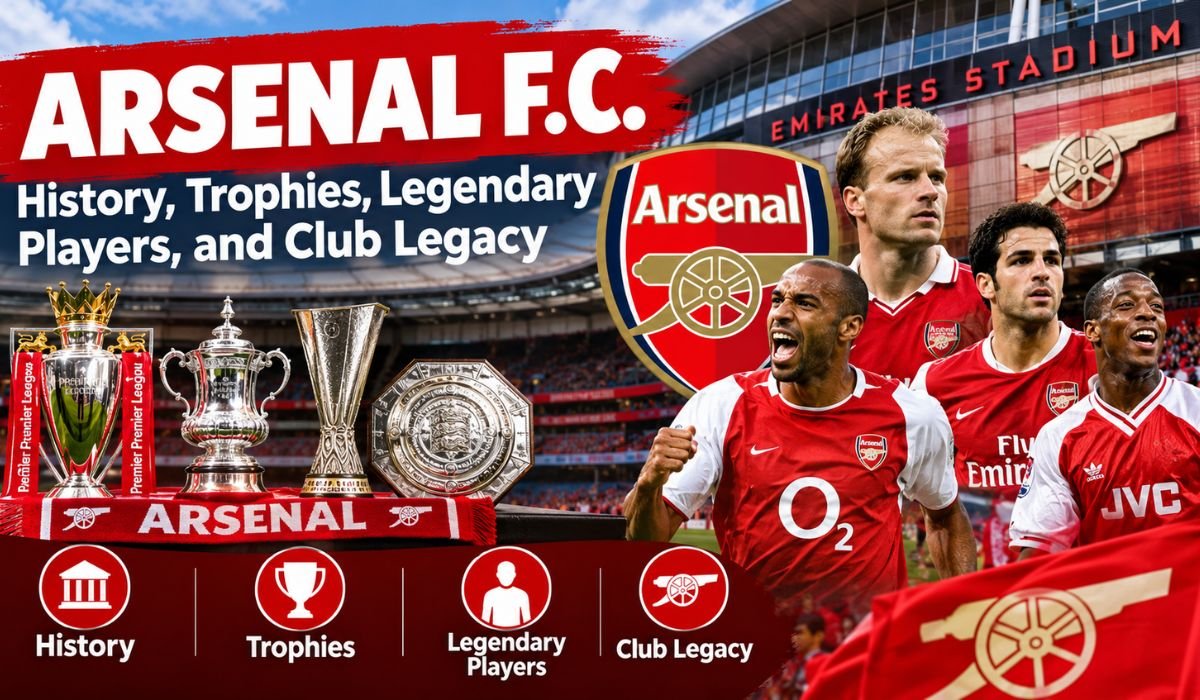
Arsenal F.C. Is One Of The Most Recognized Names In English Football. Based In North London, England, The Club Has Built A Remarkable Reputation Through Its Historic Victories, Famous Players, Influential Managers, And Loyal Supporters. Known As The Gunners, Arsenal Has A Story That Stretches Back To 1886, When A Group Of Munitions Workers Founded A Football Team In Woolwich.
Over The Years, Arsenal Football Club Has Become Famous For Its Attacking Football, Memorable Trophy-Winning Teams, And Strong Connection With Its Community. From The Dominant Sides Of The 1930s To The Unbeaten Premier League Campaign Of 2003–04, The Club Has Created Moments That Continue To Inspire Football Fans. Its Move To Emirates Stadium In 2006 Also Marked An Important Step In Its Modern Development.
In This Guide, We Will Explore Arsenal F.C.’s History, Major Trophies, Legendary Players, Famous Managers, Stadium, Rivalries, Finances, And Future. Whether You Are A Lifelong Supporter Or A New Football Fan, Understanding Arsenal’s Journey Helps Explain Why The Club Holds Such An Important Place In The Sport.
Quick Bio Information
Official Name: The Arsenal Football Club
Common Name: Arsenal F.C.
Nickname: The Gunners
Founded: October 1886
Original Name: Dial Square
Founding Location: Woolwich, London, England
Current Home Ground: Emirates Stadium
Home City: London, England
Domestic League: Premier League
Club Owner: Kroenke Sports & Entertainment
Manager: Mikel Arteta, According To The Most Recent Club Information Available For This Article; Confirm The Current Appointment Before Publication.
Traditional Colours: Red And White
Main Local Rival: Tottenham Hotspur
Previous Home Ground: Highbury
Move To Emirates Stadium: 2006
Club Motto: Victoria Concordia Crescit
Motto Meaning: Victory Through Harmony
Famous Achievement: Unbeaten Premier League Season In 2003–04
Official Website: Arsenal.com
Women’s Team: Arsenal Women, A Separate Team Within The Club’s Football Structure
What Is Arsenal F.C.?
Arsenal F.C. Is A Professional Football Club That Competes In The English Premier League, The Highest Level Of English Men’s Football. The Club Is Based In North London And Has A Large Supporter Base In The United Kingdom And Around The World. Its Identity Is Closely Connected With Its Historic Red And White Colours, The Cannon Symbol, And The Nickname The Gunners. Arsenal Is Known For Its Long History, Domestic Cup Success, And Periods Of Strong League Performance. Its Supporters Follow The Team Through League Matches, Domestic Cup Competitions, And European Football When The Club Qualifies. Arsenal Is Also Part Of A Wider Football Organization That Includes Arsenal Women And Youth Development Teams. This Combination Of History, Competition, And Community Helps Make Arsenal More Than Just A First-Team Football Club.
The Founding Of Arsenal In 1886
Arsenal’s Story Began In October 1886, When David Danskin And Fellow Workers At The Royal Arsenal Munitions Complex In Woolwich Established A Team Called Dial Square. The Club’s Early Players Were Connected With Industrial Work Rather Than Professional Football, Which Was Still Developing Into A Major Organized Sport. Dial Square Played Its First Recorded Match Against Eastern Wanderers On 11 December 1886, Winning 6–0. The Team Soon Adopted The Name Royal Arsenal And Gradually Built A More Established Football Identity. In 1891, It Became London’s First Professional Football Club, An Important Step In Its Development. Two Years Later, The Club Became A Limited Company And Joined The Football League As Woolwich Arsenal. These Early Changes Helped Turn A Workplace Team Into A Competitive Club With Bigger Ambitions.
From Woolwich To North London
During Its Early Years, Arsenal Faced Financial Challenges And Difficulties Attracting Spectators. Its Location In Southeast London Limited Its Access To Some Of The City’s Larger Football Audiences, And The Club Struggled To Remain Financially Stable. In 1913, After Relegation From The First Division, Arsenal Moved North Across London To Highbury. The New Ground Offered Better Access To A Larger Supporter Base And Gradually Became Central To The Club’s Identity. In 1919, Arsenal Was Elected Into The Enlarged First Division In A Controversial Decision That Favoured The Club Over Local Rival Tottenham Hotspur. Arsenal Later Dropped The Word “Woolwich” From Its Official Name. The Move To Highbury Changed The Club’s Future And Helped Create The Geographic Foundations Of The North London Derby, One Of English Football’s Most Recognizable Rivalries.
Arsenal’s Rise During The 1930s
Arsenal Became A Major Force In English Football During The 1930s, A Period Strongly Associated With Manager Herbert Chapman And The Work Continued By His Successors. Chapman Helped Modernize The Club’s Tactics, Training, And Public Identity. He Is Associated With The Introduction Of Shirt Numbers In English Football, The Use Of Floodlighting For Training, And The Famous Red Shirt With White Sleeves. Arsenal Won Five League Championships During The Decade And Added Two FA Cups, Establishing A Winning Tradition That Lasted Beyond Chapman’s Life. His Influence Extended Beyond Trophies: He Helped Develop A More Organized, Professional Approach To Football. The Success Of This Period Turned Arsenal Into One Of The Most Respected Clubs In The Country And Created A Foundation For Later Generations Of Players And Supporters.
Arsenal’s Trophies And Major Achievements
Arsenal Has Won Major Honours In English Football And Has Also Experienced Success In European Competition. Its Domestic Achievements Include League Championships, FA Cups, League Cups, And Community Shields. The FA Cup Has Been Especially Important To The Club’s Identity, With Arsenal Establishing A Historic record In The Competition. The Club Also Won The European Cup Winners’ Cup In 1994, Defeating Parma In The Final, And The Inter-Cities Fairs Cup In 1970. Arsenal’s Trophy History Includes Several Different Eras, From Its early league dominance to successful modern teams. Trophy totals can vary depending on the competitions included and the date of publication, so current figures should be verified against official records. What Matters Most Is The Consistency Of Arsenal’s Presence In Major Competitions And Its Ability To Build Teams That Compete For Significant Honours.
The Invincibles Of 2003–04
One Of The Greatest Achievements In Arsenal F.C. History Came During The 2003–04 Premier League Season. Managed By Arsène Wenger, Arsenal Finished The League Campaign Without Losing A Single Match. The Team Played 38 League Games, Winning 26 And Drawing 12. This Unbeaten Record Earned The Side The Nickname The Invincibles And Secured A Special Place In English Football History. The Team Combined Technical Skill, Speed, Physical Strength, And Tactical Discipline. Thierry Henry Provided Exceptional Attacking Quality, Patrick Vieira Led The Midfield, And Players Such As Dennis Bergkamp, Robert Pirès, Sol Campbell, And Jens Lehmann Made Important Contributions. The Achievement Was Not Simply About Winning matches; It Required Concentration And Consistency Across An Entire League Season. More Than Two Decades Later, The Invincibles Remain A Defining Symbol Of Arsenal’s Ambition And Footballing Identity.
Arsenal’s Legendary Players
Arsenal’s History Is Closely Connected With Players Who Have Delivered Memorable Performances And Helped Define Different Eras. Thierry Henry Is One Of The Club’s Most Celebrated Figures, Remembered For His Goalscoring, Pace, Movement, And Finishing. Dennis Bergkamp Brought Vision, Creativity, And Exceptional Technical Ability To The Attack. Tony Adams Became A Symbol Of Leadership And Defensive Commitment During His Long Arsenal Career. Patrick Vieira Was A Powerful Midfielder Whose Presence And Captaincy Helped Drive Successful Teams. Ian Wright Won Supporters’ Affection Through His Goals And Energetic Personality. David Seaman Was A Key Goalkeeper During Important Trophy-Winning Periods, While Robert Pirès And Freddie Ljungberg Added Creativity And Attacking Threat. In More Recent Years, Bukayo Saka Has Become A Major Figure Through His Development, Consistency, And contribution to the team’s attacking play. Each Player Represents A Different Part Of Arsenal’s Continuing Story.
Famous Arsenal Managers
Arsenal’s Success Has Been Shaped By Managers Who Introduced New Ideas And Built Competitive Teams. Herbert Chapman Helped Establish The Club As A Major Power During The 1930s. George Graham Later Developed Disciplined, Well-Organized Sides And Led Arsenal To Important Domestic Success, Including The Dramatic 1988–89 League Title. Arsène Wenger, Who Managed The Club From 1996 To 2018, Had A Lasting Influence On Modern Arsenal. He Won Three League Titles And Seven FA Cups, Promoted Technical And Attacking Football, And Led The Invincibles. Wenger Also Changed Approaches To Training, Nutrition, Recruitment, And Player Development. Mikel Arteta, A Former Arsenal Midfielder, Became Head Coach In December 2019. His work has focused on tactical structure, squad development, and restoring Arsenal’s competitiveness in major competitions. Assessing any manager’s legacy requires considering both trophies and the longer-term effect on the club’s style and direction.
Emirates Stadium And The Legacy Of Highbury
Emirates Stadium Became Arsenal’s Home In 2006, Replacing The Historic Highbury Ground Where The Club Had Played Since 1913. Located In Holloway, North London, The Modern Stadium Was Built To Give Arsenal Greater Capacity And Better Facilities For Supporters. It Also Helped The Club Expand Its Matchday Operations And Commercial Opportunities. Highbury, Meanwhile, Remains An Important Part Of Arsenal’s Heritage. Many Supporters Remember Its Intimate Atmosphere, Historic Stands, And Memorable Matches. After Arsenal Moved, Highbury Was Redeveloped Into Residential Housing, With Parts Of The Original Stadium Architecture Preserved. The Move To Emirates Stadium Was A Major Financial And Sporting Decision, Although Financing A Large Stadium Project Also Brought Long-Term Financial Commitments. Today, The Emirates Is Central To The Arsenal Matchday Experience, Hosting Premier League Matches, Cup Games, Stadium Tours, And Other Club Activities.
Arsenal And The North London Derby
The North London Derby Between Arsenal And Tottenham Hotspur Is One Of The Most Passionate Rivalries In English Football. Although The Two Clubs Have Their Own Histories, Arsenal’s Move To Highbury In 1913 Brought Them Into Direct Geographical Competition With Tottenham. The Rivalry Grew Through Decades Of League Meetings, Cup Matches, Disputed Moments, And Battles For Local Pride. For Supporters, The Derby Often Means More Than Three League Points Because It Represents The Identity Of Their Part Of London. Matches Can Have A Major Effect On Team Confidence And The Mood Of The Fanbase, Especially When Both Clubs Are Competing For European Qualification Or High League Positions. Arsenal Also Has Important Competitive Rivalries With Clubs Such As Manchester United And Chelsea, Particularly From Periods When They regularly challenged for major honours. However, Tottenham Remains The Club’s Most Recognized Local Rival.
Arsenal’s Ownership And Financial Growth
Arsenal Is Owned By Kroenke Sports & Entertainment, The Sports And Entertainment Group Associated With Stan Kroenke And His Family. Modern Football Clubs Operate As Complex Businesses, And Arsenal’s Finances Reflect The Scale Of The Premier League. Its Revenue Comes From Broadcasting Rights, Matchday Sales, Sponsorships, Commercial Partnerships, Merchandise, And Other Activities. Emirates Stadium Gives The Club Opportunities To Generate Income Through Ticket Sales, Hospitality, And Stadium Experiences. Arsenal Also Benefits From Its Large International Supporter Base, Which Makes The Club Attractive To global sponsors and commercial partners. Financial figures should always be read in context: annual revenue is not the same as profit, cash available for transfers, or total club valuation. Arsenal’s ability to compete at the highest level depends partly on managing wages, recruitment costs, stadium commitments, and commercial growth. Reliable financial reporting is therefore important when evaluating the club’s business position.
Arsenal’s Global Fanbase And Supporter Culture
Arsenal Has Supporters Across Europe, Asia, Africa, North America, And Other Regions, Making It One Of The Best-Known Football Clubs Worldwide. Its International Appeal Has Grown Through Television Coverage, Digital Media, Famous Players, And Decades Of Competition At The Highest Level. Supporters Commonly Identify With The Club Through Its Red And White Colours, Cannon Crest, Matchday Traditions, And The Nickname The Gunners. At Emirates Stadium, Fans Gather To Support The Team, Sing Chants, And Share The Emotional Highs And Lows Of A Football Season. International supporters often follow matches at different local times and connect through online communities, supporter groups, and official club channels. Arsenal’s history also plays a role in its global appeal: fans can connect with the Invincibles, legendary players, and historic trophy wins even if they have never visited London. This mixture Of Local Roots And International Support Helps Sustain The Club’s Worldwide Presence.
Arsenal’s Academy And Youth Development
Developing Young Talent Is An Important Part Of Arsenal’s Long-Term Strategy. The Club’s Academy Provides Coaching, Education, And Competitive Opportunities For Young Players Working Toward Professional Football. Progression From Youth Football To The First Team Requires More Than Technical Skill; Players Must Also Develop Tactical Awareness, Physical Fitness, Decision-Making, And The Ability To Handle Pressure. Bukayo Saka Is A Notable Example Of A Player Who Progressed Through Arsenal’s Academy And Became An Important First-Team Figure. Other Young Players Have Also Had Opportunities To Train With Senior Professionals, Make First-Team Appearances, Or Continue Their Development Through Loans And Other Career Routes. Not Every Academy Prospect Reaches The Senior Team, But A Strong Development System Can Help A Club Build Squad Depth And Maintain Its Identity. Youth Development Also Connects Arsenal With Local Communities By Giving Young Players Structured Opportunities To Pursue The Game.
Arsenal Men’s Team And Arsenal Women
Arsenal’s Football Identity Extends Beyond The Men’s First Team. Arsenal Women Compete In Women’s Football And Have Built An Important History Of Their Own, Including Domestic Success And Notable European Achievements. The Women’s Team Is Separate From The Men’s Team In Terms Of Competitions, Fixtures, And Sporting Results, But Both Share The Arsenal Name And Broader Club Identity. Arsenal Women Have Helped Raise The Club’s Profile In Women’s Football Through Their Performances And Their connection with supporters. The growth of women’s football has also created more opportunities for fans to follow different teams and competitions. When discussing Arsenal’s overall achievements, it is important to identify which team won a particular trophy rather than combining men’s and women’s honours without explanation. Recognizing both teams gives readers a more complete picture of Arsenal as a football organization and shows how its identity reaches different parts of the sport.
Arsenal Today And Its Future Ambitions
Arsenal’s Modern Era Is Focused On Competing Consistently For The Premier League, Domestic Cups, And European Honours. Under Mikel Arteta, The Team Has Worked Toward A More Organized Playing Style, With Emphasis On Pressing, Possession, Defensive Structure, And Coordinated Attacking Movements. Recruitment, squad balance, player fitness, and the development of young talent are all important factors in sustaining progress. Competition is intense, however, and success cannot be guaranteed by investment or promising performances alone. Injuries, fixture congestion, opponents’ quality, and decisions in decisive matches can influence an entire season. Arsenal’s long-term challenge is to turn strong campaigns into lasting success while keeping its football identity and financial position healthy. For supporters, the future is connected not only with trophies but also with seeing a team that competes with purpose, develops its players, and creates new moments that can become part of the club’s history.
Final Thoughts On Arsenal F.C.
Arsenal F.C. Has Developed From A Football Team Founded By Woolwich Munitions Workers In 1886 Into One Of The Most Recognized Clubs In The World. Its Story Includes Historic League Championships, FA Cup Success, Influential Managers, Legendary Players, And The Remarkable Unbeaten Premier League Campaign Of 2003–04. The Move From Highbury To Emirates Stadium Reflected The Changing Demands Of Modern Football, While The North London Derby Continues To Connect The Club With Its Local Roots.
Arsenal’s Legacy Is Not Defined By Trophies Alone. It Also Comes From The Players Who Inspired Supporters, The Coaches Who Changed The Team, The Young Talents Who Emerged Through Its Academy, And The Fans Who Have Followed The Club Across Generations. As Football Continues To Change, Arsenal’s Challenge Is To Honour Its History While Building Teams Capable Of Competing For The Biggest Honours. That Balance Between Tradition And Ambition Is A Major Part Of What Makes The Gunners So Interesting To Follow.
FAQs About Arsenal F.C.
When Was Arsenal F.C. Founded?
Arsenal F.C. Was Founded In October 1886 In Woolwich, Southeast London. Its Original Name Was Dial Square, Chosen In Connection With A Workshop At The Royal Arsenal Complex. The Team Later Became Royal Arsenal And Then Woolwich Arsenal Before Adopting The Name Arsenal. Its Industrial Origins Explain The Club’s Longstanding Connection With The Cannon Symbol And The Nickname The Gunners.
Why Is Arsenal Called The Gunners?
The Nickname The Gunners Comes From The Club’s Origins Among Workers At The Royal Arsenal Munitions Complex In Woolwich. The Connection With Weapons Manufacturing Influenced The Club’s Cannon Emblem And Its Identity. Over Time, The Name Became A Recognizable Part Of Arsenal’s Football Culture And Is Used By Supporters, Journalists, And The Club Itself.
Where Does Arsenal Play Its Home Matches?
Arsenal Plays Its Home Matches At Emirates Stadium In North London. The Club Moved There In 2006 After Leaving Highbury, Its Home Since 1913. Emirates Stadium Offers Modern Facilities And A Larger Matchday Venue. Highbury Remains An Important Part Of The Club’s History, And Parts Of Its Former Stadium Structure Were Preserved During Redevelopment.
Who Is Arsenal’s Manager?
Mikel Arteta Was Appointed Arsenal’s Head Coach In December 2019 And Is Associated With The Club’s Modern Rebuilding Period. His Work Has Emphasized Tactical Organization, Teamwork, Recruitment, And The Development Of Young Players. Because Managerial Appointments Can Change, Readers Should Check Arsenal’s Official Website For The Latest Confirmation Before Publishing Current information.
What Was Arsenal’s Invincibles Season?
Arsenal’s Invincibles Season Was The 2003–04 Premier League Campaign, When The Team Finished Without Losing A League Match. Arsenal Played 38 Games, Won 26, And Drew 12 Under Arsène Wenger. Players Including Thierry Henry, Patrick Vieira, Dennis Bergkamp, And Robert Pirès Helped Deliver The Achievement. The Unbeaten Campaign Remains One Of The Most Celebrated Accomplishments In Premier League History.
Who Are Arsenal’s Most Famous Players?
Some Of Arsenal’s Most Celebrated Players Include Thierry Henry, Dennis Bergkamp, Tony Adams, Patrick Vieira, Ian Wright, David Seaman, And Robert Pirès. Each Made A Different Contribution Through Goalscoring, Creativity, Leadership, Or Defensive Strength. Bukayo Saka Has Also Become A Major Modern Figure After Developing Through Arsenal’s Academy. Which Player Is Considered The Greatest Often Depends On The Era And The Supporter’s Personal View.
Who Is Arsenal’s Biggest Rival?
Tottenham Hotspur Is Arsenal’s Most Recognized Local Rival. Their Meetings Are Known As The North London Derby, A Fixture Shaped By Geography, History, And Competition For Local Pride. Arsenal Also Has Significant Sporting Rivalries With Other Major English Clubs, Including Manchester United And Chelsea, Especially During Seasons When They Compete For League Titles Or Important Cup Honours.
How Many Trophies Has Arsenal Won?
Arsenal Has Won Numerous Major Domestic Honours, Including League Championships, FA Cups, League Cups, And Community Shields, Along With European trophies. The exact total depends on which competitions are included and the date the figures are checked. For An Accurate Current Count, Use Arsenal’s Official Honours Records And Distinguish League Titles From Premier League Titles, While Keeping Men’s And Women’s Team Achievements Separate.
Learn more and explore exciting content on: Drake: Biography, Music Career, Family, and Life Story







Leave a Reply