
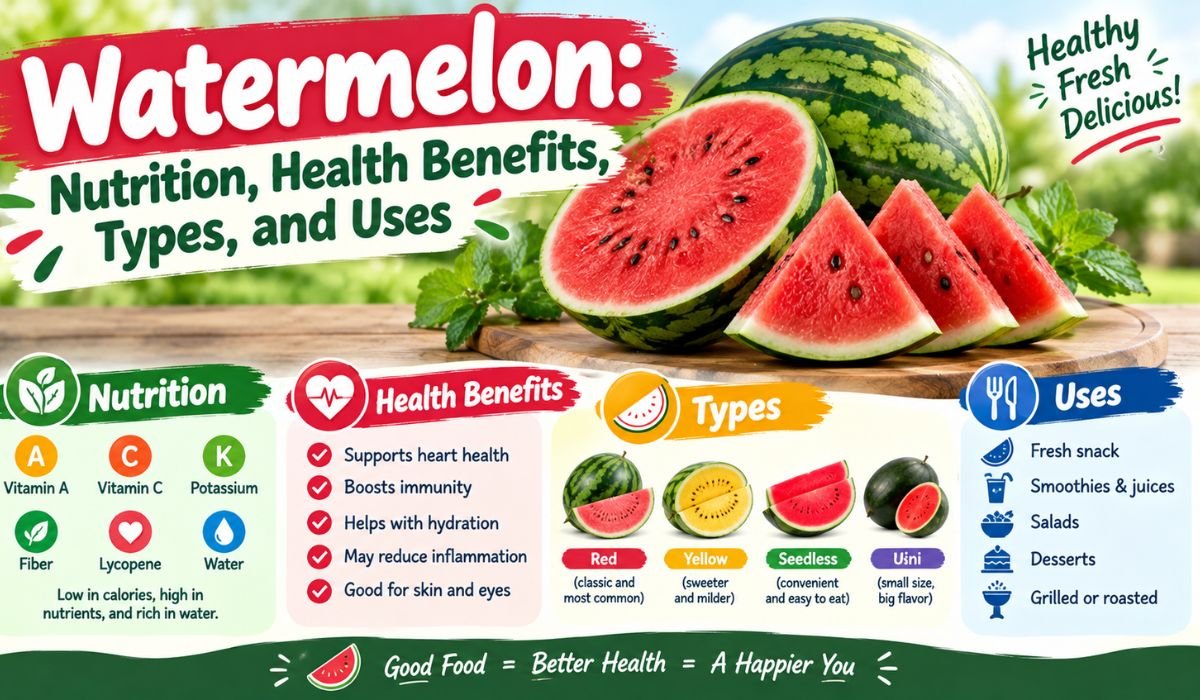
Watermelon Is One Of The Most Refreshing Fruits To Enjoy On A Warm Day. Its Sweet Taste, Juicy Texture, And Bright Red Flesh Make It A Favorite In Homes Around The World. Whether You Eat It Fresh, Blend It Into Juice, Add It To A Fruit Salad, Or Freeze It For A Cool Treat, Watermelon Offers Plenty Of Ways To Enjoy Something Naturally Sweet And Refreshing.
However, There Is More To Watermelon Than Its Delicious Flavor. It Contains A Large Amount Of Water, Provides Important Nutrients, And Comes In Several Varieties With Different Colors, Sizes, And Seed Patterns. Its History Also Stretches Back Thousands Of Years, Making It An Interesting Crop From Both A Food And Agricultural Perspective.
The Scientific Name Of Watermelon Is Citrullus Lanatus. It Belongs To The Gourd Family, Which Also Includes Cucumbers, Pumpkins, And Other Melons. Today, Watermelon Is Grown In Many Parts Of The World And Is Used In Everything From Simple Snacks To Creative Recipes. Understanding Its Nutrition, Potential Health Benefits, Varieties, And Uses Can Help You Make The Most Of This Popular Fruit.
Quick Bio Information About Watermelon
Watermelon
Essential Facts And Botanical Information
Scientific Name: Citrullus lanatus Plant Family: Cucurbitaceae Origin: Africa
Common Name
Watermelon
Plant Type
Annual Flowering Vine
Genus
Citrullus
Fruit Category
Pepo
Water Content
About 92%
Calories
30 Per 100 Grams
Main Nutrients
Vitamin C, Potassium, Lycopene
Flesh Colors
Red, Pink, Yellow, Orange
Seed Varieties
Seeded And Seedless
Growing Climate
Warm Conditions
Main Growing Regions
Tropical And Temperate Areas
Typical Uses
Snacks, Juices, Salads, Desserts
Historical Roots
Ancient African Cultivation
Growth Habit
Trailing Or Climbing Vine
What Is Watermelon?
Watermelon Is The Edible Fruit Of A Flowering Plant That Grows Along The Ground Or Spreads Across Supports. Its Long Vines Produce Broad Leaves, Small Flowers, And Large Fruits With A Firm Outer Rind. Although People Usually Think Of Watermelon As A Fruit, Its Botanical Classification Is More Specific. It Is A Type Of Pepo, A Berry-Like Fruit With A Thick Outer Layer That Is Common Among Members Of The Gourd Family.
Most Familiar Watermelons Have Green Rinds, Often With Darker Stripes, And Red Or Pink Flesh Filled With Juicy Pulp. However, Modern Cultivars Can Have Yellow Or Orange Flesh, pale Rinds, Different Shapes, And Various Seed Patterns. Their Taste Can Range From Mildly Sweet To Richly Sweet Depending On The Variety And Growing Conditions. Watermelon Is Commonly Eaten Raw Because Its Texture And Flavor Are Best Appreciated When Fresh And Properly Chilled.
Where Did Watermelon Originate?
Watermelon’s History Is Closely Connected To Africa. Botanical Research Points To Sudan As An Important Center In The Domestication Of Modern Cultivated Watermelon. Kordofan Melons And Other Related African Watermelon Populations Have Helped Researchers Understand How The Familiar Sweet Fruit Developed. This History Is More Complex Than A Single Origin Story Because Wild Relatives, Early Cultivation, And Modern Breeding All Played Different Roles.
Archaeological Evidence Also Shows That Watermelon Relatives Were Present In North Africa Thousands Of Years Ago. Ancient Seeds Found At A Prehistoric Site In Libya Have Been Dated To Around 3500 BC. Watermelons Were Cultivated In Egypt By Approximately 2000 BC, And Sweet Dessert Types Eventually Spread Across The Mediterranean Region. Over Many Generations, Farmers Selected Plants For Better Flavor, Fruit Quality, And Growing Performance. Modern Watermelon Varieties Are The Result Of This Long Process Of Cultivation And Selection.
Watermelon Nutrition Facts
Watermelon Is Mostly Water, Which Explains Its Juicy Texture And Refreshing Quality. According To Standard Food Composition Data, 100 Grams Of Raw Watermelon Provides About 30 Calories. It Contains Approximately 7.6 Grams Of Carbohydrates, Including Around 6.2 Grams Of Naturally Occurring Sugars, And Roughly 0.4 Grams Of Dietary Fiber. Exact Values Can Vary Slightly Depending On The Variety And Ripeness.
Watermelon Also Provides Vitamin C, Small Amounts Of Potassium, And Carotenoids Such As Lycopene. Red-Fleshed Watermelon Is Particularly Known For Lycopene, A Plant Pigment That Gives Many Red Fruits Their Color. The Body Uses Vitamin C In Normal Immune Function And Collagen Formation, While Potassium Helps Support Normal Muscle And Nerve Function. Watermelon Is Not A Major Source Of Protein Or Fat, But It Can Fit Easily Into A Balanced Eating Pattern. Its Natural Sweetness Also Makes It A Useful Alternative To Some Desserts That Contain Added Sugar.
Health Benefits Of Watermelon
One Of The Main Benefits Of Watermelon Is Its Contribution To Hydration. Because It Contains More Than 90% Water, Eating It Can Help Add Fluid To Your Daily Diet. It Is Especially Appealing During Hot Weather, After Outdoor Activities, Or Whenever You Want A Refreshing Snack. However, Watermelon Should Complement Regular Fluid Intake Rather Than Replace Drinking Water When You Need It.
Watermelon Also Supplies Vitamin C And Plant Compounds Such As Lycopene. Vitamin C Supports Several Normal Body Functions, And Lycopene Has Antioxidant Activity In The Body. Watermelon Can Contribute To A Fruit-Rich Eating Pattern That Includes A Variety Of Colors And Nutrients. Its Relatively Low Calorie Content Per 100 Grams Makes It A Practical Choice For People Who Want A Sweet Snack Without Consuming A Large Amount Of Energy. Still, Watermelon Is Not A Medicine, Detoxification Product, Or Guaranteed Way To Prevent Disease. Its Benefits Are Best Understood As Part Of An Overall Balanced Diet And Healthy Lifestyle.
Watermelon For Hydration And Weight Management
Watermelon Can Be A Helpful Food For People Who Want To Stay Hydrated Because It Supplies Water Along With A Small Amount Of Nutrients. Eating Water-Rich Foods Can Contribute To Overall Fluid Intake, Although Individual Hydration Needs Depend On Activity, Climate, Health, And Other Factors. On A Hot Day, A Bowl Of Chilled Watermelon Can Be A Pleasant Addition To Water And Other Appropriate Drinks.
It Can Also Fit Into A Weight-Management Plan. A 100-Gram Serving Contains Around 30 Calories, So A Generous Portion Can provide a satisfying amount of food for relatively few calories. Nevertheless, Portion Size Still Matters, Especially Because Watermelon Contains Natural Sugars. Whole Watermelon Is Usually More Filling Than Quickly Drinking A Large Glass Of Juice, And Juicing Or Straining Can Reduce The Amount Of Fiber You Consume. Long-Term Weight Management Depends On Overall Eating Habits, Activity, Sleep, And Other Factors Rather Than Any Single Fruit.
Different Types Of Watermelon
Watermelon Comes In Many Varieties, And Their Differences Go Beyond Appearance. Red-Fleshed Watermelons Are The Most Familiar In Many Markets, But Yellow And Orange Types Are Also Available. Their Flesh Colors Reflect Differences In Natural Pigments. Flavor, Sweetness, Texture, Rind Pattern, And Fruit Size Can Vary From One Cultivar To Another.
Seeded Watermelons Contain Mature, Hard Seeds, While Seedless Varieties Are Bred To Produce Fruit Without Fully Developed Hard Seeds. Miniature Watermelons Offer A Smaller Option That Can Be Convenient For Individuals Or Small Households. Some Cultivars Produce nearly round fruits, while others are more elongated. No Single Type Is Automatically The Best; The Right Choice Depends On Taste, Availability, Intended Use, And Growing Conditions. Trying Different Varieties Can Be An Easy Way To Discover New Flavors And Textures.
Seeded Vs. Seedless Watermelon
The Main Difference Between Seeded And Seedless Watermelon Is The Development Of Their Seeds. Traditional Seeded Watermelons Produce Mature Seeds That Are Usually Dark And Hard When Fully Developed. Seedless Watermelons Are Commonly Produced Through A Plant-Breeding Method Involving Different Chromosome Levels. Their Fruits generally lack fully developed hard seeds, although small, soft, white seed-like structures may still appear.
Both Types Can Be Sweet, Juicy, And Nutritious. Seedless Watermelons Are Convenient For Fruit Salads, parties, and quick snacks because people do not have to remove as many hard seeds. Seeded Varieties Remain Popular And Can Be Equally Enjoyable. Seedless Does Not Automatically Mean Genetically Modified; Common Commercial Seedless Watermelons Are Produced Through Specialized Breeding Rather Than Necessarily Through Genetic Engineering. Flavor Depends More On The Cultivar, Ripeness, And Growing Conditions Than On Seed Presence Alone.
How Does Watermelon Grow?
Watermelon Grows On A Warm-Season Annual Vine That Needs Plenty Of Sunlight And Enough Space For Its Stems To Spread. It Generally Performs Best In Warm Conditions And Well-Drained Soil. Farmers And Gardeners Usually Plant It After The Risk Of Cold Weather Has Passed, Since Low Temperatures Can Slow Growth And Damage Young Plants. Watering Needs Depend On The Soil, Weather, And Growth Stage, But Consistent Moisture Is Important For Healthy Development.
The Plant Produces Male And Female Flowers Separately On The Same Plant. Pollinators, Including Bees, Help Transfer Pollen To Female Flowers, Allowing Fruit To Develop. After Successful Pollination, The Small Developing Watermelon Gradually Expands And Accumulates Its Juicy Flesh. Many Varieties Mature In Roughly 70 To 100 Days, Though The Exact Period Varies By Cultivar And Growing Conditions. Proper Pollination, Suitable Temperatures, Disease Management, And Appropriate Watering All Help Farmers Produce Healthy Fruits.
How To Choose A Ripe And Sweet Watermelon
Choosing A Good Watermelon Is Easier When You Look At Several Clues Instead Of Relying On One Trick. First, Compare Fruits Of Similar Size And Choose One That Feels Heavy For Its Size. This Often Indicates A Good Amount Of Moisture Inside. Look At The Field Spot, The Area Where The Fruit Rested On The Ground. A Creamy Yellow Spot Can Be A Useful Sign Of Maturity, Although It Does Not Guarantee Sweetness On Its Own.
The Rind Should Generally Be Firm And Free From Significant Soft Areas, Deep Cuts, Or Signs Of Rot. Some Watermelons Have Dark Stripes, While Others Have Lighter Or More Uniform Patterns, So Appearance Depends On The Variety. Tapping A Watermelon Is A Common Traditional Method, But The Sound Can Be Difficult To Interpret Reliably. Whenever Possible, Buy From A Seller Who Handles Produce Properly And Avoid Fruit That Looks Damaged Or Has Leaking Areas. These Simple Checks Can Improve Your Chances Of Choosing A Good One.
How To Cut And Store Watermelon
Before Cutting A Watermelon, Wash The Outside Under Clean Running Water And Use A Clean Knife And Cutting Board. This Step Matters Because A Knife Can Carry Dirt Or Germs From The Rind Into The Flesh. Cut The Fruit Into Wedges, Cubes, Or Sticks Depending On How You Plan To Serve It. If You Are Preparing It For A Gathering, Keep The Pieces Covered Until They Are Ready To Eat.
Cut Watermelon Should Be Stored In A Clean, Covered Container In The Refrigerator And Chilled Promptly. Do Not Leave Cut Fruit At Room Temperature For Extended Periods, Particularly In Hot Weather. If The Fruit Has Been Left Out For Too Long Or Shows Unusual Odors, Sliminess, Or Signs Of Spoilage, It Is Safer To Discard It. Watermelon Can Also Be Frozen For Smoothies And Blended Drinks, But Freezing Changes Its Texture, Making It Less Suitable For Eating As Firm Fresh Pieces After Thawing. Whole Watermelon Generally Keeps Better Than Cut Fruit, But Storage Time Depends On Its Ripeness And Condition.
Popular Ways To Eat And Use Watermelon
Fresh Watermelon Is One Of The Simplest Ways To Enjoy The Fruit. Serve Chilled Wedges Or Cubes As A Snack, Or Combine Them With Other Fruits In A Colorful Salad. Watermelon Juice Can Be Made By Blending The Flesh And, If Desired, Straining It. It Can Also Be Added To Smoothies With Ingredients Such As Berries, Citrus, Or Yogurt. Because Its Flavor Is Mild And Refreshing, Watermelon Works Well In Both Sweet And Savory Dishes.
For A Hot-Weather Treat, Freeze Watermelon Cubes Or Blend The Fruit Into Homemade Ice Pops. You Can Also Add It To Salads With Cucumber, Fresh Herbs, Or Cheese For A Sweet-And-Savory Combination. In Some Cuisines, The Rind Is Cooked Or Pickled Instead Of Being Discarded. These Uses Show That Watermelon Is More Versatile Than It First Appears. The Best Method Depends On The Texture You Want, The Ingredients Available, And Whether You Prefer A Simple Snack Or A More Elaborate Recipe.
Can You Eat Watermelon Seeds And Rind?
Yes, Both Watermelon Seeds And Rind Can Be Used As Food When Prepared Appropriately. Mature Watermelon Seeds Are Edible, And Some Food Traditions Roast Them For A Crunchy Snack. They Contain Fat, Protein, And Other Nutrients, Although The Amount You Get Depends On The Serving Size And Preparation. Chewing Or Eating Seeds Is A Matter Of Personal Preference, And They Do Not Need To Be Consumed To Benefit From The Fruit’s Flesh.
The White Part Of The Rind Beneath The Green Skin Is Also Edible. It Has A Firmer Texture And A Milder Flavor Than The Sweet Interior. Some Recipes Cook It In Stir-Fries, Preserve It In Pickles, Or Use It In Other Dishes. Remove The Tough Outer Skin When The Recipe Calls For It, Wash The Fruit Before Cutting, And Follow Safe Food-Handling Practices. Using The Rind Can Reduce Food Waste And Introduce A Different Texture To Your Cooking.
Watermelon Production Around The World
Watermelon Is A Major Food Crop In Many Countries, And Its Production Depends On Climate, Soil, Irrigation, Cultivar Choice, And Market Demand. China Has Been The World’s Leading Watermelon Producer By A Large Margin. The Food Is Also grown commercially in countries across Asia, Africa, Europe, And The Americas. Warm Growing Seasons And Access To Water Can Support Production, While Extreme Weather, Pests, And Plant Diseases Can Affect Yields.
Farmers Select Varieties That Suit Local Conditions And Market Preferences. Some prioritize fruit size, others focus on sweetness, rind strength, disease resistance, or a shorter growing period. After Harvest, Watermelons Must Be Handled Carefully Because Their Weight And Soft Interior Can Make Them Vulnerable To Damage. Transport And Storage Practices Help Maintain Quality From The Farm To The Market. Global Production Figures Change Each Year, So Any Exact Percentage Or Ranking In A Published Article Should Be Linked To A Clearly Identified Year And A Reliable Agricultural Statistics Source.
Interesting Facts About Watermelon
Watermelon Has Several Interesting Features That Make It More Than Just A Summer Snack. Botanically, It Is A Pepo Rather Than A Typical Berry, Even Though Its Scientific Classification May Surprise People Who Think Of Berries As Small Fruits. Its Plant Produces Separate Male And Female Flowers, And Successful Pollination Helps The Fruit Develop. The Vines Can Spread Across A Large Area, Which Is Why Watermelon Plants Need Space In Many Gardens And Farms.
Another Interesting Fact Is That Watermelon Flesh Does Not Have To Be Red. Yellow And Orange Varieties Show How Plant Breeding Has Created Different colors and characteristics. The Seeds, Flesh, And Properly Prepared Rind Can All Have Culinary Uses. Watermelon Also Has A Long History That Connects Modern Markets With Ancient African Cultivation. These Features Make It A Useful Example Of How A Familiar Food Can Have A Rich Botanical, Agricultural, And Cultural Story.
Conclusion
Watermelon Is A Refreshing And Versatile Fruit With A Long History, A Wide Range Of Varieties, And A Useful Nutritional Profile. Its High Water Content, Vitamin C, And Plant Compounds Make It A Valuable Addition To A Balanced Diet, While Its Sweet Flavor Works In Snacks, Drinks, Salads, And Desserts. Learning How To Choose, Cut, And Store It Properly Can Help You Enjoy It At Its Best.
From Traditional Red-Fleshed Watermelons To Yellow Varieties And Convenient Seedless Types, There Are Many Ways To explore this familiar fruit. Its roots in African agriculture and its place in modern food culture make it interesting as well as enjoyable. Whether You Eat It Fresh On A Hot Day Or Use It In A Creative Recipe, Watermelon Offers A Simple Way To Add Refreshment And Variety To Your Meals.
Frequently Asked Questions About Watermelon
Is Watermelon Good For You?
Yes, Watermelon Can Be Part Of A Healthy, Balanced Diet. It Provides Water, Vitamin C, And Plant Compounds Such As Lycopene In Red-Fleshed Varieties. Its Nutritional Value Is Best Enjoyed Alongside A Variety Of Other Fruits, Vegetables, And Foods.
How Much Water Does Watermelon Contain?
Raw Watermelon Is Approximately 91% To 92% Water By Weight, Depending On The Sample And Data Source. This High Water Content Helps Explain Its Juicy Texture And Makes It A Useful Addition To Overall Fluid Intake.
How Many Calories Are In Watermelon?
A 100-Gram Portion Of Raw Watermelon Contains About 30 Calories. A Larger Serving Provides More Calories And Natural Sugars, So The Total Depends On How Much You Eat.
Is Watermelon High In Sugar?
Watermelon Contains Naturally Occurring Sugar, With Around 6 Grams Per 100 Grams In Common Food Composition Data. It Can Still Fit Into A Balanced Diet, But People Managing Blood Glucose Should Consider Portion Size And Their Individual Dietary Guidance.
Is Watermelon A Fruit Or A Vegetable?
Watermelon Is Generally Treated As A Fruit In Cooking Because It Develops From A Flower And Contains Seeds. Botanically, It Is A Type Of Pepo, A Specialized Berry With A Thick Rind.
Are Seedless Watermelons Genetically Modified?
Common Commercial Seedless Watermelons Are Usually Produced Through Specialized Chromosome-Based Plant Breeding. They Are Not Necessarily Genetically Engineered. Their Small, Soft, White Seed-Like Structures Are Not The Same As Fully Developed Hard Seeds.
Can You Eat Watermelon Seeds And Rind?
Yes. Mature Seeds Can Be Eaten, Including Roasted Seeds, And The White Rind Can Be Cooked Or Pickled. Wash The Outside Before Cutting And Prepare Both Parts Using Clean Utensils And Safe Food-Handling Practices.
How Do You Know If A Watermelon Is Ripe?
Look For A Firm Fruit That Feels Heavy For Its Size And Has A Creamy Yellow Field Spot. These Clues Can Help, But No Single External Sign Guarantees Sweetness. Variety, Growing Conditions, And Ripeness All Affect The Final Taste.
Learn more and explore exciting content on: Baseball Bros: How To Play, Game Features, And Winning Tips










Leave a Reply