
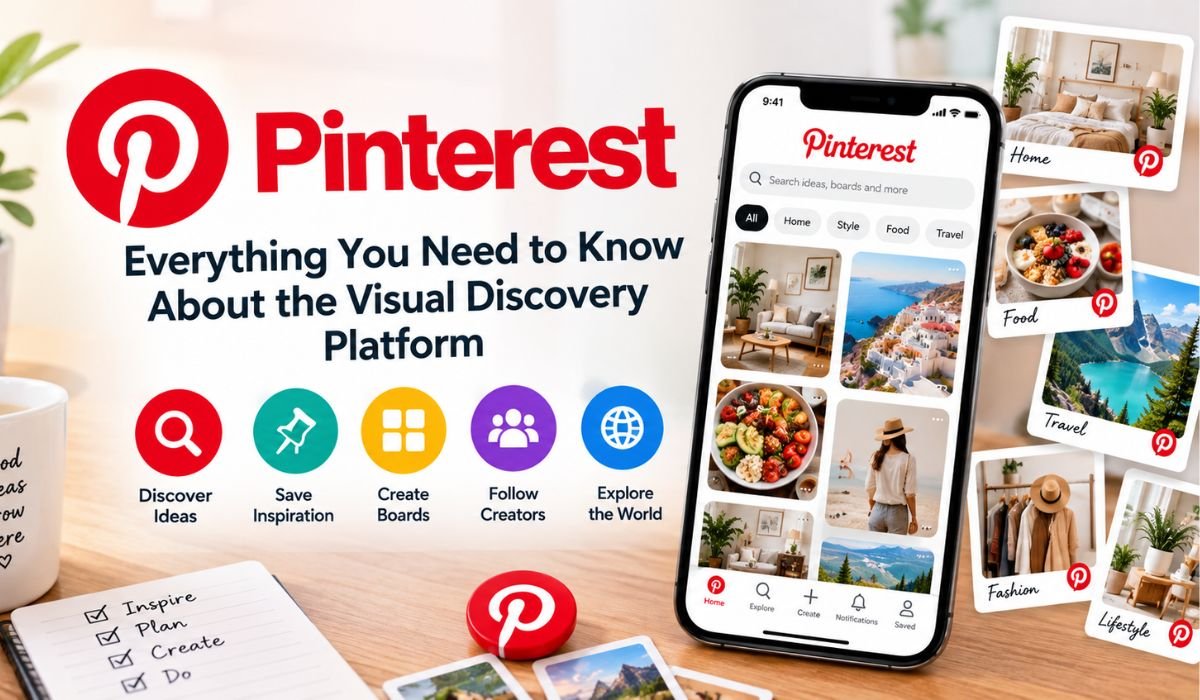
The Internet Is Full Of Ideas, But Finding The Right Inspiration Can Sometimes Feel Overwhelming. Whether You Want To Decorate Your Home, Discover A New Recipe, Plan A Holiday, Explore Fashion Trends, Or Start A Creative Project, Pinterest Offers A Simple Way To Collect Ideas And Turn Them Into Plans. Unlike Platforms That Focus Mainly On Personal Updates And Conversations, Pinterest Places Visual Discovery At The Center Of The Experience.
Pinterest Is An American Visual Discovery And Social Media Platform That Allows People To Explore Images, Videos, Products, And Helpful Resources. Users Can Save Content As Pins, Organize It Into Boards, And Return To Their Collections Whenever They Need Inspiration. Businesses And Creators Also Use Pinterest To Introduce Products, Share Content, And Reach People Searching For Ideas.
Since Its Early Development In 2009, Pinterest Has Expanded Beyond Digital Pinboards Into Visual Search, Advertising, And Shopping-Related Discovery. Understanding How Pinterest Works Can Help Individuals Use It More Effectively And Help Businesses decide whether it belongs in their digital marketing strategy.
Quick Bio Information
Pinterest, Inc. Is The Company Behind The Pinterest Platform. The Following Overview Summarizes Its Identity And History.
| Information | Details |
|---|---|
| Company Name | Pinterest, Inc. |
| Platform Name | |
| Industry | Internet And Digital Media |
| Platform Type | Social Media And Visual Discovery |
| Founded | December 2009 |
| Prototype Launch | March 2010 |
| Founders | Ben Silbermann, Paul Sciarra, And Evan Sharp |
| Headquarters | San Francisco, California, United States |
| Website | Pinterest.com |
| Stock Exchange | New York Stock Exchange |
| Stock Symbol | PINS |
| Public Listing | April 18, 2019 |
| Former CEO And Co-Founder | Ben Silbermann |
| CEO Appointed In 2022 | Bill Ready |
| Main Content | Images, Videos, Products, And Ideas |
| Main Organizing Feature | Boards |
| Individual Content Unit | Pin |
| Major Revenue Source | Advertising |
| Common Uses | Inspiration, Planning, Discovery, And Shopping |
| Business Audience | Brands, Retailers, Creators, And Publishers |
Company Leadership, Financial Figures, And Product Availability Can Change. Current Corporate Details Should Be Checked Against Pinterest’s Official Website And Investor Relations Reports Before Publication.
What Is Pinterest?
Pinterest Is A Visual Discovery Platform That Helps People Find, Save, And Organize Ideas. Think Of It As A Digital Collection Of Inspiration Where You Can Gather Everything Related To A Particular Interest Or Goal. Instead Of Keeping Pictures In Different Folders Or Saving Numerous Links Without Organization, You Can Arrange Useful Content Into Boards That Are Easy To revisit.
People Use Pinterest For Almost Every Area Of Everyday Life. Someone Planning A Kitchen Renovation Might Save Cabinet Designs, Lighting Ideas, And Color Combinations. A Student Could Collect Study Tips, While A Home Cook Might Build A Board Of Quick Dinner Recipes. Fashion Enthusiasts Can Explore Outfits, And Travelers Can Collect Destinations They Hope To Visit.
Pinterest Also Connects Inspiration With Information. Many Pins Link To Websites Containing Full Articles, Instructions, Recipes, Or Product Details. This Makes The Platform More Than An Image Gallery. It Can Act As A Starting Point For Research, Planning, And Shopping. Its Main Strength Is Helping Users Move From An Initial Idea Toward Something They Can Explore Or Create In Real Life.
The History Of Pinterest
The Story Of Pinterest Began With An Earlier Application Called Tote, Developed By Ben Silbermann And Paul Sciarra. Tote Was Designed To Help People Browse Shopping Catalogs Digitally. However, Mobile Payment Technology At The Time Made It Difficult For Users To Complete Purchases Conveniently. An Interesting Behavior Emerged: People Were Collecting And Sharing Images Of Products They Liked, Even When They Were Not Buying Them Immediately.
That Behavior Helped Inspire Pinterest. Development Began In December 2009, And A Closed Beta Version Launched In March 2010. The Early Platform Allowed Users To Gather Images And Arrange Them On Virtual Pinboards. Silbermann Personally Reached Out To Early Users, Listening To Their Feedback And Helping Build A Community Around The Product.
Pinterest Grew Quickly During Its Early Years. Mobile Applications Made The Service Easier To Access, And Technology Publications Recognized Its potential. The Platform Opened Registration More Widely In 2012 And Introduced Business Accounts That October. In April 2019, Pinterest Became A Publicly Traded Company On The New York Stock Exchange. Over Time, Its Focus Expanded From Saving Images To Visual Search, Advertising, Product Discovery, And Commercial Partnerships.
Who Founded Pinterest?
Pinterest Was Founded By Ben Silbermann, Paul Sciarra, And Evan Sharp. Each Contributed To The Company’s Early Development, Helping Turn The Idea Of Collecting Favorite Images Into A Recognizable Digital Experience.
Ben Silbermann Became The Best-Known Public Face Of Pinterest During Its Early Growth. He Helped Shape The Original Concept And Led The Company As CEO For Many Years. In June 2022, Pinterest Announced That Silbermann Would Move Into The Role Of Executive Chairman, While Bill Ready Became CEO.
Paul Sciarra Contributed To Pinterest’s Early Business Development And The Work That Led From Tote To The New Platform. Evan Sharp Played An Important Role In Pinterest’s Product And Design Direction, Helping Develop Its distinctive visual experience.
Bill Ready Brought Experience In Digital commerce and online payments to the leadership role. His appointment reflected Pinterest’s growing interest in shopping and commercial discovery. Leadership can change over time, so readers looking for the current executive team should consult the company’s official leadership information rather than relying only on older biographies.
How Does Pinterest Work?
Pinterest Works By Connecting Content Discovery With Personal Organization. Users Visit The Website Or Open The Mobile App, Explore Recommendations, Search For Topics, And Save Interesting Content. The Experience Is Built Around Finding Something Useful And Keeping It For Later.
After Creating An Account, Users Can Explore Subjects That Match Their Interests. Searching For A Topic Such As Small Bedroom Design, For Example, May Reveal Images, Videos, Product Ideas, And Related Suggestions. Users Can Open A Pin To learn more, visit its linked website, or save it to a board.
Pinterest’s Recommendation System Helps People Discover Related Content, But Results Can Differ According To Searches, engagement, settings, and platform changes. Users Can Improve Their Collections By Giving Boards Clear Names And Saving Content That Matches Their Goals. It Is Also Worth Checking The Original Source Of A Pin, Because An Attractive Image Does Not Always Guarantee That The Linked Instructions Or Information Are Accurate.
Pinterest Features You Should Know
Pinterest Offers Several Features That Work Together To Make Discovery And Organization Easier. The Most Recognizable Is The Pin, Which Represents An Individual Piece Of Content. A Pin May Contain An Image, Video, Description, Product Information, Or A Link To Another Website. Users Can Save Relevant Pins And Return To Them When Needed.
Boards Help Organize Pins Into Collections. Someone Planning A Wedding Might Keep Separate Boards For Decorations, Clothing, Flowers, And Food. A Business Could Organize Product Inspiration By Category Or Campaign. Clear Board Names make collections easier to navigate, especially when users save a large amount of material over time.
Search And Recommendations Help Users Find New Ideas, While Visual Discovery Tools Can Help Them Explore Content Related To Images Or objects they find interesting. Sharing features also allow people to send content to others, and collaborative boards may support group planning where available. Shopping-related Pins can connect users with product pages and retailers. However, features vary by account, device, location, and time, so not every user will see identical options.
What Do People Use Pinterest For?
One Reason Pinterest Remains Useful Is Its Flexibility. It Is Not Limited To One Type Of Interest Or Audience. People Use It To Gather Ideas Before Making Decisions, To Learn About New Topics, And To Keep Useful Resources Organized.
Home Design Is A Popular Example. Users Can Compare Interior Styles, Furniture Arrangements, Storage Solutions, And Color Palettes Before changing a room. In The Kitchen, People Can Discover Recipes, Baking Techniques, And Meal Planning Ideas. Fashion And Beauty Collections May Include Seasonal Outfits, Hairstyles, Makeup Inspiration, And Clothing Combinations.
Pinterest Also Supports Travel Planning, Crafts, Education, Gardening, Event Preparation, And Personal Projects. A Traveler Could Save Maps, Destination Guides, And Packing Suggestions In One Place. Someone Organizing A Birthday Party Could Collect Theme Ideas, Decorations, And Cake Designs. The Practical Value Comes From Bringing Related Inspiration Together, Making It Easier To Compare Options And Decide What To Do Next.
Pinterest For Businesses And Marketers
Pinterest Can Be Valuable For Businesses That Have Something Useful Or Visually Appealing To Show. Retailers, Designers, Food Brands, Travel Companies, Publishers, And Creators May Use The Platform To Help People Discover Their Products Or Content. Unlike A Campaign That Only Reaches Existing Followers, Useful Pinterest Content Can Also Reach People Searching For A Particular Idea.
Business Accounts Can Provide Access To Commercial Tools And Analytics, Depending On Current Availability. Companies Can Publish Pins That Show Products, Explain Services, Or Introduce Articles And Tutorials. A Furniture Store, For Example, Could Share Room Inspiration That Links To Relevant Product Pages. A Food Publisher Could Share Recipe Images That Direct Interested Readers To Full Instructions.
Businesses May Also Use Pinterest Advertising To Promote Content To Relevant Audiences. Success Depends On Several Factors, Including Image Quality, Search Relevance, landing page usefulness, campaign settings, and budget. Marketers Should Measure Meaningful Results Rather Than Relying Only On Views. Outbound Clicks, Conversions, And Sales Can Help Show Whether Pinterest Is Contributing To Real Business Goals. No Platform Guarantees Traffic Or Revenue, So Testing And Improving Content Remain Important.
How Does Pinterest Make Money?
Pinterest’s Business Model Relies Heavily On Advertising. People Can Generally Use The Core Platform Without Paying A Standard Subscription Fee, While Businesses Pay To Promote Content And Reach Audiences. Advertisements May Appear Among Other Recommended Content, Allowing Commercial Messages To Fit Into The Discovery Experience.
Promoted Content Can Help Advertisers Introduce Products, Build Brand Awareness, And Encourage Visits To Their Websites. Shopping-Related Advertising Is Especially Relevant Because Users Often Explore Pinterest While Researching Products Or Planning Purchases. For Advertisers, The Opportunity Is To Connect A Product With Someone Who Has Already Shown Interest In A Related Topic.
Pinterest’s Financial Performance Depends On Factors Such As Audience Size, Engagement, advertiser demand, pricing, and the effectiveness of its advertising products. Partnerships and advertising technology can support these activities, but they should not automatically be described as separate major revenue streams. Anyone Discussing Company Earnings Should Distinguish Revenue From Net Income And Use Figures From Official Financial Reports For The Relevant Year.
Pinterest’s Growth And Financial Performance
Pinterest’s Growth Reflects The Expansion Of Visual Discovery As A Digital Activity. Its Early Popularity Helped Establish The Platform As A Place To Collect Ideas, While Its Public Listing In 2019 Created A New Stage In Its Corporate History. As A Public Company, Pinterest Reports Financial Results And Important Business Developments To Investors.
The Platform’s Audience Size Is Often Measured Through Monthly Active Users, A Metric That Counts Accounts Or Users Active During A Monthly Period According To The Company’s reporting methodology. It Is Useful For Understanding Reach, But It Does Not Automatically Reveal How Often People Use Pinterest Or How Much Revenue Each User Generates. Revenue, profitability, and advertising performance provide different pieces of the picture.
The Supplied Research Material Reports 553 Million Monthly Active Users For 2024 And Approximately $4.22 Billion In Revenue For 2025. These Figures Should Be Checked Against The Relevant Official Reports Before Publication, Including Their Reporting Periods And Definitions. Financial Numbers Can Be Revised Or Presented Differently Across Sources. A Reliable Article Should Explain The Figures In Context Rather Than Treating Any Single Number As A Complete Measure Of Pinterest’s Success.
Pinterest Compared With Other Social Media Platforms
Pinterest Shares Some Features With Instagram, TikTok, And Facebook, But Its Main Purpose Is Different. Instagram Emphasizes Visual Sharing, creators, and social interaction. TikTok Is Known For Short-Form Video Discovery, Entertainment, And Trends. Facebook Focuses On Social Connections, Groups, Communities, Events, And A Broad Range Of Content.
Pinterest Places Greater Emphasis On Discovering Ideas And Saving Them For Future Use. Someone Browsing Pinterest Might Be Planning A Future Kitchen Renovation, Collecting Clothing Inspiration, Or Researching A Holiday months before it happens. The platform’s boards provide a structured way to keep those ideas organized.
The Differences Are Not Absolute. Instagram And TikTok Can Also Inspire Projects, While Facebook Users Can Share recommendations and organize community information. Businesses may use several platforms together, choosing each one according to the audience and purpose. Pinterest Is Particularly Worth Considering When Visual Search, evergreen inspiration, and organized collections are central to the content strategy.
Benefits Of Using Pinterest
Pinterest Makes It Easier To Collect Inspiration Without Losing Track Of Where Ideas Came From. Boards Can Bring Together Content From Different Searches And Sources, Helping Users Compare Designs, Plan Projects, And Return To Useful Material Later. This Can Be Especially Helpful When A Decision Involves Several Steps, Such As Preparing A Wedding, Redesigning A Room, Or Organizing A Trip.
The Platform Can Also Introduce Users To New Interests. A Search For One Recipe May Lead To Meal Planning Ideas, Cooking Techniques, Or Related Ingredients. A Search For Small-Space Storage Might Reveal Furniture Designs And Practical Organization Methods. This Kind Of Discovery Can Encourage Users To Explore Options They Had Not Considered Initially.
For Businesses And Publishers, Pinterest Offers Another Way To Make Content Discoverable. Well-Matched Pins May Bring Interested People To Articles, products, or tutorials. Still, Users Should Remember That Pinterest Is A Discovery Tool, Not A Guarantee Of Accuracy Or Commercial Success. Checking original sources and measuring outcomes makes the experience more useful.
Privacy, Safety, And Common Challenges
Like Other Online Platforms, Pinterest Requires Thoughtful Use. Personalized Recommendations And Advertising Can Help Users discover relevant content, but people should understand the available privacy settings and review the platform’s current policies. Options may change, so official help resources are the best place to find up-to-date instructions.
Content Quality Is Another Consideration. A Pin May Look Professional Yet Lead To An Outdated Page, Incomplete Instructions, Or Misleading Claims. This Matters Especially For Health Advice, Financial Suggestions, Safety Instructions, And Other Topics Where Incorrect Information Can Cause Harm. Checking the original source and comparing important claims with trustworthy references is a sensible habit.
Copyright Also Deserves Attention. Finding An Image On Pinterest Does Not Automatically Give Someone Permission To Reuse It In Advertising, On A Website, Or In A Commercial Project. Creators And Businesses Should Check Ownership, licensing terms, and applicable laws before republishing content. Users should also be cautious with suspicious links, unrealistic offers, and websites requesting sensitive information.
Pinterest’s Products And Partnerships
Pinterest Has Explored Different Ways To Expand Beyond Static Image Collections. In 2021, The Company Acquired Vochi, A Video Editing And Creation App. In 2022, It Introduced Shuffles, A Collage-Making App That Let Users Combine Images From Pinterest’s Library With Their Own Content. These Initiatives Reflected Interest In Creative Tools And More Interactive Ways To Work With Visual Material.
Pinterest Also Experimented With Live Video Through Pinterest TV-Related Initiatives. In 2023, The Company Announced A Partnership With LiveRamp Involving Data Collaboration For Selected Advertising Partners. Such initiatives illustrate how platforms try to improve advertising effectiveness while addressing privacy and data-handling concerns. Their exact features and availability may change over time.
The Supplied Research Also Mentions A Roku Television Project Announced For 2026 And A Zillow Advertising Partnership Reported In August 2026. Because These Are Time-Sensitive Developments, Their Current Status And Details Should Be Confirmed Through Official Announcements And Reliable News Reports Before They Are Presented As Completed launches or established services. This distinction helps readers separate a proposal or announcement from a product that is widely available.
The Future Of Pinterest
Pinterest’s Future Will Likely Be Shaped By The Relationship Between Visual Search, Personalization, Shopping, And Advertising. Users increasingly expect search tools to understand not just words but also the visual qualities of objects, styles, and designs. Improvements In Visual Discovery Could Help People Move From A General Idea To More Specific Products Or Solutions.
Shopping Is Another Important Area. Pinterest Can Connect Inspiration With Commercial Choices By Helping Users Explore Products In Context. A Person Planning A Living Room, For Example, May Want To Discover Furniture, colors, and layout ideas before comparing products. For Businesses, This Creates Opportunities To Reach People Earlier In Their decision-making process, although results depend on the quality of the experience and the relevance of the content.
Competition For User Attention And Advertising Budgets Will Remain A Challenge. Pinterest Must Continue Offering Useful Discovery Experiences While Protecting Trust, managing data responsibly, and giving advertisers meaningful results. These are strategic possibilities rather than guaranteed outcomes. The platform’s long-term success will depend on how well it balances user value with commercial growth.
Conclusion: Why Pinterest Remains Useful
Pinterest Has Grown From A Simple Idea-Collection Concept Into A Visual Discovery Platform That Connects Inspiration With Planning, Content Discovery, And Shopping. Its Pins And Boards Help People Keep Useful ideas organized, while its search and recommendation features introduce them to related topics and possibilities.
For Individual Users, Pinterest Can Make Projects Easier To Imagine And Organize. For Businesses, It Offers Another way to present products and reach audiences interested in particular subjects. Its usefulness depends on choosing relevant content, checking information carefully, and understanding how the platform’s tools fit individual goals.
As Pinterest Continues To Develop Its Discovery And Commercial Features, Its Central Idea Remains Straightforward: Help People Find Ideas That Matter To Them And Keep Those Ideas Close At Hand. Used Thoughtfully, Pinterest Can Be More Than A Place To Browse Attractive Images; It Can Be A Practical Starting Point For Learning, Planning, Creating, And Making Better-Informed Decisions.
Frequently Asked Questions About Pinterest
What Is Pinterest Used For?
Pinterest Is Used To Discover, Save, And Organize Ideas Through Images, Videos, And Links. People Use It For Recipes, Home Design, Fashion, Travel Planning, Crafts, Education, And Many Other Interests. Businesses Also Use It To Showcase Products, promote content, and reach potential customers.
Is Pinterest Free To Use?
The Core Pinterest Experience Is Generally Free For Individual Users. People Can Browse Content, Save Pins, And Create Boards Without Paying A Standard Subscription Fee. Businesses Can Pay For Advertising, And Specific Features Or Services May Have Their Own Eligibility Requirements.
What Is The Difference Between A Pin And A Board?
A Pin Is An Individual Piece Of Content, Such As An Image, Video, Or Product Idea. A Board Is A Collection That Organizes Related Pins. For Example, You Could Save Several Kitchen Designs As Pins And Group Them Together On A Board Called Kitchen Inspiration.
Can Pinterest Help A Business Grow?
Pinterest May Help Businesses Reach People Searching For Relevant Ideas And Products. Useful Pins Can Direct Users To Websites, Articles, Or Product Pages. Results Depend On Content Quality, Audience Relevance, competition, and campaign strategy, so businesses should track clicks and conversions rather than assume success is automatic.
Does Pinterest Have A Mobile App?
Yes, Pinterest Offers A Mobile App For Supported Devices, Alongside Its Website. The App Allows Users To Browse Ideas, Search For Content, Save Pins, And Manage Boards. Availability And Certain Features Can Differ Depending On The Device, Region, And Current App Version.
Is Pinterest A Search Engine Or Social Media Platform?
Pinterest Combines Elements Of Both. It Is Commonly Described As A Visual Discovery Platform Because Users Search For Ideas, explore recommendations, and organize content. It Also Has Social Features, But Its Emphasis On Finding And Saving Inspiration Distinguishes It From Platforms Focused Mainly On Conversations Or Personal Updates.
Can You Buy Products On Pinterest?
Pinterest Supports Product Discovery And Shopping-Related Content, But The Purchasing Process Depends On The Individual Pin, retailer, and region. Some Pins Link Directly To A Retailer’s Website, Where The Purchase Is Completed. Users Should Check Product Details, shipping information, and seller reliability before buying.
How Is Pinterest Different From Instagram?
Pinterest Is Primarily Designed For Discovering And Organizing Ideas That Users May Want To Revisit Later. Instagram Focuses More On Sharing Visual Content, Following Accounts, And Social Interaction. Both Platforms Support Creators And Businesses, But Pinterest’s Boards And Discovery-Oriented Experience Make It Particularly Useful For Planning And Collecting Inspiration.
Learn more and explore exciting content on: Mitch McConnell: Biography, Political Career, Family, And Legacy







Leave a Reply