
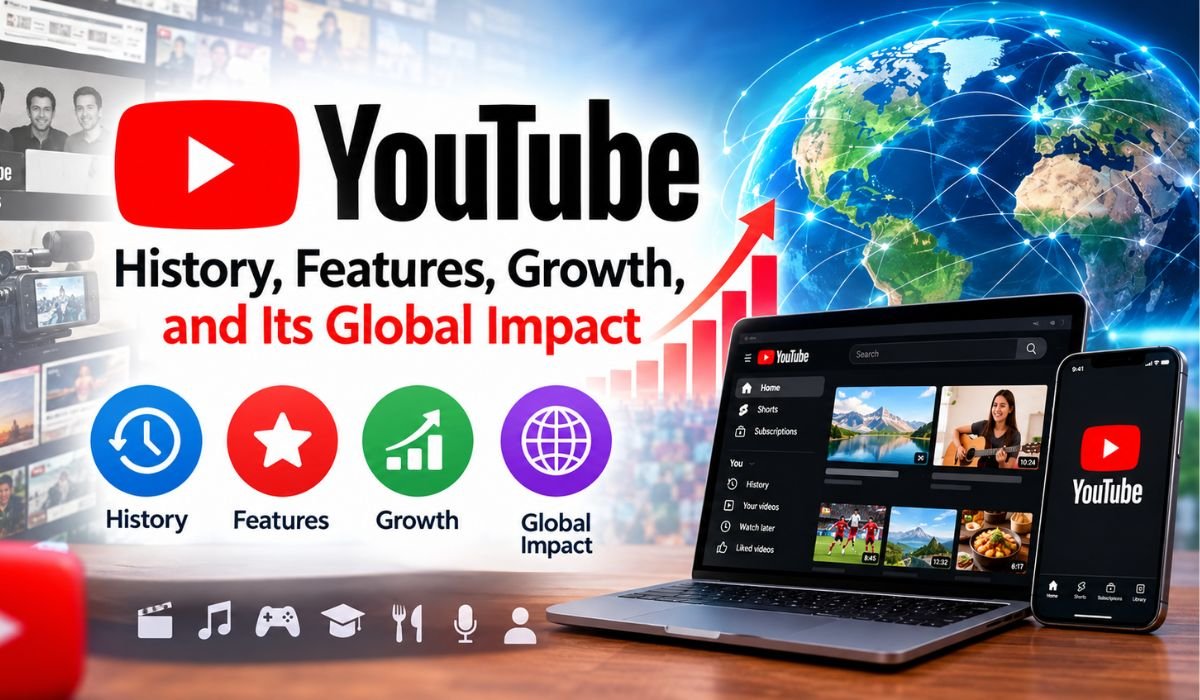
YouTube Has Changed The Way People Watch Videos, Listen To Music, Learn New Skills, And Share Ideas With The World. What Began As A Small Internet Startup In 2005 Has Become One Of The Most Recognizable Digital Platforms, Connecting Viewers, Creators, Businesses, Educators, And Entertainment Companies Across Different Countries. Today, People Use YouTube To Watch Tutorials, Follow News, Enjoy Music, Explore Hobbies, And Build Careers Through Online Content.
Owned By Google, Which Is Part Of Alphabet Inc., YouTube Offers Much More Than Traditional Video Watching. Its Services Include Short Videos, Music Streaming, Live Broadcasts, Children’s Content, And Paid Subscription Options. However, Its Growth Has Also Brought Challenges Related To Copyright, Privacy, Misinformation, And Online Safety. Understanding YouTube’s History, Features, Business Model, And Cultural Influence Helps Explain Why It Remains Such An Important Part Of Modern Digital Life.
What Is YouTube?
YouTube Is An Online Video-Sharing Platform And Social Media Service That Allows People To Upload, Watch, Share, And Discover Videos. Its Content Includes Music Videos, Educational Lessons, Product Reviews, Gaming Streams, Interviews, Documentaries, News Reports, Comedy, And Personal Vlogs. Professional Media Companies And Independent Creators Use The Same Platform To Reach Audiences, Although Their Resources And Production Methods May Differ.
Many Public Videos Can Be Watched Without Creating An Account. Signing In, However, Makes It Easier To Subscribe To Channels, Comment, Save Playlists, Manage Viewing History, And Upload Content. YouTube Is Available Through Web Browsers, Mobile Apps, Smart TVs, And Other Supported Devices. Its Combination Of Search, Recommendations, And Creator Channels helps Users Find Content That Matches Their Interests, Making It Both A Video Library And An Interactive Online Community.
YouTube Quick Bio Information
YouTube’s Basic Details Help Readers Understand Its Ownership, History, And Main Purpose At A Glance.
| Information | Details |
|---|---|
| Platform Name | YouTube |
| Industry | Internet And Digital Media |
| Website Type | Video-Sharing And Social Media Platform |
| Founding Date | February 14, 2005 |
| Public Launch | April 23, 2005 |
| Founders | Chad Hurley, Steve Chen, And Jawed Karim |
| Original Headquarters | San Mateo, California |
| Headquarters Listed In The Source | San Bruno, California, United States |
| Parent Company | Google LLC |
| Ultimate Parent | Alphabet Inc. |
| CEO | Neal Mohan, According To The Source Provided |
| First Uploaded Video | Me At The Zoo |
| First Video Uploader | Jawed Karim |
| First Video Upload Date | April 23, 2005 |
| Main Revenue Source | Advertising |
| Other Revenue Sources | Subscriptions And Creator-Related Features |
| Major Services | YouTube Shorts, YouTube Music, YouTube Premium, YouTube Kids, And YouTube TV |
| Main Content Types | Entertainment, Education, Music, News, Gaming, And Live Video |
| Availability | Worldwide, Subject To Local Restrictions |
| Official Website | YouTube.com |
These Details Provide A Helpful Overview, But Statistics And Leadership Information Should Always Be Checked Against Current Official Sources Before Publication.
Who Founded YouTube?
YouTube Was Created By Chad Hurley, Steve Chen, And Jawed Karim, Three Former PayPal Employees Who Combined Their Experience To Develop A New Way To Share Videos Online. Hurley Studied Design At Indiana University Of Pennsylvania, While Chen And Karim Studied Computer Science At The University Of Illinois Urbana-Champaign. Their Different Skills Helped Shape The Platform’s Early Design And Technology.
The Story Behind YouTube’s Creation Has Been Explained In More Than One Way. One Common Account Says Hurley And Chen Had Difficulty Sharing Videos From A Social Gathering. Karim Has Described How Difficult It Was To Find Particular Video Clips Online, Including Footage Related To The 2004 Super Bowl Halftime Show Controversy And The Indian Ocean Tsunami. The Founders Also Explored A Video-Based Dating Website Before Expanding The Idea To Accept All Kinds Of Videos. Rather Than Relying On One Origin Story, It Is More Accurate To Recognize That YouTube Emerged From A Wider Need For Easier Online Video Sharing.
The First YouTube Video
The First Video Uploaded To YouTube Was Titled Me At The Zoo. Jawed Karim Uploaded It On April 23, 2005. The Short Clip Shows Him At The San Diego Zoo Talking About Elephants. Its Content Is Simple, But Its Historical Importance Is Significant Because It Marks The Beginning Of A Platform That Would Later Reach Audiences Around The World.
The Video Demonstrated One Of YouTube’s Most Important Ideas: Ordinary People Could Publish Videos Online Without Needing A Television Network Or A Complicated Distribution System. During Its Early Months, The Platform Made Sharing Videos Through Links And Embedded Players Much Easier. Viral Clips Helped Introduce The Website To New Audiences, Including Popular Entertainment Videos That Were Shared Widely Across The Internet. This Early Growth Also Revealed The Challenges Of Copyright, As Some Popular Clips Were Uploaded Without Permission From Their Original Owners.
The History Of YouTube
YouTube Registered Its Website In February 2005 And Opened To The Public That Year. By December, It Had Moved Beyond Its Beta Phase And Was Attracting Millions Of Daily Views. Its Growth Continued Through 2006, When The Company Reported Rising Upload Numbers And A Rapid Increase In Video Viewing. These Early Milestones Showed That People Wanted A Simple Way To Publish And Watch Videos From Different Devices And Locations.
Google Announced Its Acquisition Of YouTube In October 2006 And Completed The Deal On November 13, 2006, For $1.65 Billion In Google Stock. The Acquisition Helped YouTube Expand Its Infrastructure, Advertising Operations, And Global Reach. In Later Years, The Platform updated Its Design, Improved Its Mobile Experience, And Introduced More Ways For Creators To Earn Money. Its Development Eventually extended beyond standard videos to include livestreaming, subscription services, music-focused experiences, and short-form content. Each Change Reflected Shifting Viewer Habits And Growing Competition Across Digital Media.
YouTube’s Main Features
YouTube Offers Features That Help Viewers Discover Content And Help Creators Build Communities. Users Can Search For Videos, Subscribe To Channels, Create Playlists, Share Links, Like Videos, And Leave Comments Where Those Features Are Available. Captions, Playback-Speed Controls, Video Quality Settings, And Other Accessibility Options Can Make Content Easier To Follow. Creators Can Organize Their Channels, Add Descriptions And Thumbnails, Review Performance Data, And Communicate With Their Audiences.
Recommendations Also Play A Major Role In The Viewing Experience. YouTube Uses Signals Such As Viewing Activity And User Interactions To Help Suggest Content, Although Its Systems Are Complex And Can Change Over Time. Recommendations May Introduce Viewers To New Topics, But They Can Also Encourage Long Viewing Sessions. Users Can Improve Their Experience By Managing Their Watch History, Reviewing Recommendations, Using Search Carefully, And Taking Breaks When Necessary. For Creators, Clear Titles, Accurate Descriptions, Useful Thumbnails, And Strong Content Quality Help Viewers Understand What A Video Offers.
YouTube Shorts, Music, Premium, Kids, And TV
YouTube Has Developed Several Services For Different Viewing Needs. YouTube Shorts Focuses On Short-Form Videos That Are Easy To Discover And Watch On Mobile Devices. YouTube Music Provides A Music-Centered Experience For Finding Songs, Albums, Playlists, And Music Videos. YouTube Premium Offers Paid Benefits Such As Ad-Free Viewing And Background Playback, Depending On The Plan And Region. These Services Give Users More Choices Than The Original Website Alone.
YouTube Kids Is Designed Around Children’s Viewing, With Age-Oriented Content Experiences And Parental Controls. However, Parents Should Still Review Settings And Help Children Understand Safe Online Behavior. YouTube TV Is A Separate Subscription Service Offering Live Television In Supported markets; It Is Not Available Everywhere. Together, These Products Show How YouTube Has Expanded From A Single Video-Sharing Website Into A Wider Digital Media Business. Their Features, Prices, And Availability May Change, So Readers Should Check Official Product Pages For Current Details.
How YouTube Works
For Viewers, YouTube Works Through Search, Channel Subscriptions, Recommendations, And Direct Links. A Person Can Search For A Topic, Open A Video, Explore Related Content, Or Follow A Creator For Future Uploads. For Creators, The Process Usually Begins With Recording Or Editing A Video, Uploading It, Adding A Title And Description, Selecting A Thumbnail, And Choosing Appropriate Publishing Settings. Creators Must Also Follow YouTube’s Community Guidelines And Applicable Copyright Rules.
Once A Video Is Published, YouTube Systems Help Process And Distribute It To Viewers. Its Performance Can Depend On Many Factors, Including Audience Interest, Search Relevance, Competition, Viewer Satisfaction, And Content Suitability. There Is No Guaranteed Formula For Making A Video Popular. Creators Usually Benefit From Understanding Their Audience, Providing Accurate Information, And Improving Their Work Over Time. Viewers, Meanwhile, Should Remember That A Video’s Popularity Does Not Automatically Make Its Claims Accurate Or Trustworthy.
How YouTube Makes Money
Advertising Is A Major Part Of YouTube’s Business Model. Advertisers Pay To Reach Audiences, And Ads May Appear Before, During, Or Around Eligible videos. YouTube Also Offers Paid Subscription Services And Features That allow viewers to support eligible creators. These revenue sources help fund the platform’s technology, content systems, business operations, And Creator Programs.
YouTube’s Financial Results Should Be Described Carefully Because Advertising Revenue Is Not The Same As Total Revenue. The Source Article Reports $40.4 Billion In Advertising Revenue For 2025 And Total Revenue Above $60 Billion, But Those Figures Should Be Verified Against Reliable Financial Reporting Before Being Used As Confirmed Facts. Revenue Can Also Differ By Region, Product, And Reporting Method. For Readers, The Main Point Is That YouTube Combines Advertising With Subscriptions And Other Paid Features To Support A Large Digital Media Ecosystem.
How YouTubers Make Money
Creators Can Earn Money In Several Ways, But Income Is Not Guaranteed. Eligible Channels May Receive A Share Of Advertising Revenue Through YouTube’s Monetization Programs. Other opportunities include channel memberships, paid livestream interactions such as Super Chat, sponsorships, affiliate marketing, merchandise, And Business Partnerships. The Available Options Depend On A Creator’s Location, Eligibility, Content, And Compliance With Platform Rules.
Building A Sustainable Channel Usually Requires More Than Collecting Views. Creators Need To Understand Their Audience, Publish Useful Or Entertaining Content, Improve Production Quality, And Develop Trust. A Channel With A Smaller, Highly Engaged Audience May Have Different Business Opportunities From One With Millions Of Casual Viewers. Advertiser Demand, Video Topic, Audience Location, And Content Suitability Can Also Affect Earnings. Anyone Considering YouTube As A Career Should Treat It As A Business That Takes Time, Planning, And Consistent Work Rather Than A Guaranteed Source Of Quick Income.
YouTube’s Global Growth And Reach
YouTube’s Growth Has Been Reflected In Its Large Audience, Expanding Content Library, And Increasing Variety Of Viewing Options. The Source Article Reports More Than 2.7 Billion Monthly Active Users In January 2024 And Approximately 14.8 Billion Videos By Mid-2024. It Also Cites Earlier Estimates Of More Than 500 Hours Of Video Uploaded Every Minute In 2019. These Figures Illustrate The Scale Of The Platform, But They Represent Different Measurements And Reporting Periods.
The Platform’s Global Reach Comes From Its Support For Many Languages, Topics, And Communities. People Can Watch Content From Other Countries, Learn About Different Cultures, And Connect With Creators Who Share Their Interests. Mobile Devices And Smart TVs Have Also Made Video Viewing Part Of Everyday Life. Still, Availability And Access Can Vary Because Of Local Restrictions, Internet Costs, Language Barriers, And Regional product differences. The Best Way To Discuss YouTube’s Size Is To Use Clearly Dated Statistics And Avoid Presenting Older Numbers As Current 2026 Figures.
YouTube’s Impact On Entertainment And Education
YouTube Has Changed Entertainment By Giving Independent Creators A Way To Reach Large Audiences Without Relying Entirely On Traditional Media Companies. Music Videos, Comedy, Gaming, Film Trailers, Interviews, And Livestreams Can Find Viewers Across Borders. Some Creators Have Built Businesses Around Their Channels, While Established artists and studios use YouTube to promote releases and engage with fans. Viral Videos Can Also Shape Internet Trends And Public Conversations.
Education Is Another Important Part Of YouTube’s Impact. Teachers, Students, Professionals, And Curious Viewers Can Find Tutorials, Lectures, Demonstrations, And Explanations Of Complex Topics. Visual Lessons Can Help People learn at their own pace, revisit difficult ideas, And Explore Subjects Beyond A Formal Classroom. However, Not All Educational Videos Are Reliable. Viewers Should Check The Creator’s Expertise, Compare Important Claims With Trusted Sources, And Be Careful With Content That Makes Unsupported Promises. YouTube Is A Valuable Learning Tool When Used With Critical Thinking.
YouTube’s Challenges And Controversies
YouTube’s Scale Makes Content Moderation Difficult. The Platform Has Faced Criticism Over Misinformation, Copyright Infringement, Privacy, Advertising Practices, Child Safety, And Decisions To Remove Or Restrict Content. A Video May Spread Quickly Before Its Claims Can Be Checked, While copyrighted material can be uploaded without the rights holder’s permission. Creators have also raised concerns about demonetization and how platform rules are applied.
The Company Uses Policies, Automated Systems, And Human Review To Manage Content, But No Moderation System Can resolve every dispute perfectly. YouTube has also been involved in legal challenges, including a copyright lawsuit brought by Viacom. The litigation resulted in rulings in YouTube’s favor in the case described in the source article. For everyday users, practical steps include protecting account information, reviewing privacy settings, reporting harmful content, and checking claims before sharing them. Parents should pay particular attention to children’s viewing habits and use appropriate supervision and controls.
YouTube’s Future And Global Influence
YouTube’s Future Will Likely Be Shaped By Changes In Viewing Habits, Creator Tools, Artificial Intelligence, Advertising, And Digital Entertainment. Short-Form Video, Livestreaming, Music, And Television Viewing Offer Different Ways To Reach Audiences. New Editing And Accessibility Tools May Help Creators produce content more efficiently, while advances in automated systems may influence captions, discovery, and moderation. These Developments Bring Opportunities, But Their Long-Term Effects Will Depend On How The Technology Is Used.
Trust Will Remain Essential. Viewers Need Reliable Information, Creators Need Clear Rules, And Families Need Practical Safety Tools. Copyright Owners Also Need Fair Ways To Protect Their Work While Legitimate Commentary, Education, And Creative Expression remain possible under applicable law. YouTube’s Lasting Influence Will Depend Not Only On Its Size, But Also On Its Ability To Help People Find Valuable Content And Participate Responsibly. For Businesses, Educators, And Creators, The Platform Can Offer Meaningful Opportunities When They Focus On Quality, Honesty, And Audience Needs.
Conclusion
YouTube Has Grown From A Small Startup Into A Major Part Of Global Digital Culture. Its Founders Helped Make Online Video Sharing Easier, Google’s Acquisition Supported Its Expansion, And Services Such As YouTube Shorts, YouTube Music, And YouTube Premium broadened the viewing experience. The Platform Now Plays A Role In Entertainment, Education, News, Business, And The Creator Economy.
Its Success Does Not Mean It Is Free From Problems. Misinformation, Privacy, Copyright, And Child Safety Require Continued Attention From The Company, Creators, Viewers, And Regulators. Used Thoughtfully, YouTube Can Be A Powerful Place To Learn, Share Ideas, Discover Creativity, And Build Communities. Understanding Both Its Benefits And Its Limitations Gives Users A More Balanced View Of The Platform And Its Continuing Global Impact.
FAQs About YouTube
When Was YouTube Founded?
YouTube Was Founded On February 14, 2005, By Chad Hurley, Steve Chen, And Jawed Karim. Its First Video, Me At The Zoo, Was Uploaded On April 23, 2005, The Date Commonly Associated With Its Public Launch.
Who Owns YouTube?
YouTube Is Owned By Google LLC, Which Is Part Of Alphabet Inc. Google Acquired YouTube In 2006 In A Deal Valued At $1.65 Billion In Google Stock.
What Was The First YouTube Video?
The First YouTube Video Was Me At The Zoo, Uploaded By Co-Founder Jawed Karim On April 23, 2005. It Shows Karim At The San Diego Zoo And Remains A Notable Part Of Internet History.
Is YouTube Free To Use?
Many YouTube Videos Are Free To Watch And Are Supported By Advertising. YouTube Also Offers Paid Services, Including Premium Subscriptions, And Some Features Or Content May Have Specific Requirements Or Charges.
How Does YouTube Make Money?
YouTube Earns Revenue Mainly Through Advertising, Along With Paid Subscriptions And Other Commercial Features. Eligible Creators Can Receive Revenue Shares or earn through memberships and other approved monetization options.
How Do YouTubers Earn Money?
YouTubers May Earn Through Advertising, Channel Memberships, Super Chat, Sponsorships, Affiliate Marketing, And Merchandise. Earnings Depend On Eligibility, Audience Engagement, Advertiser Demand, Content Type, And Other Factors; Views Alone Do Not Guarantee Income.
What Is YouTube Premium?
YouTube Premium Is A Paid Subscription Service That Offers Benefits Such As Ad-Free Viewing And Background Playback, Depending On Current Plan Terms And Regional Availability. It Is Different From The Standard Advertising-Supported YouTube Experience.
Is YouTube Safe For Children?
YouTube Offers YouTube Kids, Parental Controls, And Other Safety Features, But No Online Platform Is Completely Risk-Free. Parents Should Review Settings, Choose Age-Appropriate Content, Discuss Online Safety, And Stay Involved In Children’s Viewing Habits.
Learn more and explore exciting content on: Lindsey Graham: Biography, Political Career, Family, and Life Story




Leave a Reply