
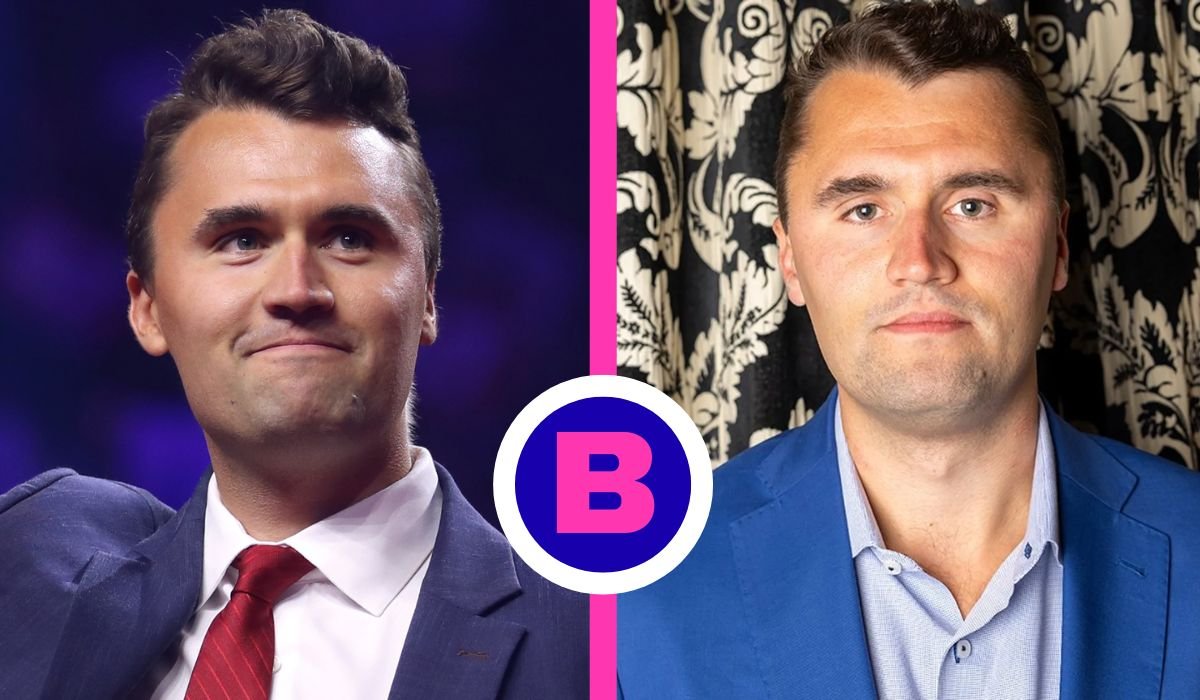
Charlie Kirk became one of the most recognizable young conservative activists in the United States by turning student politics into a national movement. Born in Illinois in 1993, Kirk entered political activism while still a teenager and, at only 18, co-founded Turning Point USA. Over the following years, he built a large conservative youth network, became a close ally of Donald Trump, hosted a popular media program, and developed a major presence on college campuses and social media. The Associated Press described his organization as a powerful force in mobilizing young conservatives, while Reuters highlighted his influence among younger Americans.
Kirk’s life also attracted significant controversy. His political statements, views on social issues, election claims, and confrontational campus style made him both a hero to supporters and a deeply criticized figure among opponents. His career ended abruptly when he was fatally shot at a Turning Point USA event at Utah Valley University on September 10, 2025. His death transformed the discussion around his life from one about political influence into one about legacy, political violence, and the future of the movement he helped build.
Charlie Kirk Quick Bio
Full Name: Charles James Kirk
Known As: Charlie Kirk
Date Of Birth: October 14, 1993
Birthplace: Arlington Heights, Illinois, United States
Raised In: Prospect Heights, Illinois
Date Of Death: September 10, 2025
Age At Death: 31
Place Of Death: Orem, Utah
Nationality: American
Political Party: Republican
Profession: Political Activist, Author, Media Personality, Entrepreneur, And Nonprofit Executive
Years Active: 2012–2025
Major Organization: Turning Point USA
Co-Founder: Bill Montgomery
Wife: Erika Frantzve
Children: Two
Education: Harper College And King’s College Studies
College Degree: He Did Not Earn A College Degree
Major Political Association: Donald Trump And The MAGA Movement
Posthumous Honor: Presidential Medal Of Freedom, Awarded In 2025
Early Life And Family Background
Charlie Kirk was born on October 14, 1993, in Arlington Heights, Illinois, a suburb of Chicago, and was raised nearby in Prospect Heights. His father, Robert Willard Kirk, was an architect who was involved in construction work connected with Trump Tower, while his mother, Kathryn Smith Kirk, had worked as a trader at the Chicago Mercantile Exchange before becoming a mental-health counselor. Kirk also had a younger sister, Mary, who later worked as an art curator in Chicago.
Kirk grew up in a family that he described as politically moderate Republican. His early environment gave him exposure to conservative politics, but his interest became much stronger during his school years. He was raised Presbyterian, became an Eagle Scout, and later described reading economist Milton Friedman as an important part of his political awakening. These experiences helped shape the conservative identity that would define his adult career.
Education And Teenage Political Interests
Kirk’s political activity began unusually early. While attending Wheeling High School, he volunteered for Republican Senate candidate Mark Kirk’s 2010 campaign. The two were not related. During the same period, Kirk became interested in conservative talk radio and began expressing strong opinions about education and politics.
At 17, an essay he wrote for Breitbart criticizing what he saw as liberal bias in school textbooks brought him national attention and led to an appearance on Fox Business. He later applied to West Point but was rejected. Although he was accepted by Baylor University, he instead attended Harper College in Illinois and left after one semester. He later studied part-time at King’s College in New York, but he never completed a college degree. The decision to leave college became part of his public identity because he increasingly presented himself as someone who learned through political experience rather than traditional academic credentials.
The Beginning Of Charlie Kirk’s Political Career
A major turning point came in 2012 when Kirk spoke at a youth government event at Benedictine University. There he met conservative businessman and activist Bill Montgomery. Montgomery was impressed by Kirk’s ability to attract the attention of young people and encouraged him to pursue political activism full time.
Soon afterward, the two founded Turning Point USA. The original concept was relatively straightforward: build a student organization that promoted free markets, limited government, and conservative political ideas. Kirk was only 18, but he quickly developed a talent for fundraising, public speaking, organization building, and attracting media attention. What began as a small project eventually became the foundation of his entire political career.
Turning Point USA And Campus Activism
Turning Point USA became closely identified with Kirk’s personality. He traveled to college campuses across the country, where he frequently challenged students and political opponents to debate him. His table, marked with the phrase “Prove Me Wrong,” became one of his most recognizable symbols.
The strategy worked particularly well in the age of social media. Short clips of Kirk arguing with students could spread rapidly online, allowing him to reach millions of people who had never attended one of his events. The AP reported that these viral campus appearances helped generate donations and contributed to Turning Point’s transformation into one of America’s largest conservative political organizations.
Turning Point USA’s Growth And Influence
Under Kirk’s leadership, Turning Point USA expanded from a student organization into a major conservative network. It developed chapters at colleges and high schools, held large political conferences, and created programs designed to encourage young people to participate in Republican politics.
The organization’s growth also brought criticism. Its Professor Watchlist and School Board Watchlist attracted concerns from critics who argued that such projects could encourage harassment or put pressure on educators. Financial reporting also received scrutiny. For accuracy, it is important to separate Turning Point USA’s organizational finances from Kirk’s personal finances. Organizational revenue, executive compensation, and personal net worth are different measures and should never automatically be treated as the same thing.
Turning Point Action And National Politics
Kirk eventually expanded beyond student organizing by helping establish Turning Point Action, a political advocacy organization focused more directly on elections and political mobilization. The group acquired Students for Trump and worked to increase youth participation in Republican campaigns.
This change marked an important stage in Kirk’s career. He was no longer simply trying to persuade students on college campuses. He was helping build political infrastructure capable of influencing elections, recruiting activists, and connecting young voters with Republican candidates. His work increasingly placed him at the center of national conservative politics.
Charlie Kirk And Donald Trump
Kirk became a strong supporter and ally of Donald Trump. His relationship with Trump grew as Turning Point became increasingly involved in mobilizing young voters and supporting the MAGA movement.
The connection was particularly important because Kirk helped translate Trump’s political message for younger audiences. His podcasts, campus appearances, speeches, and social-media content gave him a direct line to a generation that increasingly consumed political information through digital platforms rather than traditional television. Reuters noted that Kirk had millions of followers across major platforms and played a significant role in mobilizing younger conservatives.
His influence was also recognized by people he helped mentor. The AP reported that Vice President JD Vance, Representative Anna Paulina Luna, and other political figures credited Kirk with helping their political careers or introducing them to important Republican networks.
Charlie Kirk’s Political Views
Charlie Kirk’s political views were broadly conservative and increasingly connected with the Christian right and Trump-aligned politics. He opposed abortion and gun-control measures, criticized diversity, equity, and inclusion programs, and took socially conservative positions on gender and LGBTQ issues.
His political identity developed over time. What began as an emphasis on free markets and limited government became a broader cultural and political message involving religion, national identity, education, immigration, and American conservatism. His supporters viewed this as an unapologetic defense of conservative values, while critics argued that some of his rhetoric intensified political and cultural divisions.
Media Career, Books And Public Profile
Kirk understood early that political influence could extend far beyond physical events. He used podcasts, interviews, speeches, social media, and written books to communicate directly with supporters. The Charlie Kirk Show became a central part of that media strategy and helped establish him as a political media personality as well as an activist.
His media approach was particularly effective with younger audiences. Reuters reported that Kirk had more than five million followers on X and also maintained a substantial audience on TikTok. His ability to combine political commentary with highly shareable online content helped make him one of the more influential conservative voices of his generation.
Controversies And Public Criticism
Kirk’s influence came with considerable controversy. Critics objected to some of his comments about race, civil rights, Martin Luther King Jr., immigration, gender, and other social issues. He was also criticized over statements relating to COVID-19 and claims about the 2020 presidential election. The article’s source material additionally connects him with promotion of the white-genocide conspiracy theory.
A balanced Charlie Kirk biography should distinguish between his documented statements and interpretations made by supporters or critics. His confrontational style was part of his appeal, but it also made him a frequent subject of political criticism. That tension helps explain why his public image was so sharply divided: many young conservatives regarded him as an effective defender of their beliefs, while opponents considered some of his rhetoric inflammatory.
Charlie Kirk And The January 6 Era
Kirk and Turning Point Action also became associated with the political events surrounding January 6, 2021. Before the Washington, D.C., rally, Kirk said his organizations were sending large numbers of supporters to the capital. A spokesperson later said that seven buses carrying about 350 students were ultimately sent.
After the Capitol attack, Kirk said the violence did not represent mainstream Trump supporters. He later appeared before the House committee investigating January 6 and invoked his Fifth Amendment privilege against self-incrimination. His team also provided thousands of pages of records to the committee. These events remain an important part of understanding his political career and should be discussed with careful attention to documented facts and competing claims.
Charlie Kirk’s Wife And Children
Charlie Kirk married Erika Frantzve in 2021, and they had two children. Erika was closely connected with his public life and later became the leader of Turning Point USA following his death. The White House has publicly referred to Erika and the couple’s two children in official statements concerning Kirk’s death and remembrance.
Because the children are private individuals, responsible biography writing should avoid unnecessary personal information about them. The important public fact is that family was a significant part of Kirk’s life, particularly in the final years of his career.
Charlie Kirk’s Death And Assassination
On September 10, 2025, Charlie Kirk was fatally shot while speaking at a Turning Point USA event at Utah Valley University in Orem, Utah. He was 31 years old. The killing shocked the political world and immediately became a national discussion about political violence and the safety of public debate.
Reuters reported that Kirk’s death prompted grief among young Americans across ideological lines, even among people who strongly disagreed with his politics. Students organized memorials, and young Republicans and Democrats in some places issued joint statements condemning political violence.
The killing also produced intense political reactions and further polarization. For a responsible account, it is important to separate confirmed information about the attack from speculation and partisan commentary that circulated afterward.
Memorial Service And National Recognition
A major memorial service for Kirk was held at State Farm Stadium in Glendale, Arizona, on September 21, 2025. Donald Trump, JD Vance, Erika Kirk, and other prominent political figures participated in the event. The White House documented the service and described it as a gathering honoring Kirk’s life and influence.
Kirk also received significant posthumous recognition. On October 14, 2025, President Trump posthumously awarded him the Presidential Medal of Freedom, the nation’s highest civilian honor. The White House also proclaimed October 14, which would have been Kirk’s 32nd birthday, a National Day of Remembrance.
Charlie Kirk’s Legacy And Political Influence
The question of Charlie Kirk’s legacy is complicated because his influence was both substantial and controversial. He helped make conservative youth organizing more professional, media-driven, and highly visible. His campus debates showed how political activists could use short-form video and social platforms to reach audiences far beyond the original event.
His influence also extended through people he mentored and political networks he helped build. The AP reported that several young political figures credited him with encouraging or assisting their careers. After his death, Turning Point USA continued operating under Erika Kirk’s leadership, while debates about the future direction of the broader MAGA movement continued at later Turning Point events.
Final Thoughts
Charlie Kirk’s life was unusually fast-moving. From a politically interested teenager in suburban Illinois, he became a national conservative organizer before he was old enough to have completed a traditional college education. Through Turning Point USA, campus debates, digital media, and political organizing, he helped create a powerful network aimed at bringing younger Americans into conservative politics.
His career cannot be understood without acknowledging both sides of his public record. Kirk inspired many young conservatives and became an influential ally of Donald Trump, but his rhetoric and political positions also generated strong criticism. His assassination at age 31 ended a career that was still developing and left a movement searching for how to preserve his influence.
By 2026, Charlie Kirk’s political legacy is therefore larger than a simple biography. His story illustrates how modern political movements can be built through a combination of grassroots organizing, digital media, personality-driven debate, and youth engagement. Whether viewed as an influential conservative leader or a deeply polarizing political figure, his impact on American political activism is difficult to ignore.
FAQs About Charlie Kirk
Who Was Charlie Kirk?
Charlie Kirk was an American conservative political activist, media personality, author, and nonprofit executive. He co-founded Turning Point USA in 2012 and became one of the most prominent organizers of young conservatives in the United States.
When Was Charlie Kirk Born?
Charlie Kirk was born on October 14, 1993, in Arlington Heights, Illinois. He was raised in the nearby Chicago suburb of Prospect Heights.
What Was Charlie Kirk Known For?
Charlie Kirk was best known for co-founding and leading Turning Point USA, visiting college campuses for political debates, hosting The Charlie Kirk Show, supporting conservative causes, and becoming a prominent ally of Donald Trump.
Who Was Charlie Kirk’s Wife?
Charlie Kirk’s wife was Erika Frantzve. They married in 2021 and had two children. Erika later assumed a leadership role within Turning Point USA after Kirk’s death.
Did Charlie Kirk Have A College Degree?
No. Kirk attended Harper College and later studied part-time at King’s College in New York, but he did not complete a college degree. He left college early to focus on building Turning Point USA.
What Happened To Charlie Kirk?
Charlie Kirk was fatally shot on September 10, 2025, while speaking at a Turning Point USA event at Utah Valley University in Orem, Utah. His death prompted widespread political and public reaction in the United States and abroad.
What Was Charlie Kirk’s Relationship With Donald Trump?
Kirk was a strong Trump supporter and became an important figure in the MAGA movement. Through Turning Point USA and Turning Point Action, he worked to mobilize younger voters and conservative activists around Republican politics. The AP reported that Trump and other senior Republican figures credited Kirk with helping build youth support for the movement.
What Is Charlie Kirk’s Legacy?
Kirk’s legacy centers largely on his role in transforming conservative youth activism through Turning Point USA, campus debates, political organizing, and digital media. His influence remains a subject of both admiration and criticism, while the organization he helped build continues after his death.
Learn more and explore exciting content on: Gael Anderson: Biography, Career, Family, and Life Story





Leave a Reply