
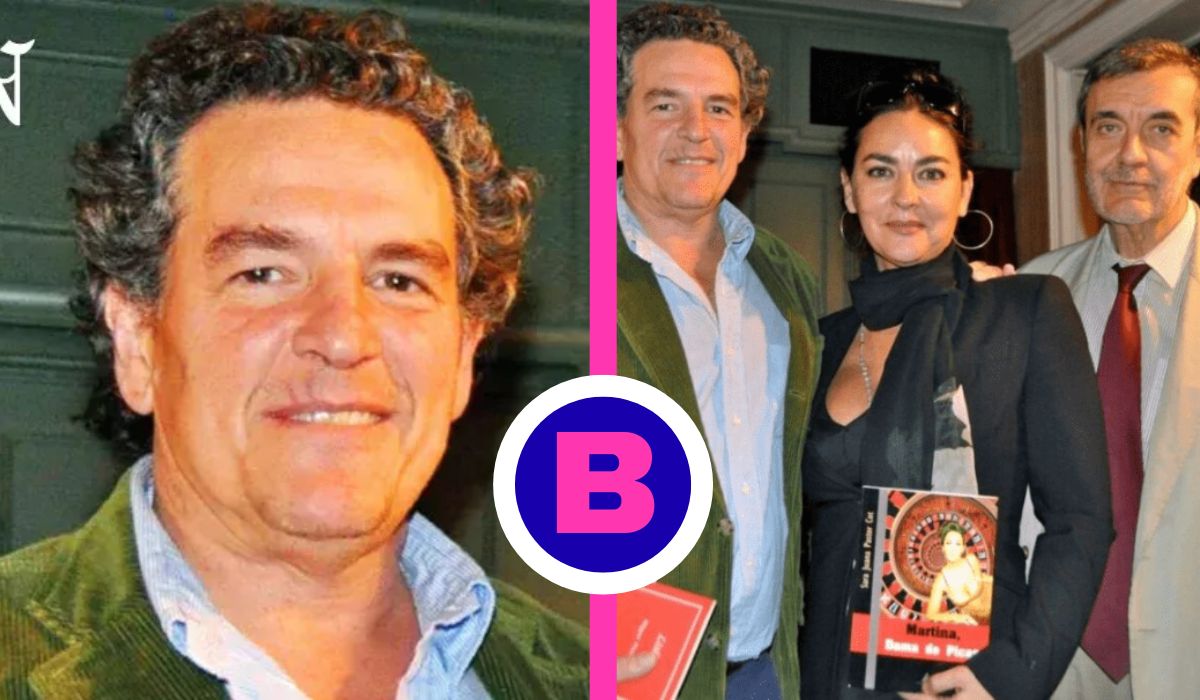
Carlos Scola Pliego is best known to the public as the man who married Sade Adu, the distinctive British-Nigerian singer whose music has captivated audiences around the world. But there’s more to his story than his connection to one of music’s most recognizable voices.
A Spanish Film Professional, Carlos worked behind the scenes on a number of Film and Television productions. His career included roles as an Assistant Director, Writer, Director, Producer, and later a Dialogue Coach. Among his better-known professional credits are the 1983 James Bond film Never Say Never Again, Christopher Columbus, Eleni, Curse of the Pink Panther, and several documentary projects. IMDb also credits him as a Dialogue Coach on Goal II: Living the Dream in 2007.
His marriage to Sade remains the most widely discussed part of his personal life. The couple married in 1989 and divorced in 1995, although many details of their relationship have remained private. Because Carlos has largely stayed away from the public eye, reliable information about his childhood, education, family, and life after his marriage to Sade is limited.
That makes accuracy especially important when telling his story. Some details about Carlos have been repeated across entertainment websites without strong sourcing, while other facts can be traced to established Film records or Sade’s own official biography. A closer look reveals a filmmaker with a career of his own, whose connection to Sade became only one chapter of his life.
Quick Bio Of Carlos Scola Pliego
| Information | Details |
|---|---|
| Full Name | Carlos Scola Pliego |
| Profession | Film Professional, Assistant Director, Director, Writer |
| Nationality | Spanish |
| Best Known For | His Film Career And Marriage To Sade |
| Famous Former Spouse | Sade Adu |
| Marriage | 1989 |
| Divorce | 1995 |
| Early Film Role | Script Supervisor |
| Assistant Director Work | Film And Television Productions |
| James Bond Credit | Never Say Never Again |
| Other 1983 Credit | Curse of the Pink Panther |
| Television Credit | Christopher Columbus |
| John Malkovich Connection | Eleni |
| Documentary Work | Ngira: Gorilas en la montaña |
| Documentary Work | Donde termina el corazón |
| Later Film Credit | Goal II: Living the Dream |
| 2007 Role | Dialogue Coach |
| Public Profile | Very Private |
| Birth Details | Not Reliably Documented |
| Current Personal Life | Limited Reliable Public Information |
Carlos Scola Pliego’s Early Career
Carlos Scola Pliego’s professional career in Film dates back to the late 1970s. His earliest known work was behind the camera, in the kind of roles that rarely make headlines but are essential to keeping a production consistent.
IMDb credits Carlos as a Script Supervisor on La boda del señor cura, released in 1979, and Opera Prima, released in 1980. In this type of role, attention to detail is crucial. Script Supervisors track continuity between scenes and help ensure that details remain consistent throughout filming.
Those early credits are significant for another reason. They establish that Carlos was already working in the Film Industry before his relationship with Sade became part of his public identity. His career didn’t begin with his marriage to a famous singer; he had already spent years developing experience in Film Production.
His Work As An Assistant Director
During the early 1980s, Carlos moved into Assistant Directing and took on a variety of Film and Television assignments. IMDb lists him on productions including Dos y dos, cinco, Black Commando, G’olé!, Hundra, and Scarab.
His work also extended to larger international productions. In 1985, Carlos was credited as Assistant Director for Spain on the Television Miniseries Christopher Columbus. IMDb lists him across four episodes of the production.
Working as an Assistant Director requires far more than simply being present on a Film Set. The role is part of the organizational backbone of a production, helping coordinate people, schedules, locations, and the practical demands of filming. Carlos’s credits therefore offer a useful glimpse into the professional experience he built before and during his relationship with Sade.
His Connection To Never Say Never Again
One of Carlos Scola Pliego’s most recognizable Film Credits came in 1983, when he worked on Never Say Never Again, the James Bond film starring Sean Connery and Kim Basinger.
IMDb lists Carlos as Second Assistant Director: Spain, although the credit was uncredited. In other words, he was part of the behind-the-scenes production team rather than one of the film’s principal creative figures.
That distinction is worth making because online profiles sometimes make Film credits sound more prominent than they actually were. Carlos didn’t direct Never Say Never Again, but his role placed him within the production team of a major international film.
That same year, he also worked as Second Assistant Director on Curse of the Pink Panther. IMDb similarly identifies his Spain credit as uncredited. His other early credits include Hundra, G’olé!, and Scarab, reflecting the range of productions on which he worked during this period.
Carlos Scola Pliego As A Documentary Filmmaker
Carlos eventually moved beyond assisting other filmmakers and took on more creative responsibilities himself.
IMDb credits him as co-director, writer, and producer of Ngira: Gorilas en la montaña, a short documentary from 1988. The project represents an important shift in his career because it placed him directly in charge of shaping a documentary rather than working solely within someone else’s production team.
He followed it with Donde termina el corazón in 1989, for which he is credited as Director and Writer.
These projects add considerable depth to the story of Carlos Scola Pliego. He wasn’t simply an Assistant Director whose name became familiar because of Sade. His credits show a filmmaker who also pursued Documentary Work and took on writing and directing responsibilities.
His Later Film Work
Carlos’s connection to Film didn’t end with his marriage to Sade. His professional credits continued into the 2000s, although the publicly available record becomes less detailed than it is for his earlier career.
IMDb lists Carlos as a Dialogue Coach on Goal II: Living the Dream in 2007. The international sports drama was filmed partly in Spain, and the credit shows that Carlos continued to contribute to Film Production long after his work during the 1980s.
IMDb’s professional listing also includes producer work on Capitanes de la arena in 2001. Together, these credits indicate that Carlos remained involved in Film over several decades.
There are gaps in the publicly available record, however, and they shouldn’t be filled with guesses. The available sources don’t provide a complete account of everything Carlos did professionally after the 1980s. What they do establish is that his Film Career continued well beyond his relationship with Sade.
How Did Carlos Scola Pliego Meet Sade?
The exact circumstances of Carlos Scola Pliego’s first meeting with Sade aren’t extensively documented in primary sources. Published accounts generally place their connection in Spain during the period when Sade was working on music videos associated with her Promise era.
Beyond that broad outline, details about their early courtship are difficult to verify. Stories about exactly when they met, how quickly their relationship developed, and what happened privately between them have often been repeated in secondary publications without strong primary documentation.
What is firmly established is that their relationship became serious and eventually led to marriage. Sade’s official biography identifies Carlos Scola Pliego as the Spanish Film Director she married in 1989.
The timing is also significant. By then, Sade was already an internationally successful artist, while Carlos was pursuing a career behind the camera. Their relationship therefore brought together two people working in different parts of the creative world.
Sade And Carlos Scola Pliego’s Love Story
Carlos became part of Sade’s life during a particularly important period in her career. By the late 1980s, she had already achieved international success, and her growing fame meant that even her private relationships attracted public interest.
Accounts of the relationship have described Sade as being deeply in love with Carlos. Yet the couple themselves didn’t make their relationship a public spectacle. They generally kept their private lives away from the press, leaving relatively little first-person material about their courtship and marriage.
That privacy makes it difficult to reconstruct their relationship in detail. It’s tempting to connect every later song or emotional change in Sade’s life to Carlos, but doing so goes beyond the evidence available.
The most reliable picture is simpler: they fell in love, married in 1989, lived together in Spain, and eventually went their separate ways.
When Did Sade And Carlos Scola Pliego Get Married?
Sade and Carlos Scola Pliego married in 1989. Sade’s official biography confirms the year, while IMDb currently records February 11, 1989, as the beginning of their marriage.
However, there is a discrepancy in published accounts. Some secondary sources have reported October 11, 1989, as the wedding date. Because the exact date isn’t consistently reported across available sources, it’s more responsible to treat 1989 as the confirmed year rather than presenting one disputed date as unquestionable fact.
Some accounts have also described the wedding as taking place in a Spanish castle. That detail has been widely repeated, although it isn’t as firmly established by the available primary sources as the year of the marriage.
What is clear is that the couple lived together in Spain during their marriage, making the country an important setting in this chapter of Sade’s personal life.
What Was Their Marriage Like?
There is surprisingly little reliable information about what everyday married life was like for Carlos and Sade. Both maintained a relatively private existence, and Sade has long been known for limiting public discussion of her personal affairs.
As a result, their marriage is best understood through the facts that are available rather than through speculation about what happened behind closed doors.
Published reports indicate that the relationship eventually became troubled. Sade later spoke about the emotional effect of the breakup, suggesting that the end of the relationship was painful for her. Still, neither Carlos nor Sade provided a complete public account explaining every difficulty within their marriage.
That distinction matters. A biography can acknowledge that a relationship ended badly without pretending to know private conversations or motivations that were never publicly confirmed.
Why Did Sade And Carlos Scola Pliego Divorce?
The precise reason for Sade and Carlos Scola Pliego’s divorce has never been fully established through a detailed joint public statement.
What is known is that their marriage ended in divorce in 1995. IMDb lists Sade as Carlos’s former spouse and records their marriage as lasting from 1989 to 1995.
Some published accounts say Sade left Spain and returned to London after the relationship deteriorated. Other details about the separation are less certain. It’s also important to distinguish between a physical separation and a legal divorce. A couple can stop living together long before their divorce is officially completed.
For that reason, claims that identify one specific cause of the breakup should be treated carefully unless they can be traced to a direct statement from one of the people involved.
How Long Were They Married?
The available records place Carlos Scola Pliego and Sade’s marriage between 1989 and 1995, meaning their legal marriage lasted approximately six years.
Some reports indicate that the couple separated earlier than the final divorce date. There’s no contradiction in that possibility because separation and divorce aren’t the same event.
Although their marriage was relatively brief, it remains an important chapter in Sade’s biography. It took place during a period when she was moving through major professional and personal changes, and the relationship continued to attract interest long after it ended.
Did Carlos Scola Pliego Inspire Sade’s Music?
Few questions about Carlos Scola Pliego attract as much curiosity as whether he inspired Sade’s music.
The answer requires some caution. There is no reliable evidence establishing that any particular Sade song was written specifically about Carlos. Her songwriting frequently explores love, longing, heartbreak, devotion, vulnerability, and emotional uncertainty, themes that naturally invite listeners to connect the music with events in her personal life.
The 1992 album Love Deluxe is sometimes discussed in connection with this period of Sade’s life. The album includes songs such as “No Ordinary Love,” “Cherish the Day,” “Kiss of Life,” “Bullet Proof Soul,” and “Pearls.”
Yet the existence of emotional themes on the album doesn’t prove that Carlos was the subject of any particular song. It’s perfectly reasonable to discuss the possibility that personal experiences influenced Sade’s creative work, but it’s not responsible to turn fan interpretations into confirmed biographical facts.
Sade’s music has always been broader than one relationship. Her work explores universal experiences of love and loss, which is part of the reason it continues to resonate with listeners.
What Did Sade Say About The End Of The Relationship?
Sade has rarely discussed her private relationships at length, but accounts of her comments about the end of her marriage indicate that the experience affected her deeply.
She described the breakup as a painful period and said it took years before the experience stopped affecting her in the same way. Those remarks offer one of the clearest glimpses into the emotional importance of the relationship.
At the same time, Sade’s comments don’t provide a complete explanation for why the marriage ended. They tell us something about how she experienced the breakup, not necessarily everything that caused it.
That difference is important when examining the relationship today. The emotional impact can be acknowledged without inventing details about the private circumstances of the divorce.
What Happened To Carlos After The Divorce?
Following the end of his marriage to Sade, Carlos Scola Pliego largely disappeared from mainstream celebrity coverage.
That doesn’t mean he left Film behind. His documented professional credits show that he remained involved in the industry. IMDb lists later work including producer credits on Capitanes de la arena in 2001 and his Dialogue Coach role on Goal II: Living the Dream in 2007.
Beyond those records, however, there is little reliable public information about Carlos’s personal life. His current residence, financial situation, relationships, and everyday activities aren’t sufficiently documented by authoritative sources.
In many ways, that privacy is one of the defining features of Carlos Scola Pliego’s public story. He became known because of his marriage to an internationally famous singer, yet he never developed the same public profile himself.
Carlos Scola Pliego And Sade’s Later Lives
Sade’s life continued to change after her divorce from Carlos. Her official biography records the birth of her child in 1996 and describes later changes in her family and home life.
Those events occurred after her marriage to Carlos and belong to a different period of her story. Keeping the timelines separate helps avoid a common problem in celebrity biographies, where later relationships and family events become mixed together with earlier ones.
Carlos’s later life is much less documented. Unlike Sade, he didn’t maintain a highly visible public career in front of audiences, and there is no comparable official biography covering his personal life.
The contrast between them is striking. Sade remained a globally recognized recording artist, while Carlos continued largely outside the celebrity spotlight.
Why Is Carlos Scola Pliego Still Associated With Sade?
The main reason is straightforward: Carlos Scola Pliego was Sade’s only documented husband.
That fact makes him an important figure for anyone researching Sade’s personal history. However, describing him only as a former celebrity spouse doesn’t tell the whole story.
Carlos had established his Film Career before his marriage. His work included Script Supervision, Assistant Direction, Documentary Filmmaking, Writing, Producing, and later Dialogue Coaching. His credits connect him to both Spanish and international productions.
His involvement with Never Say Never Again is particularly notable because it placed him within the production history of a major international franchise. His documentary work is equally useful in understanding his professional identity because it shows that he also pursued projects in which he had greater creative control.
In other words, Sade explains why people search for Carlos, but his Film Career explains who he was professionally.
What Can We Reliably Say About Carlos Scola Pliego Today?
The most responsible description of Carlos Scola Pliego today is that he is a Spanish Film Professional whose career spans several decades, while much of his personal life remains outside the public record.
Reliable sources don’t provide enough evidence to confidently state his exact current age, birth date, current residence, net worth, relationship status, or day-to-day activities. Those details appear on some low-authority biography websites, but repeated claims aren’t necessarily reliable simply because they’re easy to find online.
For a subject this private, acknowledging what isn’t known is just as important as documenting what is known.
The strongest evidence about Carlos comes from his professional Film Credits and the confirmed history of his marriage to Sade. Beyond that, readers should be cautious about claims that can’t be traced to trustworthy sources.
Final Thoughts
Carlos Scola Pliego’s story is much more than a footnote in Sade’s biography.
He built a career in Film Production beginning in the late 1970s, worked as an Assistant Director on Spanish and international projects, and contributed to productions including Never Say Never Again. He later moved into Documentary Filmmaking, Writing, Directing, and Producing, while his Film work continued into the 2000s.
His marriage to Sade in 1989 remains the reason most people recognize his name. Their relationship ended in divorce in 1995, and Sade later acknowledged how deeply the breakup affected her. Yet many details of their private life remain unknown, and there is no good reason to fill those gaps with speculation.
That’s ultimately what makes a careful biography of Carlos Scola Pliego different from a typical celebrity profile. The available evidence shows a filmmaker with a substantial professional history who happened to share an important period of his life with one of the world’s most famous singers.
For readers searching for Carlos Scola Pliego in 2026, the most useful portrait is therefore a balanced one. He was a Film Professional in his own right, Sade’s only documented husband, and a notably private figure whose later personal life remains largely undocumented.
FAQs About Carlos Scola Pliego
Who Is Carlos Scola Pliego?
Carlos Scola Pliego is a Spanish Film Professional who has worked as an Assistant Director, Director, Writer, Producer, and Dialogue Coach. He is also widely known because he married singer Sade Adu in 1989. His documented Film Credits include Never Say Never Again, Eleni, Christopher Columbus, Ngira: Gorilas en la montaña, Donde termina el corazón, and Goal II: Living the Dream.
When Did Carlos Scola Pliego Marry Sade?
Carlos Scola Pliego and Sade married in 1989. IMDb currently records February 11, 1989, as the beginning of their marriage, while some secondary sources have reported October 11, 1989. Because the exact date is inconsistently reported, 1989 is the safest detail to present as confirmed.
When Did Carlos Scola Pliego And Sade Divorce?
Carlos Scola Pliego and Sade divorced in 1995. IMDb records their marriage as running from 1989 to 1995. Reports about when they separated physically are less consistent, so the legal divorce date should be kept separate from any earlier separation.
Did Carlos Scola Pliego Work On A James Bond Film?
Yes. IMDb credits Carlos Scola Pliego as Second Assistant Director: Spain on Never Say Never Again, the 1983 James Bond film starring Sean Connery. His credit is marked as uncredited, meaning he worked as part of the behind-the-scenes production team rather than as one of the film’s principal credited filmmakers.
What Films Did Carlos Scola Pliego Direct?
IMDb credits Carlos as co-director, Writer, and Producer of the 1988 short documentary Ngira: Gorilas en la montaña. It also credits him as Director and Writer of Donde termina el corazón from 1989.
Did Carlos Scola Pliego And Sade Have Children?
There is no reliable public record establishing that Carlos and Sade had children together. Sade’s later biography records the birth of her child in 1996, after her marriage to Carlos had ended. The available evidence therefore doesn’t support identifying Carlos as the father of Sade’s child.
Did Carlos Scola Pliego Inspire Sade’s Songs?
There is no reliable evidence proving that specific Sade songs were written about Carlos. Listeners and writers have interpreted some of Sade’s music through the lens of her personal relationships, but interpretation isn’t the same as confirmation from the artist. Songs on Love Deluxe explore love, longing, and emotional complexity, but they shouldn’t automatically be attributed to Carlos.
What Is Known About Carlos Scola Pliego Today?
Reliable information about Carlos’s current personal life is limited. His documented Film Career includes later work such as producer credits on Capitanes de la arena and a Dialogue Coach role on Goal II: Living the Dream in 2007. Beyond those records, there isn’t enough authoritative public information to make confident claims about his current residence, finances, relationships, or daily life.
Learn more and explore exciting content on: Who Was Carl Ellan Kelley? The Story of Aretha Franklin’s Sister











Leave a Reply